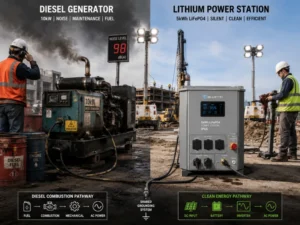
Power reliability has become a growing concern for businesses, contractors, infrastructure operators, and facility managers worldwide. Increasing weather-related disruptions, aging utility infrastructure, grid instability, and rising energy demands have made emergency power preparedness more important than ever.
As a result, the market for portable power backup solutions has expanded rapidly across commercial, industrial, and residential sectors. Unlike traditional fuel generators, modern portable power stations offer clean energy storage, quiet operation, low maintenance requirements, and seamless integration with solar charging systems.
For distributors, EPC contractors, system integrators, and procurement professionals, portable power stations are no longer viewed as niche consumer products. They have evolved into practical energy resilience tools capable of supporting construction sites, telecommunications infrastructure, emergency response operations, remote work environments, and business continuity planning.
Selecting the right portable power backup solution, however, requires more than comparing battery capacities and inverter ratings. Long-term reliability, battery chemistry, safety certifications, supply chain stability, warranty support, and engineering quality all play critical roles in determining lifecycle value.
This guide explores the technical, commercial, and operational considerations that decision-makers should evaluate when selecting portable power stations for emergency backup applications.
Why Emergency Backup Power Has Become a Strategic Priority in 2026
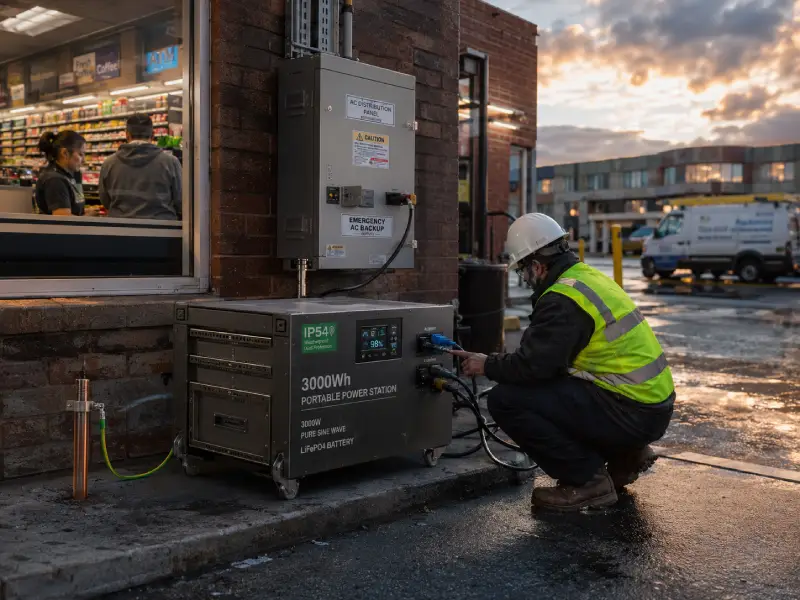
Over the past decade, backup power planning has shifted from being an optional contingency measure to a strategic operational requirement. Businesses that once relied solely on utility power increasingly recognize that even short-duration outages can lead to revenue losses, operational disruptions, damaged equipment, and dissatisfied customers.
Portable energy storage solutions have emerged as a practical response to these challenges because they provide immediate backup power without the operational limitations associated with traditional generators.
Rising Grid Instability Worldwide
Electrical grids around the world are facing unprecedented pressure. Urbanization, increased electrification, electric vehicle adoption, extreme weather events, and aging infrastructure are placing significant demands on existing utility networks.
In many regions, utility companies are investing heavily in modernization programs. However, grid upgrades often require years of planning and implementation. During this transition period, businesses remain vulnerable to:
- Unexpected blackouts
- Voltage fluctuations
- Weather-related service interruptions
- Wildfire prevention shutdowns
- Storm-related infrastructure failures
- Temporary maintenance outages
For organizations operating critical equipment, even a short interruption can result in productivity losses or equipment downtime. Portable power stations provide an additional layer of resilience that helps bridge these temporary disruptions.
Growing Demand for Resilient Power Systems
Business continuity has become a major consideration across multiple industries. Organizations increasingly seek backup power systems capable of supporting essential operations during utility outages.
Examples include:
- Telecommunications equipment
- Network infrastructure
- Security systems
- Medical support equipment
- Retail payment systems
- Remote monitoring devices
- Construction site equipment
- Industrial control systems
Unlike large stationary energy storage systems, portable power stations can be deployed rapidly, relocated when necessary, and utilized across multiple applications. This flexibility makes them particularly attractive for organizations managing distributed assets.
Why Portable Solutions Are Filling the Gap Between Generators and ESS
Traditionally, businesses had two primary options for backup power:
- Fuel-powered generators
- Permanent energy storage systems (ESS)
Each solution offers advantages but also comes with limitations.
Generators provide extended runtime but require fuel storage, regular maintenance, emissions compliance, and noise management. Permanent ESS installations offer excellent performance but typically require significant upfront investment and fixed installation infrastructure.
Portable power stations occupy a valuable middle ground. They provide:
- Fast deployment
- Minimal maintenance
- Solar charging capability
- Silent operation
- Indoor-safe use
- Scalable deployment flexibility
For many organizations, this combination delivers the optimal balance between cost, convenience, and operational resilience.
What Is a Portable Power Station and How Does It Work?
A portable power station is a self-contained energy storage system that stores electrical energy within rechargeable batteries and delivers power through integrated inverter technology.
Unlike conventional generators that produce electricity through fuel combustion, portable power stations store electricity in batteries and release it when needed through AC and DC output ports.
Modern systems can be charged through:
- Utility grid power
- Solar panels
- Vehicle charging systems
- Portable generators
- Hybrid charging combinations
This flexibility makes portable power stations suitable for a wide range of backup and mobile energy applications.
Core Components of a Modern Portable Power Station
Understanding the internal architecture of a portable power station is essential when evaluating product quality and long-term performance.
LiFePO4 Battery Pack
The battery pack serves as the energy storage core of the system.
Lithium Iron Phosphate (LiFePO4) batteries have become the preferred chemistry for modern portable power stations due to their:
- Excellent thermal stability
- Long cycle life
- Enhanced safety characteristics
- High charge-discharge efficiency
- Reduced maintenance requirements
Compared with older lithium-ion chemistries, LiFePO4 technology provides improved reliability for backup power applications where safety and longevity are critical.
Battery Management System (BMS)
The Battery Management System acts as the system’s safety and intelligence center.
A high-quality BMS continuously monitors:
- Cell voltage
- Current flow
- Temperature
- State of charge
- Cell balancing performance
The BMS helps prevent overcharging, over-discharging, overheating, and short-circuit conditions while maximizing battery lifespan.
Pure Sine Wave Inverter
The inverter converts stored DC energy into AC power suitable for powering electrical devices and appliances.
Premium portable power stations utilize pure sine wave inverters because they deliver utility-grade electricity compatible with sensitive electronics such as:
- Laptops
- Networking equipment
- Medical devices
- Communication systems
- Monitoring equipment
MPPT Solar Charge Controller
Maximum Power Point Tracking (MPPT) technology optimizes solar charging efficiency by continuously adjusting operating parameters to maximize energy harvest from photovoltaic modules.
This technology allows portable power stations to integrate effectively with solar panels, creating highly flexible portable solar backup systems.
How Portable Power Backup Differs from Traditional Generators
| Feature | Portable Power Station | Fuel Generator |
|---|---|---|
| Noise Level | Very Low | High |
| Emissions | Zero During Operation | Produces Exhaust |
| Maintenance | Minimal | Regular Maintenance Required |
| Indoor Operation | Safe | Not Recommended |
| Solar Charging | Supported | Not Supported |
| Fuel Dependency | None | Required |
While generators remain useful for certain high-load applications, portable power stations increasingly serve as a practical alternative for organizations seeking cleaner, quieter, and more flexible emergency power solutions.
Expert Tip:
When evaluating portable power stations, focus on usable energy capacity, inverter efficiency, battery cycle life, and BMS quality rather than relying solely on advertised watt-hour ratings. Engineering design often has a greater impact on real-world performance than headline specifications.
Why Demand for Emergency Portable Power Backup Is Growing Across Industries
Portable power stations are increasingly being deployed across diverse industries because they address multiple operational challenges simultaneously. Their mobility, reliability, and ease of deployment make them valuable assets in situations where power continuity cannot be compromised.
Residential Emergency Preparedness
Homeowners are becoming more proactive about emergency preparedness due to increasing weather-related disruptions and utility outages.
Portable power stations can support:
- Refrigerators
- Lighting systems
- Internet equipment
- Medical devices
- Mobile communications
- Home office equipment
As remote work continues to expand, maintaining connectivity during outages has become a higher priority for many households.
Commercial and Small Business Backup Applications
For small and medium-sized businesses, downtime often translates directly into financial losses.
Portable power backup systems can help maintain operations for:
- Retail checkout systems
- Network equipment
- Security systems
- Access control infrastructure
- Customer service operations
- Point-of-sale terminals
The ability to rapidly deploy backup power without facility modifications makes portable systems particularly attractive for commercial environments.
Construction and Remote Job Sites
Construction projects frequently require temporary power solutions before permanent electrical infrastructure becomes available.
Portable power stations provide flexible energy support for:
- Inspection equipment
- Power tools
- Communication devices
- Surveying equipment
- Monitoring systems
- Field offices
Their portability enables contractors to move energy resources wherever they are needed throughout the project lifecycle.
Telecommunications and Network Infrastructure
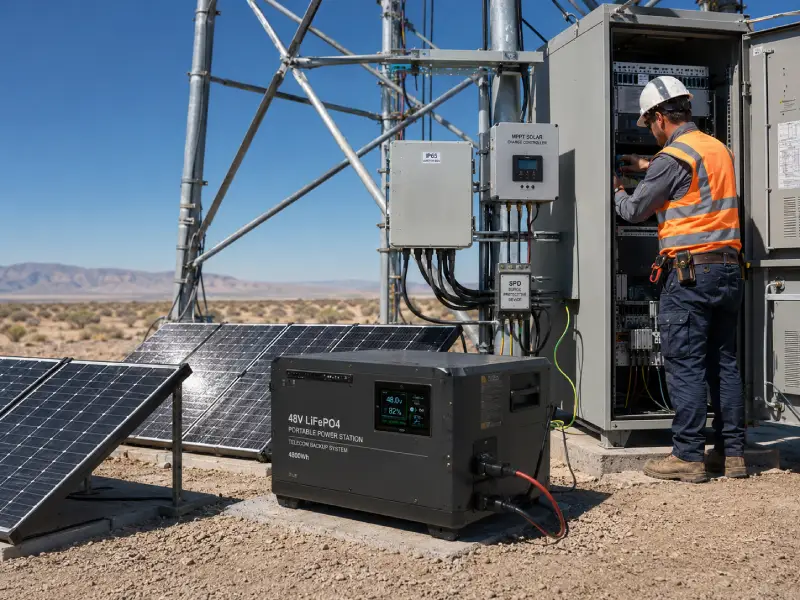
Telecommunications providers increasingly utilize portable energy storage systems to support critical communication equipment during maintenance activities, temporary outages, and remote deployments.
Reliable backup power helps maintain network availability and supports continuity of communication services in challenging operating environments.
As communication infrastructure expands into more remote locations, demand for highly reliable portable backup systems is expected to continue growing.
In the next section, we will examine the engineering and procurement factors that distributors, EPC contractors, and procurement teams should evaluate before selecting a portable power station supplier, including battery chemistry, capacity sizing, certification requirements, charging flexibility, supplier assessment criteria, and common procurement risks that can significantly impact long-term project success.
Engineering Considerations When Deploying Portable Power Backup Systems
Selecting a portable power station involves far more than comparing battery capacities or inverter wattage ratings. In real-world deployments, system performance depends heavily on proper engineering evaluation, load analysis, environmental conditions, charging strategies, and operational requirements.
For EPC contractors, system integrators, energy solution providers, and procurement teams, understanding these engineering considerations can significantly reduce project risks while improving customer satisfaction and long-term reliability.
Load Assessment and Runtime Calculations
One of the most common mistakes in portable power backup projects is improper load sizing.
Many buyers focus exclusively on battery capacity without accurately calculating actual power demand. This often results in either oversized systems that increase project costs or undersized systems that fail to meet operational requirements during outages.
A proper load assessment should include:
- Continuous operating load
- Peak load demand
- Startup surge requirements
- Expected runtime duration
- Critical versus non-critical loads
For example, a telecommunications cabinet may have a continuous load of 300W but experience temporary startup surges from cooling equipment. Similarly, construction site equipment may require significantly higher startup currents than normal operating loads.
Procurement teams should evaluate both inverter surge capability and battery discharge performance to ensure stable operation under varying load conditions.
Battery Capacity Versus Usable Energy
Not all battery capacity is equally usable.
Manufacturers often advertise total battery capacity, but actual usable energy depends on multiple factors:
- Depth of discharge limitations
- Inverter conversion efficiency
- Operating temperature
- Battery aging
- System standby consumption
A 2000Wh portable power station may deliver less usable AC energy after accounting for conversion losses and operational conditions.
Professional buyers should focus on real-world runtime estimates rather than relying solely on nominal battery specifications.
Expert Tip:
Many backup power failures occur because systems are selected based on battery capacity alone. Accurate load analysis, surge demand evaluation, and usable energy calculations are far more important than headline watt-hour ratings.
Environmental Conditions and Deployment Requirements
Portable power stations are increasingly deployed in challenging operating environments. Engineering teams should evaluate environmental factors before selecting equipment.
Key considerations include:
- Operating temperature range
- Humidity exposure
- Dust protection requirements
- Ventilation conditions
- Altitude limitations
- Transportation frequency
Construction sites, telecom installations, emergency response operations, and outdoor events often expose equipment to harsh conditions that can significantly impact battery performance and equipment lifespan.
Systems designed with advanced thermal management and high-quality battery cells typically deliver more consistent performance under demanding conditions.
Battery Cycle Life and Long-Term Ownership Cost
For commercial users, lifecycle economics often matter more than initial purchase price.
LiFePO4 battery technology has become the preferred choice for portable power stations because of its exceptional cycle life and safety characteristics.
Many modern LiFePO4 systems can achieve:
- 4000–6000+ charge cycles
- 10+ years of service life under proper operation
- Improved thermal stability
- Lower degradation rates
A higher-quality battery system may carry a higher upfront cost but can significantly reduce replacement expenses over its operational lifespan.
Procurement managers should evaluate total cost of ownership (TCO) rather than focusing exclusively on acquisition cost.
Key Factors Procurement Teams Should Evaluate Before Purchasing Portable Power Stations
As competition within the portable energy storage market continues to intensify, product specifications alone no longer provide a complete picture of quality and reliability.
Professional procurement teams typically evaluate multiple technical and commercial factors before selecting suppliers.
Battery Chemistry Matters: Why LiFePO4 Leads the Market
Battery chemistry directly affects safety, performance, lifespan, and operational reliability.
Among commercially available battery technologies, Lithium Iron Phosphate (LiFePO4) has emerged as the dominant choice for professional portable power backup applications.
Advantages include:
- Excellent thermal stability
- Long service life
- Enhanced safety profile
- Lower risk of thermal runaway
- Consistent performance under repeated cycling
These characteristics make LiFePO4 particularly suitable for emergency backup applications where reliability is critical.
Capacity and Output Power Selection
Different applications require different power configurations.
Portable power stations can generally be categorized into three segments:
Small Capacity Systems (300–1000Wh)
- Personal electronics
- Communication devices
- Field equipment
- Light-duty backup applications
Medium Capacity Systems (1000–3000Wh)
- Mobile workstations
- Retail backup power
- Network equipment
- Construction support tools
Large Capacity Systems (3000Wh+)
- Extended outage support
- Telecommunications infrastructure
- Emergency response deployments
- Commercial continuity applications
Selecting the correct capacity range helps optimize both performance and investment efficiency.
Charging Flexibility and Renewable Energy Integration
Charging flexibility has become an increasingly important purchasing criterion.
Modern portable power stations may support:
- AC charging
- Solar charging
- Vehicle charging
- Generator charging
- Hybrid charging modes
For organizations operating in remote locations, solar charging capability can significantly extend operational autonomy while reducing fuel dependency.
The integration of MPPT technology enables more efficient solar energy harvesting and improves charging performance under varying environmental conditions.
Safety Features and System Protection
Safety remains one of the most important evaluation criteria for commercial energy storage systems.
A high-quality portable power station should incorporate multiple protection mechanisms, including:
- Overcharge protection
- Over-discharge protection
- Short-circuit protection
- Over-current protection
- Temperature monitoring
- Cell balancing functionality
Robust safety design not only protects equipment but also reduces warranty risks and potential liability exposure.
Portable Power Station Certifications and Compliance Requirements
Certifications play a critical role in international procurement decisions. Compliance documentation demonstrates that products have undergone testing according to recognized industry standards.
Importers, distributors, and EPC contractors should always verify certification status before placing large-volume orders.
Why UN38.3 Matters for Global Battery Transportation
UN38.3 is one of the most important certifications for lithium battery products.
It verifies that batteries can withstand transportation-related conditions such as:
- Altitude simulation
- Thermal testing
- Vibration testing
- Shock testing
- External short circuit testing
- Impact testing
Without proper UN38.3 documentation, international shipment of lithium battery products can become significantly more complicated.
Understanding CE, FCC, and Regional Compliance Requirements
Different markets require different compliance standards.
Examples include:
- CE certification for European markets
- FCC compliance for the United States
- RoHS environmental compliance
- UKCA requirements for the United Kingdom
- Regional safety certifications depending on target markets
Distributors should verify that certifications correspond to the specific markets where products will be sold.
Certification Verification Checklist for Importers
Before finalizing procurement decisions, buyers should request:
- Certification copies
- Test reports
- Factory audit documentation
- Quality control procedures
- Battery traceability information
- Warranty documentation
Verifying documentation in advance helps reduce regulatory risks and potential customs clearance delays.
How Procurement Teams Evaluate Portable Power Station Suppliers
Choosing the right supplier is often more important than choosing a specific product model.
The long-term success of a portable power station business depends heavily on manufacturing quality, supply chain reliability, technical support, and after-sales service capabilities.
Manufacturing Companies Versus Trading Companies
One of the first questions buyers should ask is whether they are working directly with a manufacturer or through a trading intermediary.
Direct manufacturers often provide:
- Better technical support
- Faster engineering communication
- Greater customization flexibility
- More competitive pricing structures
- Improved production transparency
For OEM and ODM projects, direct manufacturer relationships typically provide significant advantages throughout the product development lifecycle.
Cell Brand Transparency and Supply Chain Stability
Battery cells represent one of the most critical components within any portable power station.
Professional buyers increasingly request transparency regarding:
- Cell sourcing
- Cell grading procedures
- Incoming inspection standards
- Traceability systems
- Supply chain continuity plans
A stable battery supply chain helps ensure consistent product quality and reduces production risks during periods of market volatility.
Warranty Performance and Failure Metrics
Warranty terms alone do not provide a complete picture of product reliability.
Experienced procurement teams often evaluate:
- DOA (Dead-on-Arrival) rates
- Warranty claim ratios
- Failure analysis procedures
- Spare parts availability
- Technical response times
Suppliers with robust quality management systems typically demonstrate lower field failure rates and stronger customer support capabilities.
Production Capacity and Lead-Time Reliability
As demand for portable power backup systems continues to grow, production capacity has become an increasingly important supplier selection criterion.
Buyers should evaluate:
- Manufacturing capacity
- Production scalability
- Lead-time consistency
- Inventory management systems
- Peak-season delivery performance
Reliable supply chain performance is particularly important for distributors and project-based procurement teams managing customer delivery commitments.
What to Look for in an Engineering-Focused Portable Power Station Manufacturer
Beyond pricing and specifications, engineering capability often separates long-term partners from short-term suppliers.
Manufacturers with strong engineering resources are generally better equipped to provide:
- OEM customization
- ODM development services
- Battery system optimization
- Certification support
- Technical documentation
- Application engineering assistance
For companies seeking long-term growth in the energy storage market, selecting a supplier with proven engineering expertise can significantly reduce project risks and accelerate market expansion.
In the final section, we will examine real deployment scenarios, emerging industry trends, strategic opportunities for distributors and EPC contractors, frequently asked procurement questions, and how organizations can identify a reliable long-term manufacturing partner for portable power backup solutions.
Real Applications of Portable Power Backup Systems Across Key Industries
Understanding real-world deployment scenarios is essential for evaluating the true value of a portable power station. While technical specifications provide important information, practical applications reveal how portable energy storage systems solve operational challenges across different industries.
As power resilience becomes a growing priority worldwide, portable power backup solutions are increasingly being adopted by contractors, infrastructure operators, facility managers, telecommunications providers, emergency response organizations, and commercial enterprises seeking reliable backup energy without the complexity of permanent installations.
Telecommunications Network Backup
Telecommunications infrastructure requires uninterrupted power to maintain network availability and service continuity.
Although many critical facilities utilize permanent backup systems, portable power stations have become valuable supplementary resources during:
- Temporary maintenance activities
- Network upgrades
- Emergency repairs
- Remote site deployments
- Disaster recovery operations
Field technicians often need a rapidly deployable power source capable of supporting routers, switches, monitoring devices, communication equipment, and maintenance tools. Portable power stations provide flexible energy support without requiring fuel logistics or generator maintenance.
For telecommunications operators managing geographically distributed assets, portability offers significant operational advantages compared with fixed backup infrastructure.
Construction Site Temporary Power
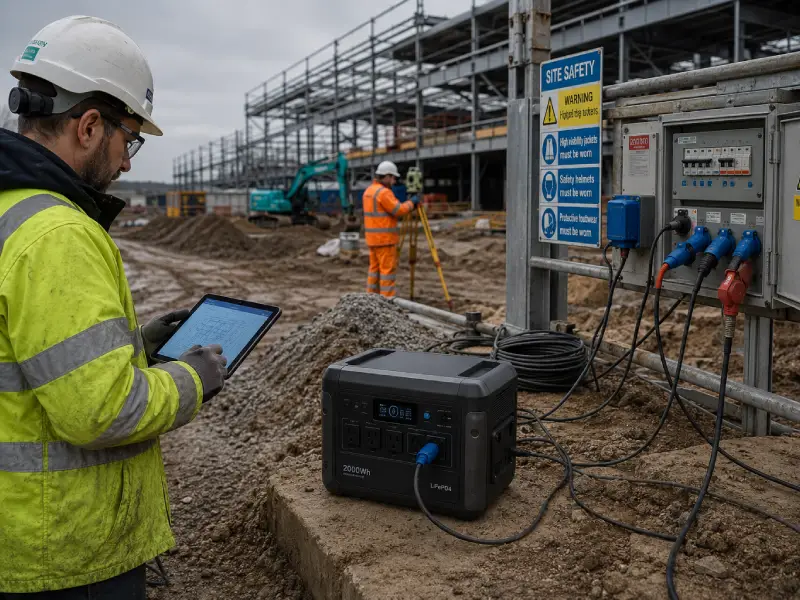
Construction projects frequently encounter situations where electrical infrastructure is not yet available, incomplete, or temporarily inaccessible.
Portable power stations can support:
- Inspection equipment
- Laser measurement tools
- Surveying instruments
- Communication systems
- Temporary lighting
- Site monitoring equipment
- Mobile offices
Unlike fuel-powered generators, battery-based systems produce no direct emissions and operate quietly, making them particularly useful in urban environments, indoor construction projects, and noise-sensitive locations.
As sustainability requirements become increasingly important in construction projects, clean energy solutions are gaining broader acceptance among contractors and project owners.
Emergency Response and Disaster Recovery
Natural disasters often create situations where rapid deployment of temporary power becomes essential.
Portable power stations can support critical operations such as:
- Emergency communications
- Medical support equipment
- Command centers
- Temporary shelters
- Mobile lighting systems
- Field coordination facilities
Because they can be transported quickly and activated immediately, portable power stations provide an effective solution during the early stages of disaster response when infrastructure restoration efforts are still underway.
Commercial Continuity and Small Business Backup
For many businesses, even a brief outage can result in operational disruption, revenue loss, and customer dissatisfaction.
Portable power stations can help maintain critical functions such as:
- Internet connectivity
- Point-of-sale systems
- Security infrastructure
- Access control systems
- Customer service operations
- Remote work environments
The ability to maintain essential operations during temporary outages can improve business resilience while reducing the financial impact of unexpected interruptions.
Portable Solar Power Applications
One of the most significant advantages of modern portable power stations is their compatibility with solar charging systems.
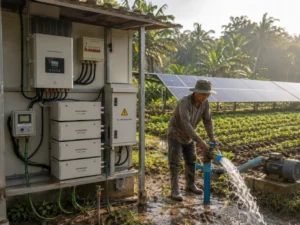
When combined with photovoltaic panels, portable energy storage solutions can support:
- Remote monitoring stations
- Agricultural operations
- Environmental monitoring projects
- Outdoor research activities
- Mobile field operations
- Temporary infrastructure deployments
This combination creates a highly flexible portable solar backup system capable of operating independently from utility power for extended periods.
Expert Tip:
The most successful portable power deployments are typically designed around specific operational requirements rather than battery capacity alone. Understanding actual load profiles, runtime expectations, charging opportunities, and environmental conditions leads to more reliable project outcomes.
Portable Power Station vs. Home Energy Storage System: Which Solution Fits Different Needs?
Procurement teams and project developers often compare portable power stations with residential or commercial energy storage systems (ESS). While both technologies store electrical energy, they serve different operational objectives.
Understanding these differences helps buyers identify the most suitable solution for specific applications.
Portable Power Stations
Portable power stations are designed for flexibility and mobility.
Key advantages include:
- Rapid deployment
- No permanent installation requirements
- Easy transportation
- Lower initial investment
- Flexible application scenarios
They are particularly effective for temporary backup power, mobile operations, remote work environments, and distributed infrastructure support.
Residential and Commercial ESS
Permanent energy storage systems are typically designed for:
- Whole-home backup
- Commercial energy management
- Solar self-consumption optimization
- Demand charge reduction
- Long-duration backup requirements
These systems generally require professional installation and integration with electrical infrastructure.
Hybrid Deployment Strategies
Many organizations now utilize a combination of both technologies.
For example:
- Permanent ESS for facility-level backup
- Portable power stations for field operations
- Mobile backup resources for maintenance teams
- Temporary emergency power reserves
This hybrid approach can maximize operational flexibility while improving overall energy resilience.
Future Trends Shaping the Portable Power Backup Industry
The portable energy storage market continues to evolve rapidly as battery technology, power electronics, and renewable energy systems advance.
Several trends are expected to influence product development and purchasing decisions in the coming years.
Expansion of LiFePO4 Technology
LiFePO4 battery chemistry has already become the preferred choice for many portable power applications, and adoption is expected to continue growing.
Advantages such as long cycle life, improved safety, and enhanced durability align well with the requirements of commercial and industrial users.
Future improvements in cell design and manufacturing efficiency may further enhance performance while reducing overall system costs.
Smart Energy Management Features
Portable power stations are increasingly incorporating intelligent energy management capabilities.
Examples include:
- Remote monitoring
- Mobile application integration
- Battery health analytics
- Energy consumption tracking
- Predictive maintenance functions
These features provide greater visibility into system performance and support more informed operational decision-making.
Deeper Solar Integration
As distributed renewable energy adoption accelerates, portable power stations are becoming more closely integrated with solar energy systems.
Higher-efficiency MPPT controllers, improved charging algorithms, and expanded photovoltaic compatibility are helping maximize energy harvest and operational flexibility.
This trend is particularly relevant for remote applications where grid access may be limited or unavailable.
Higher Capacity and Modular Architectures
Manufacturers are increasingly developing scalable designs that allow users to expand storage capacity according to changing operational requirements.
Modular architectures provide several advantages:
- Greater flexibility
- Improved scalability
- Simplified maintenance
- Extended product lifecycles
These developments are expected to broaden the range of commercial applications for portable energy storage systems.
What to Look for in a Long-Term Portable Power Station Manufacturing Partner
For distributors, importers, EPC contractors, and energy solution providers, supplier selection can have a greater impact on business success than individual product specifications.
A reliable manufacturing partner contributes not only products but also technical expertise, supply chain stability, and long-term business support.
Engineering and Product Development Capabilities
Manufacturers with strong engineering resources are generally better positioned to:
- Develop customized solutions
- Support OEM projects
- Provide ODM services
- Optimize battery system performance
- Adapt products to changing market requirements
This capability becomes particularly valuable when entering new markets or serving specialized customer segments.
Quality Management Systems
Quality should be evaluated throughout the manufacturing process rather than solely through final product inspection.
Key indicators include:
- Incoming material inspection procedures
- Battery cell testing standards
- Production process controls
- Aging and reliability testing
- Final inspection protocols
Comprehensive quality management helps reduce field failures and improve customer satisfaction.
Supply Chain Reliability
Recent global supply chain disruptions have highlighted the importance of manufacturing resilience.
Buyers should assess:
- Supplier diversification
- Battery cell sourcing strategies
- Inventory management capabilities
- Production scalability
- Lead-time consistency
Reliable supply chains help distributors maintain inventory availability and meet customer delivery expectations.
Technical and After-Sales Support
Professional support capabilities can significantly influence long-term partnership success.
Buyers should evaluate:
- Response times
- Technical documentation quality
- Warranty support procedures
- Training resources
- Engineering consultation availability
Strong support infrastructure often translates into lower operational risk and higher customer satisfaction.
How SolarDyna Supports Professional Energy Storage Partners
For organizations seeking a long-term portable power station supplier, evaluating manufacturing expertise, engineering capabilities, and supply chain stability is essential.
SolarDyna focuses on delivering energy storage solutions designed to meet the needs of distributors, EPC contractors, system integrators, and professional energy solution providers.
By emphasizing product quality, technical support, manufacturing consistency, and customer-focused development, SolarDyna aims to help partners build sustainable growth in increasingly competitive energy markets.
Whether the objective is expanding a product portfolio, supporting specialized projects, or developing customized energy storage solutions, selecting an engineering-focused manufacturing partner can provide meaningful long-term advantages.
Ready to Evaluate Portable Power Backup Solutions?
If you are sourcing portable power stations for distribution, project deployment, OEM development, or energy storage integration, consider requesting:
- Product catalogs
- Technical specifications
- Certification packages
- Factory qualification documents
- OEM/ODM consultation
- Sample evaluation units
A structured supplier evaluation process can significantly reduce procurement risks while improving long-term project success.
Looking for a Reliable Portable Power Backup Partner?
Choosing the right portable power backup solution involves more than battery capacity. Long-term performance depends on battery quality, safety certifications, engineering design, and supply chain reliability. SolarDyna provides LiFePO4 portable power stations, OEM/ODM development, and commercial backup power solutions designed for distributors, EPC contractors, system integrators, and energy solution providers.
✔ OEM & ODM customization for distributors and private-label projects
✔ Certification support including UN38.3, CE, FCC and transportation documentation
✔ Engineering consultation for telecom, construction, emergency response and off-grid deployments
✔ Stable manufacturing capacity and long-term supply chain support
Get product catalogs, certification packages, OEM options, and project-specific recommendations from our engineering team.
Frequently Asked Questions About Portable Power Backup
Q1. How long can a portable power station run during a power outage?
Runtime depends on battery capacity, inverter efficiency, connected loads, and operating conditions. Buyers should calculate runtime based on actual power consumption rather than battery capacity alone.
Q2. Are LiFePO4 portable power stations safer than conventional lithium-ion systems?
LiFePO4 chemistry is widely recognized for its strong thermal stability, long cycle life, and enhanced safety characteristics, making it a preferred option for many backup power applications.
Q3. Can portable power stations be charged using solar panels?
Most modern systems support solar charging through integrated MPPT charge controllers, enabling renewable energy integration and extended off-grid operation.
Q4. What certifications should buyers verify before importing portable power stations?
Certification requirements vary by market, but buyers commonly review UN38.3 transportation compliance, CE documentation, FCC compliance, and other region-specific requirements.
Q5. How many charge cycles should commercial buyers expect?
Many LiFePO4-based systems are designed to achieve thousands of charge-discharge cycles under appropriate operating conditions, supporting long service life and reduced replacement costs.
Q6. Can portable power stations completely replace generators?
The answer depends on application requirements. Portable power stations offer advantages such as silent operation, low maintenance, and solar compatibility, while generators may remain advantageous for extremely high-load or extended-duration applications.
Q7. What factors matter most when choosing a supplier?
Beyond pricing, buyers should evaluate engineering capabilities, quality control systems, certification support, supply chain stability, warranty programs, and technical service capabilities.
Q8. Why is portable power backup becoming increasingly important?
Growing grid instability, increasing weather-related disruptions, and the need for business continuity are driving demand for reliable portable power backup solutions across residential, commercial, and industrial markets.
Conclusion
The demand for portable power backup solutions is expected to continue growing as organizations place greater emphasis on energy resilience, operational continuity, and flexible power deployment.
Modern portable power stations have evolved far beyond their original consumer-oriented applications. Today, they serve as valuable energy assets supporting telecommunications infrastructure, construction projects, emergency response operations, commercial facilities, remote work environments, and renewable energy deployments.
For procurement teams, distributors, EPC contractors, and system integrators, successful supplier selection requires careful evaluation of battery technology, engineering design, safety certifications, manufacturing quality, and long-term support capabilities.
While product specifications remain important, sustainable success often depends on partnering with a manufacturer capable of providing reliable products, strong technical expertise, responsive support, and stable supply chain performance.
As the portable energy storage industry continues to mature, organizations that prioritize quality, engineering excellence, and long-term value will be better positioned to meet evolving market demands and deliver reliable energy solutions to their customers.