For EPC contractors, solar distributors, and commercial energy integrators, sourcing from an experienced OEM ODM battery manufacturer in China is no longer simply a procurement decision — it is a long-term strategic investment in supply chain stability, project profitability, and market competitiveness. As global demand for photovoltaic systems, LiFePO4 batteries, and commercial energy storage systems continues to accelerate, China remains the world’s largest manufacturing hub for solar products and battery energy storage solutions.
However, importing solar products from China successfully requires much more than finding the lowest quotation online. Professional buyers today must evaluate engineering capability, manufacturing consistency, certification compliance, battery safety, logistics expertise, and after-sales technical support before selecting a supplier. A low-cost supplier with poor quality control can easily create project delays, warranty claims, communication failures, and expensive operational risks.
This comprehensive guide explains how EPC contractors, procurement managers, and distributors can safely import solar products from China step by step. You will learn how to identify a reliable OEM ODM battery manufacturer, audit factories professionally, manage certification risks, negotiate procurement agreements, and establish long-term partnerships with engineering-focused suppliers.
Whether you are sourcing commercial ESS systems, LiFePO4 battery packs, hybrid inverters, or complete photovoltaic solutions, this article will help you reduce procurement risks while improving project reliability and long-term ROI.
What You Will Learn in This Guide
- How to verify a real OEM/ODM battery factory in China
- Key technical and certification requirements for ESS procurement
- How professional EPC buyers audit battery suppliers
- How to avoid low-quality battery cells and fake factories
- Important shipping and customs considerations for lithium batteries
- How to build long-term supply chain partnerships with Chinese manufacturers
Why Global EPC Contractors Are Still Importing Solar Products from China in 2026
Despite increasing global competition in renewable energy manufacturing, China continues to dominate the solar and energy storage supply chain. From photovoltaic modules and hybrid inverters to LiFePO4 battery systems and commercial ESS containers, China’s manufacturing ecosystem remains unmatched in production scale, component integration, automation capability, and cost efficiency.
For international EPC contractors and distributors, working with a qualified OEM ODM battery manufacturer offers significant advantages in terms of customization flexibility, engineering support, and procurement scalability.
China Controls the World’s Most Mature Solar Supply Chain
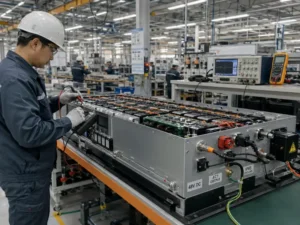
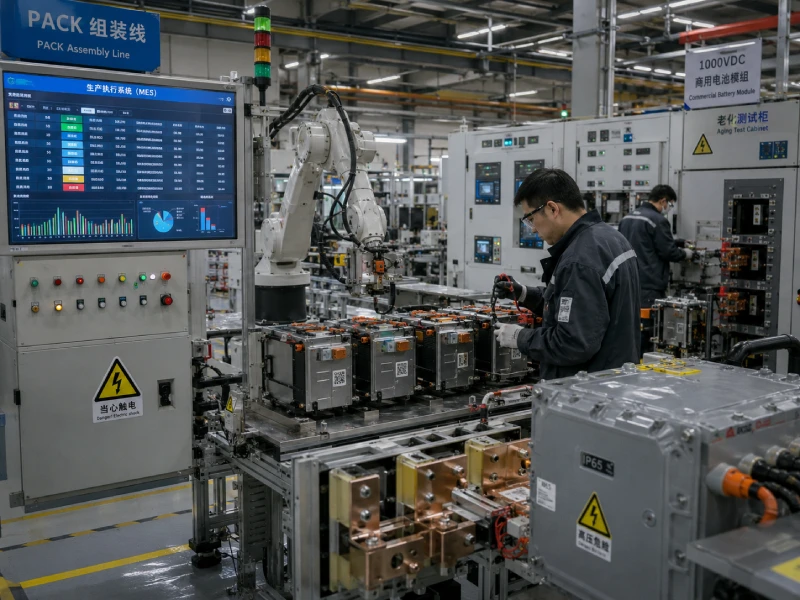
China’s renewable energy manufacturing ecosystem has evolved far beyond low-cost mass production. Today, leading Chinese ESS manufacturers operate highly automated facilities equipped with advanced MES traceability systems, robotic PACK assembly lines, laser welding systems, and sophisticated battery aging laboratories.
More importantly, China has developed a deeply integrated upstream and downstream industrial chain that allows manufacturers to optimize:
- Battery cell sourcing
- Battery Management Systems (BMS)
- Energy Management Systems (EMS)
- Power Conversion Systems (PCS)
- Thermal management systems
- Grid integration technologies
- Certification processes
This integrated manufacturing environment enables shorter lead times, lower production costs, and faster engineering customization compared to many emerging manufacturing regions.
For EPC companies managing utility-scale or commercial energy storage projects, these supply chain advantages directly influence project timelines, operational reliability, and long-term profitability.
Expert Tip
Many overseas buyers assume all Chinese battery suppliers offer similar products. In reality, there is a massive difference between a true engineering-focused OEM ODM battery manufacturer and a simple trading company. Professional ESS manufacturers typically invest heavily in thermal simulation, BMS software optimization, automated production systems, and certification engineering.
This engineering depth directly affects battery lifespan, system safety, communication compatibility, and long-term field performance.
Why Experienced Buyers No Longer Focus Only on Price
In the early stages of the global solar industry, many buyers prioritized procurement cost above all else. However, as commercial ESS deployments increase worldwide, experienced procurement managers now understand that the lowest initial quotation often creates the highest long-term lifecycle cost.
Battery degradation, thermal instability, communication failures, and weak quality control can severely impact:
- Project ROI
- System uptime
- Warranty expenses
- Maintenance costs
- Customer satisfaction
- Grid compliance
For example, low-grade battery cells with inconsistent internal resistance may initially pass basic testing but can create severe balancing issues after repeated cycling. Similarly, poorly designed thermal management systems can accelerate capacity degradation in high-temperature environments.
As a result, professional EPC buyers increasingly evaluate suppliers based on:
- Engineering capability
- Factory automation level
- Certification experience
- Project references
- Quality management systems
- Technical documentation support
- After-sales response capability
This shift is particularly important for commercial and industrial ESS projects where downtime or battery failure can result in substantial financial losses.
What Professional EPC Buyers Actually Evaluate Before Choosing a Supplier
One of the biggest mistakes inexperienced importers make is evaluating suppliers primarily based on pricing and catalog specifications. Professional EPC contractors and distributors take a completely different approach.
Before signing any procurement agreement, experienced buyers carefully assess the supplier’s manufacturing capability, engineering depth, project experience, and long-term operational stability.
This evaluation process becomes even more critical when sourcing from an OEM ODM battery manufacturer responsible for customized ESS solutions or private-label battery systems.
Manufacturing Capability
Modern ESS manufacturing requires far more than manual battery assembly. Leading manufacturers invest heavily in automation to improve consistency, traceability, and production efficiency.
Professional buyers should evaluate whether the supplier operates:
- Automated cell sorting systems
- Laser welding equipment
- Automated PACK assembly lines
- Intelligent aging test systems
- MES traceability platforms
- Automated BMS testing stations
Automation reduces human error and significantly improves product consistency — especially important for high-capacity commercial ESS systems where thousands of cells operate simultaneously.
A factory’s production capacity should also align with your long-term procurement strategy. Some smaller suppliers may provide attractive pricing initially but lack the operational scale required for large repeat orders.
Engineering Capability
For commercial ESS projects, engineering capability is often more important than manufacturing scale alone.
A true engineering-oriented supplier should possess expertise in:
- Battery system architecture
- Thermal management design
- BMS communication protocols
- PCS integration
- EMS optimization
- Grid compliance engineering
- Containerized ESS design
Professional EPC buyers often request technical documentation such as:
- Single-line diagrams
- BMS communication protocols
- Battery thermal simulation reports
- PCS compatibility lists
- Grid certification documents
- Protection logic diagrams
Suppliers unable to provide detailed engineering documentation may struggle to support large-scale deployments or customized projects.
This is one reason why leading EPC contractors increasingly prioritize engineering-focused suppliers over low-cost trading companies.
Expert Tip
Many ESS procurement failures are caused not by defective hardware, but by system integration mismatches.
Common issues include:
- BMS communication incompatibility
- PCS protocol mismatch
- Incorrect thermal management sizing
- Improper ventilation design
- Weak EMS integration logic
Professional suppliers with real engineering teams can help identify these risks before production begins.
Supply Chain Stability
Long-term supply chain stability has become one of the most important considerations for global EPC companies. Delayed deliveries, unstable component sourcing, and fluctuating battery cell quality can severely disrupt project execution schedules.
Professional buyers should carefully evaluate:
- Battery cell sourcing strategy
- Relationships with Tier-1 cell suppliers
- Inventory management systems
- Lead time consistency
- Warranty reserve capability
- Export experience
Reliable suppliers typically maintain strategic partnerships with major lithium cell manufacturers and implement strict incoming material inspection standards to maintain product consistency.
In contrast, unstable suppliers may switch cell brands frequently based on short-term pricing fluctuations, creating unpredictable performance variations between production batches.
Project Delivery Experience
One of the strongest indicators of supplier reliability is proven project delivery experience.
Experienced ESS manufacturers usually possess:
- Commercial ESS deployment references
- Utility-scale project experience
- Regional certification expertise
- Grid compliance knowledge
- International logistics experience
Professional EPC buyers often request case studies demonstrating:
- Installed system capacity
- Operating environment
- Project application scenarios
- Grid connection type
- Thermal management strategy
- System operating performance
Case studies help buyers evaluate whether the supplier truly understands real-world deployment challenges rather than simply assembling generic battery products.
How to Audit a Real OEM ODM Battery Manufacturer
Factory auditing is one of the most important steps when importing solar products from China. Unfortunately, many overseas buyers skip this process entirely or rely only on online marketing materials.
A professional factory audit helps buyers verify whether the supplier truly possesses the engineering, manufacturing, and quality management capabilities required for long-term cooperation.
For large-scale ESS projects, auditing an OEM ODM battery manufacturer should be considered mandatory rather than optional.
Factory vs Trading Company — Why It Matters
Many companies promoting themselves as battery manufacturers are actually trading companies or small assembly workshops with limited engineering capability.
Working with intermediaries often creates:
- Longer communication chains
- Higher pricing
- Reduced quality transparency
- Limited technical support
- Poor customization capability
Real manufacturers typically provide:
- Factory videos
- Production photos
- Detailed technical documentation
- Engineering support teams
- Live online factory tours
- Independent testing capabilities
Professional buyers should always verify factory ownership before finalizing procurement agreements.
Comparison Table: OEM vs ODM vs Trading Company
| Category | OEM Manufacturer | ODM Manufacturer | Trading Company |
|---|---|---|---|
| Brand Customization | High | Medium | Low |
| Engineering Support | Strong | Moderate | Weak |
| Production Transparency | High | Medium | Low |
| Quality Control | Strong | Moderate | Unstable |
Factory Audit Checklist for Professional Solar and ESS Buyers
A professional factory audit should go far beyond checking whether a supplier owns production equipment. Experienced EPC contractors understand that the real purpose of a factory audit is to evaluate whether the supplier can consistently deliver safe, compliant, and high-performance products under long-term commercial conditions.
When importing solar products from China, especially commercial ESS systems and LiFePO4 battery solutions, buyers should approach supplier verification from four critical dimensions:
- Production system capability
- Quality management processes
- Engineering validation capability
- Compliance and certification expertise
The most reliable OEM ODM battery manufacturer partners are usually transparent about their production workflow, testing procedures, and engineering standards. Suppliers unwilling to provide technical details or live factory verification should be treated cautiously.
Production System Evaluation
The first step in a factory audit is evaluating the supplier’s actual production infrastructure.
Professional battery manufacturing requires advanced automation systems to ensure product consistency, reduce assembly errors, and maintain long-term reliability across large production volumes.
During factory audits, EPC buyers should verify whether the supplier operates:
- Automated cell sorting systems
- Laser welding machines
- Automated PACK assembly lines
- High-voltage insulation testing stations
- Battery aging test rooms
- Automated BMS programming systems
- MES production traceability systems
Battery cell sorting is particularly important because inconsistent cell voltage and internal resistance can significantly reduce system stability and battery lifespan.
Professional manufacturers usually grade cells before assembly to improve cycle consistency and thermal stability.
In contrast, low-cost suppliers often skip advanced sorting processes entirely to reduce production costs.
Quality Management System Verification
Quality management systems are one of the strongest indicators of whether a supplier can support long-term commercial ESS deployments.
Professional buyers should evaluate whether the manufacturer follows structured QC procedures throughout the entire production process.
This typically includes:
- Incoming material inspection (IQC)
- In-process quality control (IPQC)
- Outgoing quality inspection (OQC)
- Final aging and performance testing
- Shipment verification
Incoming material inspection is particularly important because battery performance depends heavily on upstream component quality.
Reliable suppliers carefully inspect:
- Battery cells
- BMS boards
- Busbars
- Connectors
- Thermal interface materials
- Wiring harnesses
Professional factories also implement traceability systems that record production data for every battery module and PACK. This allows rapid troubleshooting if operational issues occur in the future.
For commercial ESS projects with multi-year warranties, traceability is essential for risk management and after-sales support.
Expert Tip
Many low-cost battery suppliers advertise long warranty periods but lack proper production traceability systems.
Without serial-level production tracking, identifying defective batches becomes extremely difficult after deployment. This creates major warranty risks for EPC contractors and distributors.
Professional ESS manufacturers typically maintain complete traceability records covering:
- Cell batch numbers
- BMS firmware versions
- Production timestamps
- Testing records
- Operator logs
Engineering Validation and Reliability Testing
For commercial and industrial ESS systems, engineering validation is often more important than basic production capability.
Battery systems operate under highly variable environmental conditions, including:
- High temperatures
- Humidity fluctuations
- Frequent cycling
- Grid instability
- High-load discharge conditions
Professional buyers should verify whether suppliers conduct advanced reliability testing such as:
- Cycle life testing
- High-temperature testing
- Low-temperature testing
- Vibration testing
- Drop testing
- Salt spray testing
- Short-circuit testing
- Thermal runaway testing
These tests help validate whether the battery system can maintain long-term operational stability under real-world conditions.
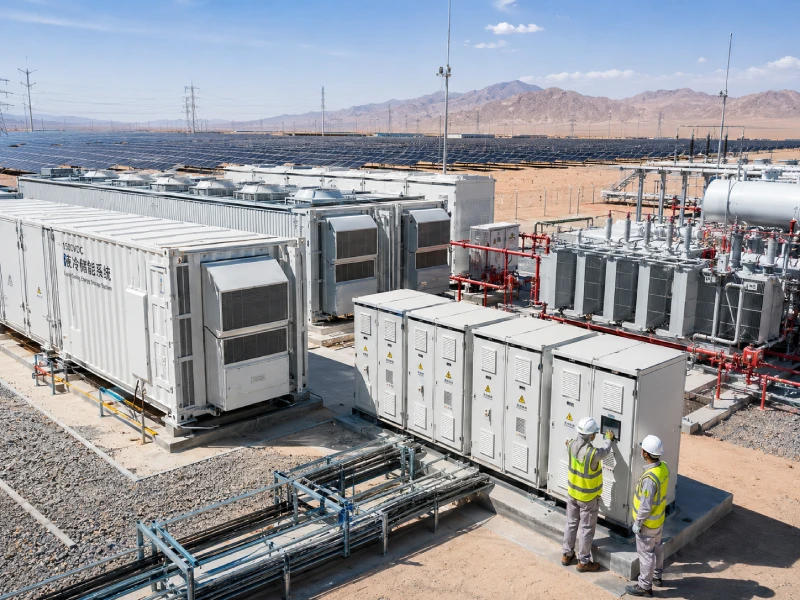
For outdoor commercial ESS systems, thermal management design is particularly critical. Poor ventilation or insufficient cooling can accelerate battery degradation and create major safety risks.
Leading ESS manufacturers often use thermal simulation software during product development to optimize airflow and temperature distribution inside battery cabinets and containers.
Compliance and Certification Capability
Certification compliance is one of the most underestimated aspects of international ESS procurement.
Different regions maintain different certification requirements for lithium battery systems, photovoltaic products, and commercial ESS deployments.
Professional buyers should verify whether the supplier possesses experience with:
- IEC62619
- UL1973
- UL9540
- UL9540A
- CE certification
- UN38.3 transportation testing
- MSDS documentation
- IEC62133
A reliable OEM ODM battery manufacturer should understand not only certification documentation, but also the engineering logic behind safety compliance.
For example, UL9540A thermal runaway testing requires deep understanding of:
- Cell chemistry behavior
- Thermal propagation
- Ventilation systems
- Fire suppression integration
- Container pressure release design
Suppliers with limited certification experience often struggle when adapting products for North American or European commercial ESS markets.
How to Evaluate Solar Product Quality Before Mass Production
One of the most important risk management strategies in solar and ESS procurement is conducting detailed product validation before mass production begins.
Unfortunately, many inexperienced importers skip this stage entirely and move directly from quotation approval to bulk purchasing.
This creates significant risks because product inconsistencies often remain hidden until systems are deployed in the field.
Professional EPC contractors typically implement a structured sample validation process before signing long-term agreements with an OEM ODM battery manufacturer.
Requesting and Testing Product Samples
Sample evaluation should focus on both hardware quality and engineering integration capability.
For battery systems, buyers should validate:
- Battery capacity consistency
- Charge/discharge efficiency
- BMS communication stability
- Thermal behavior
- Protection logic accuracy
- Voltage balancing performance
Commercial ESS buyers should also test compatibility with:
- PCS systems
- Hybrid inverters
- EMS platforms
- Monitoring software
- SCADA systems
Communication protocol mismatches are surprisingly common in international ESS projects and can create major commissioning delays.
Professional suppliers typically provide:
- CAN communication documentation
- RS485 protocol descriptions
- BMS parameter settings
- Firmware upgrade support
- Remote technical assistance
Evaluating Battery Cell Quality
Battery cell quality directly determines system lifespan, stability, and long-term performance.
However, identifying low-grade cells can be difficult for inexperienced buyers because many suppliers use misleading marketing terminology.
Professional buyers should verify:
- Cell manufacturer brand
- Production date consistency
- Internal resistance consistency
- Cell grading standards
- Cycle test data
- Batch traceability records
Tier-1 cell suppliers generally offer:
- Better cycle stability
- Lower degradation rates
- Improved thermal consistency
- Higher safety standards
By contrast, recycled or mixed-batch cells may initially appear functional but often degrade rapidly after repeated cycling.
This becomes especially problematic in commercial ESS applications where battery replacement costs are extremely high.
Expert Tip
One of the most common hidden procurement risks involves suppliers switching battery cell brands after sample approval.
Professional EPC buyers usually include strict procurement agreements specifying:
- Approved cell manufacturer
- Cell model number
- Production date range
- Performance tolerance standards
- Batch consistency requirements
This helps prevent unauthorized material substitutions during mass production.
Evaluating BMS and System Integration Capability
The Battery Management System (BMS) functions as the operational intelligence layer of an ESS solution.
A high-quality battery PACK with weak BMS logic can still experience:
- Overcharging risks
- Cell imbalance
- Communication failures
- Inaccurate SOC estimation
- Poor thermal protection
Professional buyers should evaluate:
- BMS protection logic
- Firmware upgrade capability
- Remote monitoring functionality
- Alarm management systems
- Communication protocol support
- Integration flexibility
Leading suppliers usually support multiple communication standards to simplify integration with global inverter brands and EMS platforms.
For large commercial projects, remote diagnostics capability is increasingly important because it allows faster troubleshooting and reduces operational downtime.
Understanding International Certifications and Compliance Requirements
Importing solar products from China involves much more than manufacturing and logistics. Certification compliance plays a critical role in project approval, customs clearance, insurance eligibility, and long-term operational safety.
Different countries maintain different regulatory standards for:
- Lithium batteries
- Commercial ESS systems
- Hybrid inverters
- PV modules
- Grid connection equipment
Professional buyers should verify certification requirements before production begins rather than after shipment.
Important ESS and Battery Certifications
Commercial ESS projects often require multiple overlapping certifications depending on project size and installation region.
Common certifications include:
| Certification | Purpose |
|---|---|
| IEC62619 | Industrial lithium battery safety |
| UL1973 | Battery energy storage safety |
| UL9540 | ESS system certification |
| UL9540A | Thermal runaway evaluation |
| UN38.3 | Lithium battery transportation |
| CE | European market compliance |
Experienced suppliers usually maintain dedicated compliance teams to manage certification updates and documentation requirements for different international markets.
Shipping, Logistics, and Customs Strategies for Importing Solar Products from China
After supplier verification and product validation are completed, logistics management becomes the next critical stage in the procurement process.
For EPC contractors and commercial ESS buyers, international transportation is not simply about moving products from one country to another. Shipping delays, customs clearance issues, improper battery handling, and documentation errors can severely disrupt project timelines and increase operational costs.
This is particularly important when importing lithium batteries and commercial energy storage systems from an experienced OEM ODM battery manufacturer, because ESS products are classified as sensitive cargo in many international shipping regulations.
Professional procurement managers typically treat logistics planning as an extension of project risk management rather than a simple transportation task.
Sea Freight vs Air Freight for ESS Products
Choosing the correct transportation method depends on product type, project urgency, shipment volume, and regional regulations.
For commercial ESS systems and LiFePO4 batteries, sea freight remains the most common transportation method because of:
- Lower transportation cost
- Higher cargo capacity
- Reduced battery transportation restrictions
- Better suitability for large-volume shipments
Air freight may be appropriate for:
- Small sample orders
- Urgent replacement components
- High-priority demonstration projects
- Prototype validation shipments
However, lithium battery air transportation is heavily regulated and usually requires:
- UN38.3 certification
- MSDS documentation
- Special packaging compliance
- Dangerous goods declarations
For large commercial ESS projects, containerized sea freight typically offers the most practical balance between cost efficiency and operational safety.
Comparison Table: Sea Freight vs Air Freight
| Factor | Sea Freight | Air Freight |
|---|---|---|
| Cost | Lower | Higher |
| Transit Time | Longer | Faster |
| ESS Suitability | Excellent | Limited |
| Dangerous Goods Restrictions | Moderate | Strict |
| Large Volume Shipping | Ideal | Limited |
Choosing Freight Forwarders Experienced in ESS Logistics
Many import delays occur because buyers choose freight forwarders without experience handling lithium battery systems or commercial ESS equipment.
Professional ESS logistics providers understand:
- Dangerous goods regulations
- Battery packaging requirements
- Customs documentation standards
- Container loading safety
- International shipping compliance
For large battery systems, incorrect packaging or incomplete documentation can result in:
- Customs delays
- Port inspections
- Cargo rejection
- Additional storage charges
- Transportation penalties
Experienced EPC procurement teams usually coordinate logistics planning early in the production process rather than waiting until manufacturing is complete.
This allows better synchronization between:
- Production scheduling
- Container booking
- Port delivery timing
- Project installation milestones
Expert Tip
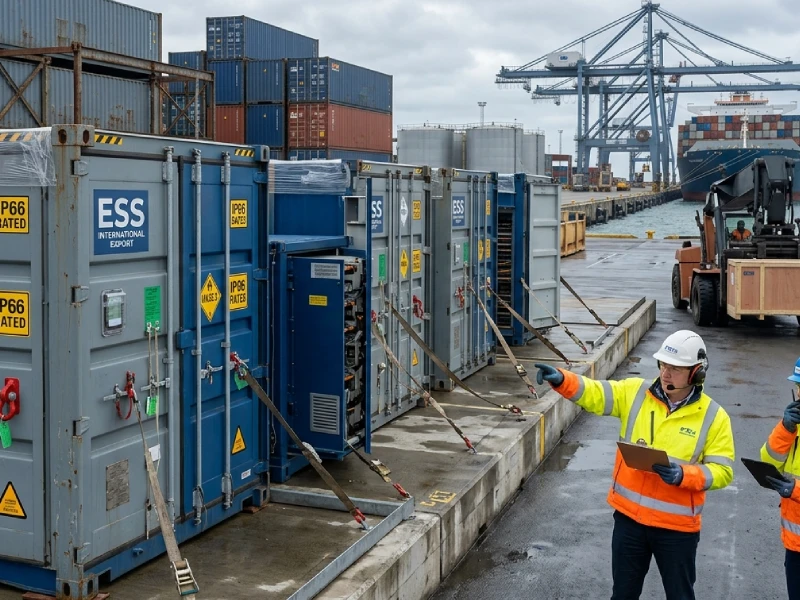
Commercial ESS systems are highly sensitive to improper transportation handling.
Professional suppliers typically implement:
- Shock-resistant packaging
- Moisture protection systems
- Battery isolation protection
- Container fixation structures
- Transportation monitoring procedures
Poor packaging quality can create hidden internal battery damage that may not appear until months after installation.
Important Customs Documentation for Solar Product Imports
Proper documentation management is essential for smooth customs clearance.
When importing solar products from China, buyers typically require:
- Commercial invoice
- Packing list
- Bill of lading
- Certificate of origin
- UN38.3 reports
- MSDS documents
- Product certification files
- Dangerous goods declarations
Professional suppliers usually prepare documentation packages before shipment to reduce customs risks and accelerate import procedures.
EPC contractors managing utility-scale projects should also verify whether local regulations require additional:
- Grid compliance approvals
- Energy authority certifications
- Electrical safety permits
- Environmental compliance documentation
How to Structure Safer Procurement Agreements with Chinese Suppliers
One of the most overlooked aspects of importing solar products from China is contract risk management.
Even when working with a qualified OEM ODM battery manufacturer, poorly structured procurement agreements can expose buyers to:
- Delivery delays
- Quality inconsistencies
- Unauthorized material substitutions
- Warranty disputes
- Communication misunderstandings
Professional EPC buyers usually establish highly detailed procurement agreements covering technical, operational, and quality-related requirements.
Define Detailed Technical Specifications
A vague purchase agreement creates significant procurement risk.
Professional contracts should clearly define:
- Battery cell brand and model
- Capacity tolerance range
- Cycle life requirements
- BMS communication protocols
- Thermal management configuration
- Certification standards
- Mechanical dimensions
- Protection logic requirements
Detailed technical documentation helps prevent misunderstandings between buyers and suppliers during production.
This is especially important for customized commercial ESS systems where engineering integration requirements are often highly project-specific.
Implement Milestone-Based Payment Structures
Experienced procurement managers rarely pay large balances before production verification.
Instead, they commonly structure payments around production milestones such as:
- Initial deposit
- Sample approval
- Mid-production inspection
- Final FAT testing
- Pre-shipment inspection
This approach reduces procurement risk while encouraging production transparency.
For large ESS projects, third-party inspections are often conducted before shipment approval.
Inspection reports may include:
- Battery performance testing
- Visual inspection results
- Communication validation
- Safety function testing
- Packaging verification
Top 7 Risks When Importing Solar Products from China
Although China offers significant manufacturing advantages, international buyers still face multiple procurement risks if supplier verification and engineering evaluation are handled improperly.
Professional EPC contractors usually implement strict supplier qualification procedures to reduce operational uncertainty.
1. Fake Factory Claims
Many online suppliers claim to be manufacturers while operating as trading companies or small assembly workshops.
This often results in:
- Poor quality transparency
- Limited engineering support
- Higher pricing
- Unstable production schedules
Professional buyers should always verify factory ownership and production capability through audits or live factory inspections.
2. Low-Grade Battery Cells
Low-quality or recycled cells remain one of the largest hidden risks in ESS procurement.
Poor cell quality can create:
- Rapid capacity degradation
- Thermal instability
- Voltage imbalance
- Reduced cycle lifespan
Reliable suppliers usually maintain long-term partnerships with Tier-1 cell manufacturers and implement strict incoming material inspection procedures.
3. Weak Thermal Management Design
Thermal management directly affects ESS reliability and safety.
Poor ventilation design or insufficient cooling can accelerate:
- Battery degradation
- System imbalance
- Thermal runaway risks
- Component failure rates
Professional suppliers typically conduct thermal simulation analysis during product development.
4. Certification Inconsistencies
Some suppliers provide incomplete or outdated certification documents.
Professional buyers should verify:
- Certification validity
- Testing laboratory authenticity
- Product model consistency
- Regional compliance applicability
Failure to verify certifications can create major customs and project approval delays.
5. Communication Protocol Mismatches
Communication incompatibility between BMS, PCS, EMS, and inverter systems is a surprisingly common issue in international ESS projects.
Professional suppliers should support:
- CAN communication
- RS485 communication
- Protocol customization
- Remote debugging support
6. Delayed Production and Delivery
Poor production planning or unstable component sourcing can severely affect project schedules.
Professional buyers usually evaluate:
- Factory production capacity
- Inventory systems
- Supply chain stability
- Historical delivery performance
7. Weak After-Sales Technical Support
Commercial ESS systems require long-term technical support throughout their operational lifecycle.
Professional suppliers should provide:
- Remote diagnostics
- Firmware updates
- Spare parts support
- Technical troubleshooting
- Commissioning assistance
Suppliers lacking engineering service capability often struggle to support international EPC deployments effectively.
Why Engineering-Focused Buyers Choose Solardyna
As the global ESS industry becomes increasingly competitive, professional buyers are shifting away from purely price-driven procurement strategies.
Today’s EPC contractors and distributors increasingly prefer suppliers capable of acting as long-term engineering partners rather than simple hardware vendors.
Solardyna positions itself as an engineering-oriented renewable energy partner focused on:
- Commercial ESS solutions
- LiFePO4 battery systems
- OEM/ODM battery manufacturing
- Integrated energy storage engineering
- Long-term supply chain reliability
Unlike trading-oriented suppliers, engineering-focused manufacturers emphasize:
- System reliability
- Thermal management optimization
- BMS/EMS integration
- Strict quality management
- Project-specific customization
For EPC contractors managing utility-scale or commercial energy storage deployments, this engineering depth becomes increasingly important as projects grow in complexity and operational requirements.
Expert Tip
The best OEM ODM battery manufacturer partners behave like engineering consultants rather than simple exporters.
Professional ESS suppliers help customers optimize:
- System architecture
- Thermal performance
- Certification strategy
- Grid compatibility
- Lifecycle operating cost
This partnership-oriented approach often creates significantly better long-term ROI than choosing the lowest-cost supplier.
Conclusion: Successful Solar Product Importing Requires Engineering-Level Supplier Evaluation
Importing solar products from China successfully requires much more than comparing quotations online.
For EPC contractors, distributors, and commercial energy developers, supplier selection directly affects:
- Project reliability
- Operational safety
- Lifecycle profitability
- Installation efficiency
- Long-term maintenance cost
Professional procurement teams increasingly prioritize:
- Factory transparency
- Engineering capability
- Certification expertise
- Supply chain stability
- Long-term technical support
Working with an experienced OEM ODM battery manufacturer helps reduce procurement risks while improving ESS system performance, project consistency, and long-term operational value.
As commercial energy storage deployments continue expanding worldwide, engineering-oriented supply chain partnerships will become one of the most important competitive advantages for EPC contractors and renewable energy distributors.
Looking for a Reliable OEM ODM Battery Manufacturer for Your ESS Project?
Importing solar products from China requires more than competitive pricing. Solardyna helps EPC contractors, distributors, and commercial energy developers source LiFePO4 batteries, commercial ESS systems, and OEM/ODM energy storage solutions with engineering-grade quality control, certification support, and stable global supply capability.
✔ OEM/ODM battery manufacturing with engineering customization
✔ Factory audit support, FAT testing, and certification assistance
✔ Stable supply chain for utility-scale and commercial deployments
✔ Technical support for BMS, PCS, EMS, and grid integration
Speak directly with our ESS engineering team for factory audit support, technical evaluation, and customized energy storage solutions tailored to your project requirements
Frequently Asked Questions About Importing Solar Products from China
Q1. How can I verify a real OEM ODM battery manufacturer?
Professional buyers should verify factory ownership, production equipment, engineering capability, certification records, and project references. Live factory audits and third-party inspections are strongly recommended for commercial ESS procurement.
Q2. What certifications are required for commercial ESS systems?
Common certifications include IEC62619, UL1973, UL9540, UL9540A, CE, and UN38.3 depending on the target market and project application.
Q3. Why is thermal management important in ESS design?
Thermal management directly affects battery lifespan, operational safety, and system reliability. Poor cooling design can accelerate degradation and increase thermal runaway risks.
Q4. How do EPC contractors reduce procurement risks when importing from China?
Professional EPC teams typically implement supplier audits, technical sample validation, third-party inspections, milestone-based payment structures, and strict procurement specifications.
Q5. What is the biggest mistake buyers make when sourcing batteries from China?
Focusing only on initial purchase price while ignoring engineering quality, thermal design, certification capability, and after-sales support often creates major long-term operational risks.