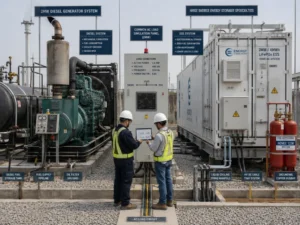
Why the Best Battery for Off Grid Solar Is Now a Strategic Procurement Decision in 2026
Rising electricity costs, unstable grid infrastructure, stricter carbon reduction policies, and increasing pressure to maximize long-term ROI are forcing EPC contractors, distributors, and commercial energy developers to rethink how they design off-grid solar systems in 2026. In today’s highly competitive renewable energy market, choosing the wrong battery technology can lead to premature replacement costs, unstable system performance, unexpected maintenance expenses, and lower project profitability. For procurement managers, technical directors, and energy solution providers searching for the best battery for off grid solar applications, the challenge is no longer simply finding energy storage — it is securing a reliable, scalable, and commercially sustainable battery solution that can support long-term business growth.
As global off-grid solar adoption accelerates across telecom infrastructure, agriculture, industrial facilities, remote communities, and commercial microgrids, battery selection has become one of the most important strategic decisions in modern energy projects. Buyers are no longer evaluating batteries based solely on upfront pricing. Instead, they are comparing lifecycle costs, system compatibility, thermal stability, safety performance, charging efficiency, warranty reliability, and supply chain consistency.
This guide explores how to choose the best battery for off grid solar systems in 2026 from a B2B perspective. It compares major battery technologies, explains critical technical evaluation factors, and reveals why LiFePO4 batteries are rapidly becoming the preferred energy storage solution for long-term off-grid solar investments.
Why Off-Grid Solar Battery Selection Has Become a Strategic Business Decision
Over the past five years, the global off-grid solar market has undergone a major transformation. What was once considered a niche energy segment for rural electrification has evolved into a large-scale commercial opportunity spanning telecommunications, mining, industrial backup systems, agriculture, healthcare infrastructure, island microgrids, and military-grade energy resilience projects.
However, rapid market growth has also created new operational risks for distributors, EPC contractors, and project developers. Many companies still focus too heavily on minimizing initial battery procurement costs while overlooking long-term operational performance. This often results in severe lifecycle cost issues that negatively impact ROI.
For commercial buyers, the consequences of poor battery selection can include:
- Unexpected battery degradation within 2–3 years
- Increased maintenance and replacement costs
- System downtime affecting critical operations
- Reduced inverter compatibility
- Lower solar energy utilization efficiency
- Warranty disputes caused by unstable suppliers
- High transportation and logistics expenses due to oversized systems
In many remote off-grid projects, battery failure does not simply create inconvenience — it can completely interrupt business continuity. Telecom towers may lose communication capability, agricultural irrigation systems may stop operating during critical farming periods, and industrial microgrids may experience severe power instability.
As a result, modern B2B buyers are increasingly prioritizing long-term energy storage reliability instead of short-term cost savings.
What Defines the Best Battery for Off Grid Solar Systems?
There is no universal battery solution suitable for every off-grid application. The ideal energy storage system depends on project scale, environmental conditions, daily load demand, backup duration requirements, and lifecycle expectations.
Nevertheless, the best battery for off grid solar systems typically shares several critical characteristics that directly affect commercial performance and long-term ROI.
1. Long Cycle Life
Battery cycle life represents the number of charge and discharge cycles a battery can complete before its usable capacity significantly declines. In commercial solar applications, cycle life directly impacts replacement frequency and total operational cost.
Traditional lead-acid batteries generally offer between 500 and 1,500 cycles depending on usage conditions. In contrast, modern lithium iron phosphate (LiFePO4) batteries can often exceed 6,000 cycles under proper operating conditions.
This difference dramatically affects total ownership costs over a 10-year project lifecycle.
For example:
- A lead-acid battery bank may require multiple replacements during a decade-long deployment
- A high-quality LiFePO4 battery system may operate throughout the entire project lifecycle with minimal degradation
For EPC contractors and procurement managers, longer cycle life translates into:
- Lower maintenance costs
- Reduced replacement labor
- Improved customer satisfaction
- Higher project profitability
- Better long-term energy reliability
2. High Depth of Discharge (DoD)
Depth of discharge refers to how much of a battery’s stored energy can be safely used before recharging.
Lead-acid batteries typically support only 50% usable capacity if long lifespan is expected. By comparison, LiFePO4 batteries commonly support 80% to 95% depth of discharge without major performance degradation.
This means businesses can extract significantly more usable energy from the same installed battery capacity.
Higher DoD provides several commercial advantages:
- Smaller battery banks for the same usable energy output
- Reduced installation space requirements
- Lower transportation costs
- Improved energy efficiency
- Better ROI per kilowatt-hour stored
In large industrial or telecom applications where installation footprint matters, high-DoD battery systems can substantially improve project economics.
3. Strong Thermal Stability and Safety
Safety has become one of the most important battery evaluation criteria in modern energy storage systems. Thermal runaway incidents involving low-quality lithium batteries have increased global awareness regarding battery safety engineering.
This is especially important for:
- Remote telecom infrastructure
- Industrial backup power systems
- Commercial buildings
- Coastal solar installations
- High-temperature desert environments
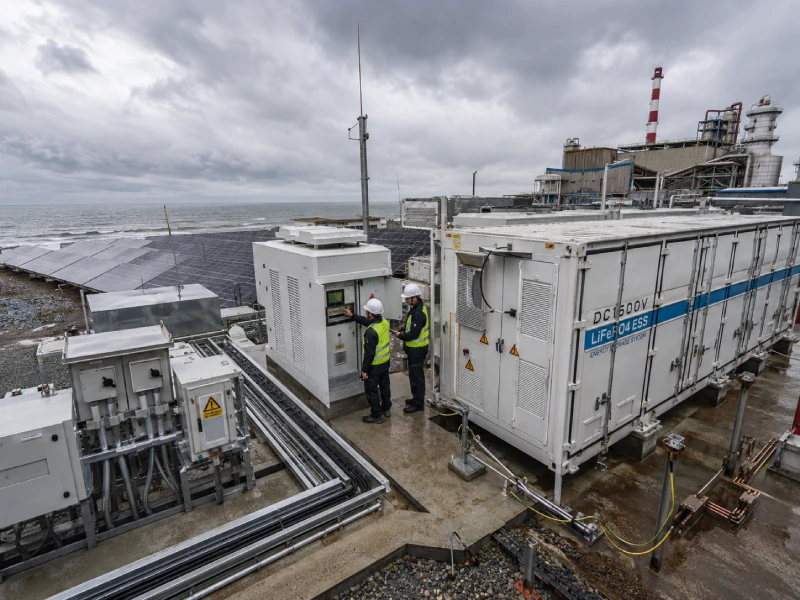
- Containerized battery energy storage systems (BESS)
LiFePO4 battery chemistry is widely recognized for its superior thermal stability compared with other lithium-ion chemistries such as NMC batteries.
Key safety advantages include:
- Lower risk of thermal runaway
- Improved temperature tolerance
- Enhanced structural stability
- Longer operational lifespan under harsh conditions
- Reduced fire risks in commercial installations
Expert Tip:
For remote or high-temperature off-grid projects, EPC contractors should prioritize LiFePO4 battery systems equipped with intelligent Battery Management Systems (BMS), active temperature monitoring, and IP-rated enclosures. Environmental stress is one of the leading causes of premature battery failure in off-grid applications.
4. High Energy Efficiency
Energy efficiency determines how much stored solar energy can actually be used after charging and discharging losses.
Lead-acid batteries generally operate at around 70%–85% efficiency, while LiFePO4 systems often exceed 95% round-trip efficiency.
This efficiency difference becomes extremely important in large commercial systems because energy losses accumulate significantly over time.
Higher efficiency results in:
- Faster battery charging
- Better solar energy utilization
- Reduced PV oversizing requirements
- Improved overall system performance
- Lower operational costs
For commercial microgrids and industrial solar installations, even small efficiency improvements can generate substantial long-term savings.
Comparing the Main Battery Technologies for Off-Grid Solar Systems
Understanding the strengths and limitations of different battery chemistries is essential when evaluating the best energy storage solution for off-grid solar applications.
While multiple technologies remain available on the market, lithium iron phosphate batteries are rapidly becoming the dominant solution for commercial and industrial projects.
Lead-Acid Batteries
Lead-acid batteries have been used in solar energy systems for decades and remain one of the lowest-cost battery options in terms of initial purchase price.
They are commonly used in:
- Small residential backup systems
- Basic rural electrification projects
- Low-budget off-grid installations
However, lead-acid technology presents several significant disadvantages for modern commercial applications.
Advantages of Lead-Acid Batteries
- Lower upfront investment
- Widely available globally
- Mature technology with established supply chains
Major Limitations
- Short operational lifespan
- Frequent maintenance requirements
- Low depth of discharge
- Slow charging efficiency
- Large installation footprint
- Poor high-temperature performance
- Heavy weight increases logistics costs
For modern B2B energy projects focused on long-term ROI, lead-acid batteries are increasingly viewed as a short-term solution rather than a strategic infrastructure investment.
AGM and Gel Batteries
Absorbent Glass Mat (AGM) and Gel batteries are advanced forms of sealed lead-acid batteries designed to improve maintenance requirements and operational reliability.
These batteries are commonly used in:
- Small backup power systems
- Residential off-grid installations
- Mobile energy applications
- Low-load telecom backup systems
Compared with traditional flooded lead-acid batteries, AGM and Gel batteries provide:
- Reduced maintenance
- Improved leak resistance
- Better vibration tolerance
- More flexible installation orientation
However, they still suffer from many of the same core limitations associated with lead-acid chemistry, including:
- Limited cycle life
- Lower usable capacity
- Poor deep discharge tolerance
- Reduced efficiency compared with lithium technologies
As a result, AGM and Gel batteries are gradually losing market share in larger commercial and industrial off-grid solar systems.
Lithium-Ion Batteries (LiFePO4)
LiFePO4 batteries have become one of the fastest-growing energy storage technologies in the global solar industry.
For many distributors, EPC contractors, and technical procurement teams, LiFePO4 now represents the best battery for off grid solar systems due to its superior balance of safety, lifespan, efficiency, and scalability.
Unlike traditional battery technologies, LiFePO4 systems are specifically well-suited for modern commercial solar infrastructure.
Key Advantages of LiFePO4 Batteries
- Extremely long cycle life
- High charging and discharging efficiency
- Fast charging capability
- Excellent thermal stability
- Minimal maintenance requirements
- High energy density
- Compact installation footprint
- Lower long-term operational costs
LiFePO4 batteries are especially suitable for:
- Telecom tower backup systems
- Commercial microgrids
- Industrial facilities
- Remote infrastructure
- Agricultural irrigation projects
- Mining operations
- Island energy systems
- Containerized ESS applications
The combination of safety, long lifespan, and operational efficiency makes LiFePO4 technology one of the strongest long-term investments for commercial solar developers.
Off-Grid Solar Battery Comparison: Lead-Acid vs AGM vs LiFePO4 (2026)
A clear technical comparison of the best battery for off grid solar technologies used in commercial and industrial energy storage systems. This evaluation helps EPC contractors, distributors, and procurement teams make data-driven investment decisions based on lifecycle performance rather than upfront cost.
| Performance Metric | Lead-Acid Battery | AGM / Gel Battery | LiFePO4 Battery |
|---|---|---|---|
| Cycle Life | 500 – 1,500 cycles | 800 – 2,000 cycles | 4,000 – 8,000+ cycles |
| Depth of Discharge (DoD) | ~50% | 50–60% | 80–95% |
| Charging Efficiency | 70–85% | 75–90% | 92–98% |
| Lifecycle Cost (TCO) | High (frequent replacement) | Medium | Lowest over 10–15 years |
| Maintenance Requirement | High (regular maintenance) | Medium | Very Low |
How to Properly Size the Best Battery for Off-Grid Solar Systems
One of the most common mistakes in commercial off-grid solar projects is improper battery sizing. Even the most advanced battery technology can underperform if the energy storage system is incorrectly designed. For EPC contractors, technical directors, and procurement managers, battery sizing is not simply a technical exercise — it directly affects system reliability, lifecycle cost, project profitability, and customer satisfaction.
In many failed off-grid deployments, battery problems are not caused by manufacturing defects but by inaccurate system sizing assumptions, poor load forecasting, or improper integration between the battery, inverter, and photovoltaic array.
To identify the best battery for off grid solar applications, businesses must first understand how energy demand, environmental conditions, and operational requirements influence storage system design.
Understanding Daily Energy Consumption
The foundation of every off-grid battery design begins with calculating daily electricity consumption.
This includes evaluating:
- Total daily energy usage (kWh)
- Peak load demand
- Critical backup loads
- Nighttime energy consumption
- Seasonal load fluctuations
- Future expansion requirements
For commercial and industrial projects, energy usage patterns are often highly dynamic. Agricultural irrigation systems may experience seasonal demand spikes, while telecom infrastructure requires stable 24/7 operation regardless of weather conditions.
Procurement teams should avoid relying solely on average daily consumption because short-duration peak loads can place significant stress on battery systems and inverters.
For example:
- Water pumps may create high startup surge currents
- Industrial compressors may require large temporary power outputs
- Telecom systems demand uninterrupted voltage stability
- Cold storage facilities may cycle frequently during high-temperature periods
Failure to account for these operational realities often results in undersized battery systems, accelerated degradation, and reduced project reliability.
The Importance of Autonomy Days
Battery autonomy refers to how long an off-grid system can continue operating without solar charging input.
This factor becomes critically important in regions with:
- Frequent cloudy weather
- Monsoon seasons
- Snow accumulation
- Dust storms
- Long rainy periods
Commercial projects typically require between one and five days of battery autonomy depending on application criticality.
Examples include:
- Residential systems: 1–2 days
- Agricultural systems: 1–3 days
- Telecom towers: 3–5 days
- Medical or critical infrastructure: 5+ days
Higher autonomy improves operational reliability but also increases battery investment costs. Therefore, optimal system design requires balancing resilience against financial efficiency.
Environmental Conditions and Battery Performance
Environmental factors are among the most underestimated variables in battery system design.
Extreme temperatures can significantly impact:
- Charging efficiency
- Discharge performance
- Battery lifespan
- Internal resistance
- System safety
In high-temperature regions such as the Middle East, Southeast Asia, Africa, and coastal industrial zones, poorly engineered battery systems often experience rapid degradation.
Likewise, cold-weather environments can reduce available battery capacity and charging acceptance rates.
For this reason, modern LiFePO4 systems increasingly incorporate:
- Active thermal management
- Intelligent BMS temperature control
- Liquid cooling systems
- Heating functions for low-temperature operation
- Environmental monitoring sensors
Expert Tip:
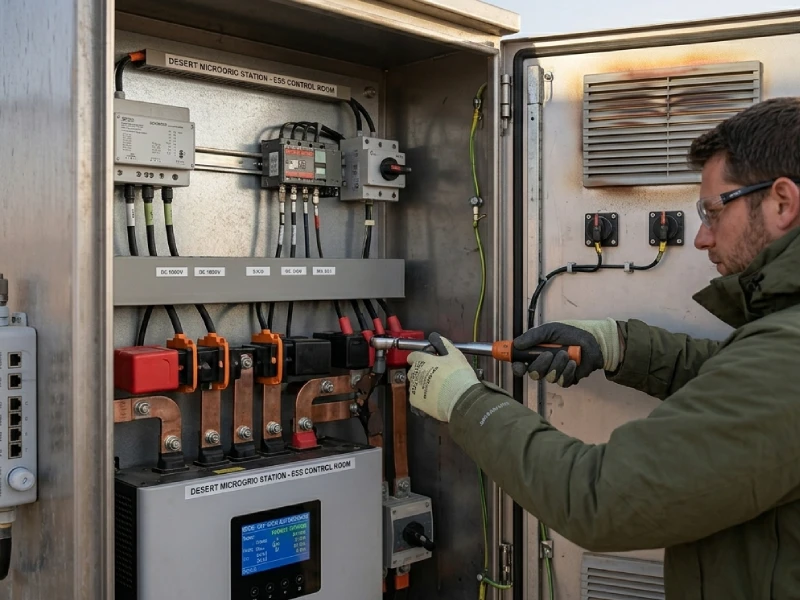
When designing commercial off-grid ESS projects in tropical or coastal environments, EPC contractors should prioritize battery systems with corrosion-resistant enclosures, advanced thermal protection, and intelligent ventilation management. Environmental stress is one of the leading contributors to premature battery aging.
Why Oversizing and Undersizing Both Create Problems
Battery sizing errors can dramatically affect long-term system economics.
Undersized battery systems often lead to:
- Frequent deep discharging
- Accelerated cycle degradation
- Higher operating temperatures
- Unstable power delivery
- Reduced customer satisfaction
Meanwhile, oversized systems create a different set of financial inefficiencies:
- Excessive upfront CapEx
- Lower ROI per stored kilowatt-hour
- Increased transportation costs
- Larger installation footprint
- Longer payback periods
The goal is not simply to maximize battery capacity, but to optimize the relationship between:
- Solar generation capacity
- Battery storage size
- Load demand patterns
- Operational resilience requirements
- Long-term financial return
Battery-Inverter Compatibility Matters More Than Many Buyers Realize
Even high-quality batteries can perform poorly if they are incompatible with inverter systems or energy management software.
Battery-inverter communication affects:
- Charging optimization
- Discharge efficiency
- Safety protections
- State-of-charge accuracy
- System lifespan
Modern LiFePO4 batteries increasingly support advanced communication protocols such as:
- CAN Bus
- RS485
- Modbus
- Ethernet-based EMS integration
For large-scale commercial systems, seamless integration between battery packs, PCS units, inverters, and EMS platforms is essential for maintaining stable long-term operation.
This is one reason why experienced EPC contractors increasingly prefer integrated energy storage suppliers capable of providing complete engineering support instead of standalone battery products.
Best Batteries for Different Off-Grid Solar Applications
Different industries have dramatically different energy storage requirements. A battery system optimized for residential backup power may fail completely in a telecom or industrial environment.
Selecting the best battery for off grid solar applications requires understanding the operational priorities of each market segment.
Residential and Rural Electrification Systems
Residential off-grid systems continue to grow rapidly in regions with unstable grid infrastructure or high electricity prices.
Key priorities for residential buyers include:
- Quiet operation
- Minimal maintenance
- Compact design
- Long lifespan
- Easy installation
Wall-mounted LiFePO4 batteries have become increasingly popular because they offer:
- Space-saving installation
- Higher energy density
- Longer service life
- Improved charging efficiency
- Enhanced safety performance
For distributors and installers, modular residential battery systems also simplify logistics, installation labor, and after-sales service.
Commercial and Industrial Off-Grid Solar Systems
Commercial and industrial projects require far more sophisticated battery architectures than residential systems.
These applications often involve:
- High power demand
- Large daily energy consumption
- Complex load management
- Peak shaving strategies
- Backup power integration
- Scalable energy storage expansion
High-voltage LiFePO4 battery racks are increasingly becoming the preferred solution for commercial energy storage because they provide:
- Improved system efficiency
- Reduced cable losses
- Scalable modular expansion
- Centralized monitoring capability
- Better inverter compatibility
For industrial users, reliability is often more important than initial pricing because downtime can create substantial operational losses.
As a result, procurement teams increasingly evaluate suppliers based on:
- Engineering capability
- Manufacturing consistency
- Technical support responsiveness
- Global certification compliance
- Long-term supply stability
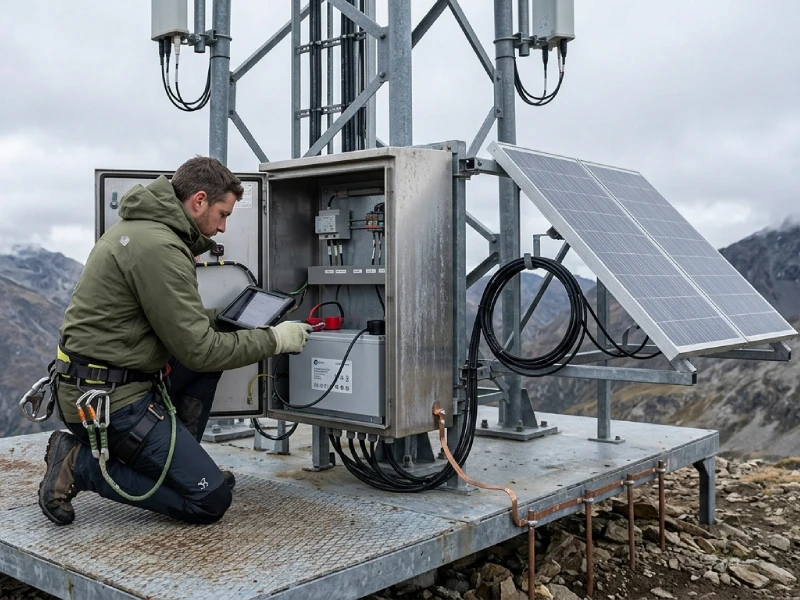
Telecom Tower Energy Storage
Telecommunications infrastructure represents one of the most demanding off-grid battery applications.
Telecom operators require:
- 24/7 uninterrupted operation
- Long backup duration
- Minimal maintenance
- Remote monitoring capability
- Excellent temperature tolerance
- High reliability under harsh conditions
Traditional lead-acid batteries have historically dominated telecom backup systems, but operators are rapidly transitioning toward LiFePO4 solutions due to lower lifecycle costs and reduced maintenance requirements.
Modern telecom battery systems increasingly feature:
- Smart BMS communication
- Remote diagnostics
- Cloud-based monitoring
- Rack-mounted modular architecture
- Wide-temperature operating capability
For telecom infrastructure deployed in remote deserts, coastal regions, or mountainous environments, battery durability directly impacts network uptime and operational stability.
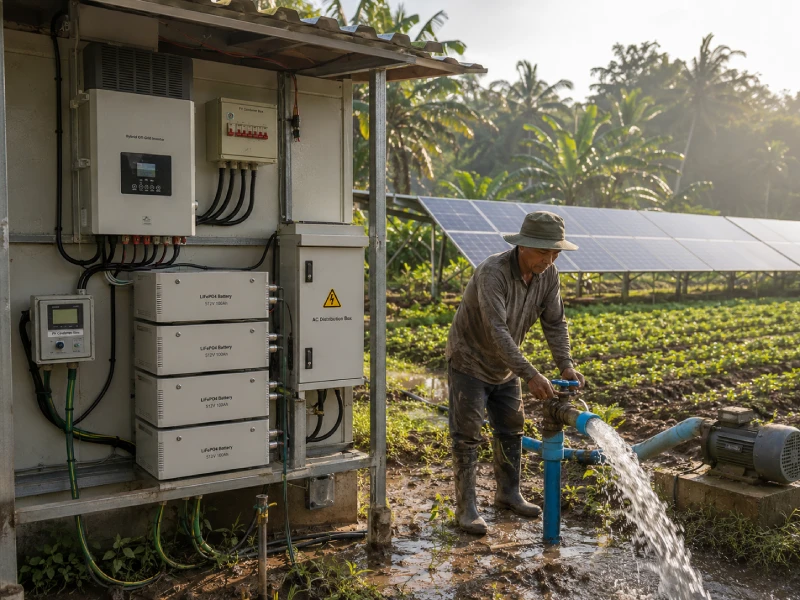
Agricultural Off-Grid Solar Systems
Agricultural solar applications are expanding rapidly due to rising fuel costs and increasing demand for sustainable irrigation systems.
Common agricultural applications include:
- Solar water pumping
- Livestock facilities
- Remote farm electrification
- Cold storage systems
- Greenhouse climate control
Agricultural projects present unique battery challenges because they often operate in:
- Dust-heavy environments
- High humidity conditions
- Extreme heat exposure
- Remote maintenance locations
LiFePO4 batteries provide major advantages in these conditions because they require significantly less maintenance than lead-acid systems while delivering more stable long-term performance.
For distributors targeting agricultural markets, rugged battery enclosure design and environmental durability have become important competitive differentiators.
How to Evaluate an Off-Grid Battery Supplier in 2026
As the global energy storage market expands rapidly, battery supplier quality has become increasingly inconsistent. Many suppliers compete aggressively on price while sacrificing manufacturing standards, engineering support, or long-term service capability.
For B2B buyers, choosing the wrong supplier can create far greater financial damage than choosing the wrong battery chemistry.
Today, evaluating the best battery for off grid solar systems requires assessing not only the battery itself, but also the long-term capabilities of the manufacturer behind it.
Manufacturing Capability and Production Consistency
Battery quality consistency is essential for commercial ESS projects.
Low-quality manufacturing often leads to:
- Cell imbalance
- Inconsistent capacity
- Higher failure rates
- Thermal instability
- Reduced cycle life
Professional buyers should evaluate whether suppliers operate:
- Automated production lines
- Advanced cell grading systems
- Automated welding equipment
- Comprehensive aging tests
- Strict QC inspection processes
Reliable manufacturers also maintain strong traceability systems for:
- Battery cells
- BMS components
- Production batches
- Testing records
These systems are essential for maintaining quality consistency across large commercial deployments.
Global Certifications and Compliance
Commercial battery systems must comply with international certification requirements to ensure safety, logistics approval, and project eligibility.
Important certifications may include:
- UL certifications
- IEC standards
- CE compliance
- UN38.3 transportation certification
- MSDS documentation
- Grid connection approvals
For EPC contractors working on international projects, certification compliance is often mandatory during project bidding and approval processes.
Failure to secure properly certified battery systems can delay installations and increase legal or operational risks.
Supply Chain Stability Is Becoming a Competitive Advantage
Global lithium battery demand continues to increase rapidly, creating supply chain pressure across the energy storage industry.
Unstable suppliers may struggle with:
- Long lead times
- Cell shortages
- Price volatility
- Delayed project deliveries
- Inconsistent product specifications
For distributors and EPC contractors managing multiple projects simultaneously, supply instability can severely impact business reputation and revenue.
As a result, long-term supplier partnerships are becoming increasingly important in the energy storage industry.
Expert Tip:
When evaluating battery suppliers, procurement teams should assess not only battery pricing, but also manufacturing scalability, engineering responsiveness, certification capability, and long-term supply reliability. In commercial ESS projects, supplier stability is often more valuable than short-term cost reductions.
Why LiFePO4 Batteries Are Becoming the Best Battery for Off-Grid Solar Projects
Over the past decade, the global energy storage industry has undergone a major technological shift. While lead-acid batteries once dominated the off-grid solar market due to their lower upfront cost, commercial buyers are increasingly prioritizing long-term operational efficiency, safety, scalability, and lifecycle profitability.
As a result, LiFePO4 technology has rapidly emerged as one of the strongest candidates for the best battery for off grid solar applications in 2026.
For EPC contractors, distributors, telecom integrators, and industrial energy developers, the decision is no longer simply about reducing initial procurement costs. Instead, businesses are evaluating which battery technology can deliver the most stable performance and lowest total ownership cost over a 10–15 year operational lifecycle.
Lower Lifecycle Costs Create Stronger Long-Term ROI
One of the biggest misconceptions in the energy storage industry is that lower upfront pricing automatically creates better project economics.
In reality, many low-cost battery systems generate significantly higher expenses over time due to:
- Frequent replacement cycles
- High maintenance requirements
- Reduced charging efficiency
- Operational downtime
- Premature degradation
- Transportation and labor costs associated with battery replacement
LiFePO4 batteries typically require a higher initial investment compared with traditional lead-acid systems. However, their longer lifespan dramatically reduces long-term operational costs.
For example:
- A standard lead-acid battery may require replacement every 2–4 years in demanding off-grid environments
- A high-quality LiFePO4 battery system may operate reliably for 10 years or longer with proper system integration
This lifecycle advantage becomes especially important in remote or large-scale commercial projects where replacement logistics are expensive and operational interruptions create financial risk.
For EPC contractors managing multiple installations, longer battery lifespan also improves:
- Customer retention
- After-sales service efficiency
- Warranty management
- Brand reputation
- Project profitability
Over a full project lifecycle, LiFePO4 systems frequently achieve lower total ownership costs despite their higher initial purchase price.
Improved Safety Performance for Commercial ESS Applications
Battery safety has become one of the most important considerations in modern off-grid solar infrastructure.
Large-scale commercial energy storage systems often operate in environments where battery failure can create severe operational, financial, and reputational consequences.
Industries increasingly requiring high-safety battery systems include:
- Telecommunications
- Healthcare infrastructure
- Commercial microgrids
- Industrial manufacturing
- Mining operations
- Data centers
- Government infrastructure
Compared with several other lithium chemistries, LiFePO4 batteries are widely recognized for their superior thermal and chemical stability.
Key safety advantages include:
- Lower risk of thermal runaway
- Enhanced structural stability
- Better tolerance to high temperatures
- Reduced combustion risk
- Stable voltage characteristics
This safety profile makes LiFePO4 particularly attractive for:
- Containerized ESS systems
- Indoor commercial installations
- High-temperature environments
- Remote unattended infrastructure
- High-density energy storage deployments
Modern LiFePO4 systems are increasingly integrated with advanced Battery Management Systems (BMS) capable of:
- Real-time voltage monitoring
- Temperature balancing
- Overcharge protection
- Overcurrent protection
- Remote diagnostics
- Predictive maintenance analysis
For B2B buyers, this level of system intelligence significantly improves operational reliability and reduces maintenance risks.
Higher Energy Density Reduces Infrastructure Costs
Energy density refers to how much energy a battery can store relative to its size and weight.
Compared with lead-acid technologies, LiFePO4 batteries offer significantly higher energy density, allowing businesses to install more usable storage capacity within smaller physical footprints.
This creates major commercial advantages in:
- Telecom cabinets
- Containerized ESS systems
- Industrial facilities with limited installation space
- Mobile energy applications
- Urban commercial projects
Higher energy density also improves:
- Transportation efficiency
- Installation flexibility
- Warehouse utilization
- System scalability
For global distributors and EPC contractors managing international logistics, reduced battery weight and smaller system size can significantly lower shipping and deployment costs.
Faster Charging and Better Solar Utilization
One of the key advantages of modern LiFePO4 systems is their ability to charge efficiently at higher rates.
This capability becomes increasingly important as commercial solar installations aim to maximize renewable energy utilization during limited sunlight hours.
Compared with lead-acid batteries, LiFePO4 systems generally provide:
- Faster charging speed
- Higher charging efficiency
- Lower energy losses
- Improved partial-state charging performance
- Better compatibility with high-power PV arrays
For off-grid systems operating in regions with variable weather conditions, rapid charging capability helps maximize solar harvesting opportunities.
This improves:
- Energy independence
- Fuel savings in hybrid systems
- Operational stability
- Renewable energy utilization rates
In industrial microgrids and hybrid diesel-solar systems, these efficiency improvements can generate substantial long-term cost savings.
Scalability Supports Future Energy Expansion
Commercial energy demand rarely remains static over time.
Businesses often expand operations, increase equipment loads, or integrate additional renewable energy generation capacity.
Modern LiFePO4 systems are highly modular, allowing:
- Flexible capacity expansion
- Parallel battery integration
- Scalable rack architecture
- Hybrid ESS deployment
- Future inverter upgrades
This scalability is particularly valuable for:
- Growing telecom networks
- Expanding industrial facilities
- Commercial microgrids
- Agricultural modernization projects
- Remote infrastructure development
Instead of completely replacing existing systems, businesses can expand storage capacity incrementally as operational requirements evolve.
Why Long-Term Supplier Partnerships Matter in Off-Grid Solar Projects
As the global battery market becomes increasingly competitive, supplier reliability is becoming just as important as battery technology itself.
Many energy storage projects fail to achieve expected ROI not because of poor system design, but because suppliers cannot maintain consistent product quality, stable delivery schedules, or professional technical support.
For procurement managers and EPC contractors, selecting the best battery for off grid solar systems increasingly means choosing a supplier capable of supporting long-term business growth.
Stable Manufacturing Capacity Reduces Project Risk
Global lithium battery demand continues to rise rapidly due to accelerating adoption of:
- Electric vehicles
- Grid-scale ESS projects
- Commercial solar installations
- Residential energy storage systems
This demand growth has placed enormous pressure on battery supply chains worldwide.
Unstable suppliers often struggle with:
- Raw material shortages
- Long lead times
- Inconsistent product specifications
- Cell supply fluctuations
- Delayed project fulfillment
For distributors and EPC contractors, these issues can damage:
- Project timelines
- Customer trust
- Revenue stability
- Brand reputation
Reliable manufacturers with scalable production capacity provide:
- Predictable delivery schedules
- Consistent battery quality
- Stable technical specifications
- Long-term product availability
- Better support for large-volume projects
As commercial ESS projects become larger and more complex, manufacturing stability is becoming a major competitive advantage.
Technical Engineering Support Is Increasingly Critical
Modern off-grid solar systems involve far more than simply connecting batteries to solar panels.
Commercial ESS deployments increasingly require integration between:
- Battery systems
- Hybrid inverters
- EMS platforms
- Remote monitoring software
- PCS equipment
- Smart grid communication systems
Without proper engineering support, system integration problems can lead to:
- Charging instability
- Battery imbalance
- Reduced efficiency
- Communication failures
- Premature degradation
- Unexpected downtime
This is why experienced EPC contractors increasingly prefer suppliers capable of providing:
- System design consultation
- Technical compatibility analysis
- BMS integration support
- Remote commissioning assistance
- After-sales troubleshooting
- Firmware optimization
In large-scale commercial projects, engineering support often has greater long-term value than minor pricing differences.
Expert Tip:
The most successful EPC contractors and distributors increasingly evaluate battery suppliers as long-term strategic partners rather than short-term product vendors. Reliable technical support, stable production capability, and strong engineering collaboration often determine the long-term profitability of commercial energy storage projects.
Why SolarDyna Supports Long-Term Off-Grid Energy Success
As global demand for reliable off-grid solar infrastructure continues to grow, businesses require more than just battery products — they need dependable energy storage partners capable of supporting long-term project success.
SolarDyna focuses on delivering advanced LiFePO4 energy storage solutions designed for the evolving needs of distributors, EPC contractors, telecom integrators, and commercial solar developers.
Advanced LiFePO4 Battery Manufacturing Capability
High-performance battery systems begin with manufacturing consistency.
SolarDyna emphasizes:
- Strict quality control processes
- High-consistency cell selection
- Intelligent BMS integration
- Comprehensive product testing
- Scalable production capability
These manufacturing standards help ensure stable battery performance across demanding off-grid solar applications.
Customized Commercial ESS Solutions
Different industries require different energy storage architectures.
SolarDyna supports a wide range of commercial applications including:
- Telecom backup systems
- Industrial microgrids
- Agricultural solar storage
- Commercial hybrid ESS projects
- Remote infrastructure electrification
Flexible OEM and ODM support allows distributors and EPC contractors to develop customized energy storage solutions based on:
- Voltage requirements
- Capacity targets
- Environmental conditions
- Installation architecture
- Communication protocol compatibility
Engineering-Focused Technical Support
Successful commercial ESS deployment requires strong technical coordination throughout the project lifecycle.
SolarDyna supports customers through:
- System design consultation
- Battery-inverter compatibility analysis
- ESS integration support
- Remote technical assistance
- After-sales troubleshooting
For commercial buyers, this engineering-focused approach helps reduce deployment risks while improving long-term system reliability.
Conclusion: Choosing the Best Battery for Off-Grid Solar Is About Long-Term Business Value
As the off-grid solar industry continues evolving in 2026, battery selection has become one of the most important factors influencing project profitability, operational stability, and long-term customer satisfaction.
While low-cost battery systems may appear attractive during initial procurement, long-term commercial success increasingly depends on lifecycle performance, safety, efficiency, scalability, and supplier reliability.
For many commercial and industrial applications, LiFePO4 technology has become one of the strongest solutions for the best battery for off grid solar systems due to its:
- Long operational lifespan
- High charging efficiency
- Excellent thermal stability
- Reduced maintenance requirements
- Strong scalability
- Lower lifecycle costs
However, battery technology alone is not enough. Successful off-grid energy projects also require:
- Accurate system sizing
- Professional engineering integration
- Reliable technical support
- Stable manufacturing quality
- Long-term supplier partnerships
For EPC contractors, distributors, and commercial energy developers seeking long-term energy storage success, choosing the right battery supplier can be just as important as choosing the right battery chemistry.
As global demand for energy resilience and renewable infrastructure continues to grow, businesses that prioritize high-quality off-grid ESS solutions today will be better positioned to achieve stronger ROI, improved operational reliability, and sustainable competitive advantages in the years ahead.
Ready to Build More Reliable Off-Grid Solar Projects?
Partner with SolarDyna to access advanced LiFePO4 battery solutions designed for commercial and industrial off-grid applications.
- Customized ESS configurations
- OEM & ODM support
- Technical engineering consultation
- Global project delivery capability
- Long-term supply chain partnership support
Frequently Asked Questions About the Best Battery for Off Grid Solar Systems (2026 B2B Guide)
Q1: What is the best battery for off grid solar systems in 2026 for commercial projects?
For B2B applications such as telecom infrastructure, industrial microgrids, agriculture, and remote facilities, LiFePO4 (Lithium Iron Phosphate) batteries are widely considered the best battery for off grid solar systems in 2026. They offer significantly longer cycle life, higher depth of discharge (80–95%), better thermal stability, and lower total cost of ownership compared to lead-acid batteries. For EPC contractors and distributors, LiFePO4 systems also provide better scalability and integration with modern hybrid inverters and EMS platforms.
Q2: Why are LiFePO4 batteries better than lead-acid for off-grid solar systems?
LiFePO4 batteries outperform lead-acid batteries in nearly all commercial performance metrics. They last up to 5–10 times longer, require no regular maintenance, support deeper discharge without damage, and operate with higher energy efficiency. In off-grid solar systems, this translates into fewer replacements, lower operational downtime, and significantly improved ROI for long-term projects.
Q3: How long do off-grid solar batteries typically last in commercial applications?
Battery lifespan depends on chemistry, usage conditions, and system design. Lead-acid batteries typically last 2–4 years in off-grid commercial environments, while high-quality LiFePO4 batteries can last 8–15 years. Proper system sizing, temperature control, and correct charge-discharge management significantly extend operational life, especially in high-load industrial or telecom applications.
Q4: What factors should EPC contractors consider when selecting an off-grid solar battery?
Key selection factors include cycle life, depth of discharge (DoD), temperature tolerance, energy efficiency, BMS intelligence, system compatibility with inverters, warranty terms, and supplier stability. For large-scale commercial projects, long-term supply chain reliability and technical support are equally important as battery performance specifications.
Q5: How does battery sizing impact off-grid solar system performance?
Incorrect battery sizing can significantly reduce system efficiency and ROI. Undersized batteries lead to deep cycling and premature degradation, while oversized systems increase unnecessary capital costs. Proper sizing must account for daily energy consumption, peak load demand, autonomy days, and seasonal variation to ensure optimal system performance and cost efficiency.
Q6: Can off-grid solar systems operate without backup generators?
Yes, fully off-grid solar systems can operate without diesel or backup generators if properly designed with sufficient PV capacity and battery storage. However, in critical commercial applications such as telecom or industrial operations, hybrid configurations are sometimes used as a redundancy measure to ensure uninterrupted power supply during extended low-sunlight periods.
Q7: What is the role of BMS in off-grid solar battery systems?
The Battery Management System (BMS) is essential for safety, efficiency, and system longevity. It monitors voltage, current, temperature, and state of charge (SOC), while protecting against overcharging, deep discharge, and thermal runaway. In commercial off-grid systems, advanced BMS also enables remote monitoring, predictive maintenance, and system optimization through EMS integration.
Q8: How should businesses evaluate a reliable off-grid solar battery supplier?
B2B buyers should evaluate suppliers based on manufacturing capability, quality control systems, international certifications (such as IEC, UL, and UN38.3), production scalability, and technical support capability. Equally important is supply chain stability, as inconsistent delivery or product variation can directly impact EPC project timelines and long-term operational reliability.
Need the Best Battery for Off Grid Solar Projects in 2026?
Selecting the best battery for off grid solar is critical for long-term ROI, system stability, and project reliability. We provide high-performance LiFePO4 energy storage solutions designed for EPC contractors, distributors, telecom operators, and industrial off-grid applications.
✔ OEM/ODM customization for EPC contractors and global distributors
✔ Engineering support for off-grid solar system design & integration
✔ Stable manufacturing capacity for large-scale ESS deployment
✔ Long lifecycle design for maximum ROI and reduced replacement cost
Speak with our energy engineers for a custom off-grid solar battery solution tailored to your project requirements
Similar Posts
Hybrid Inverter Benefits for Commercial ESS: Why EPC Contractors Are Replacing Traditional Solar Inverters
As commercial electricity prices continue to rise worldwide, businesses are under growing pressure to improve energy efficiency, stabilize operating costs, and increase power resilience. At the same time, the rapid…
Top Off-Grid Solar Applications Worldwide: High-Growth Markets for EPCs and Energy Storage Integrators in 2026
As global energy demand continues to rise and grid reliability becomes increasingly uncertain in many regions, off grid solar applications are rapidly transitioning from niche energy solutions to critical infrastructure assets. Today,…
Battery Energy Storage System (BESS): How It Works & How to Choose the Right Supplier for Long-Term ROI
Battery Energy Storage System (BESS): Key Challenges and Why Procurement Decisions Define Long-Term ROI Rising electricity costs, tightening grid regulations, and increasing pressure to deliver predictable ROI are forcing EPC…
Commercial Energy Storage Systems: Applications, Benefits, and ROI for Modern Businesses
Why Commercial Energy Storage Systems Are Becoming Essential for Modern Businesses Rising electricity prices, unstable grid infrastructure, growing ESG pressure, and the rapid expansion of renewable energy are forcing commercial…
Solar Battery vs Generator Cost: A Lifecycle Cost & Engineering Comparison for EPC and Commercial Energy Projects
In modern energy infrastructure planning, solar battery vs generator cost has become one of the most critical decision factors for EPC contractors, commercial developers, and industrial procurement teams. As distributed energy systems…