Portable Power Station vs Generator: Which One Wins in Modern Energy Applications?
The debate around portable power station vs generator has become increasingly important for B2B energy buyers, especially EPC contractors, distributors, and procurement managers operating in construction, off-grid infrastructure, and industrial backup power markets. As energy demand becomes more decentralized and sustainability requirements tighten, the comparison of portable power station vs generator is no longer just a technical preference—it is a strategic procurement decision that directly impacts lifecycle cost, operational reliability, and long-term ROI.
For modern energy system integrators, understanding the real differences in the portable power station vs generator landscape is essential for building competitive, compliant, and scalable power solutions in 2026 and beyond.
This article provides a deep technical and commercial breakdown designed specifically for B2B decision-makers evaluating power systems for industrial deployment, rental fleets, remote operations, and emergency backup applications.
Why the Portable Power Station vs Generator Comparison Matters for B2B Energy Buyers in 2026
The global energy landscape is undergoing a structural transformation. Rising fuel costs, stricter emissions regulations, and increasing demand for mobile and modular energy solutions have significantly changed how enterprises evaluate temporary and backup power systems. In this context, the portable power station vs generator comparison has become a critical decision framework for procurement teams.
Rising Demand for Mobile and Distributed Power Systems
Industries such as construction, telecommunications, emergency services, and remote engineering projects increasingly require flexible energy solutions that can be deployed quickly without complex installation. Traditional diesel generators have long dominated this space, but their limitations—fuel dependency, noise, and maintenance requirements—are becoming more restrictive in modern operational environments.
By contrast, lithium-based portable energy systems offer silent operation, indoor usability, and integration with renewable energy sources such as solar PV, making them highly attractive for distributed applications.
Shift from Fuel-Based Systems to Lithium Energy Storage
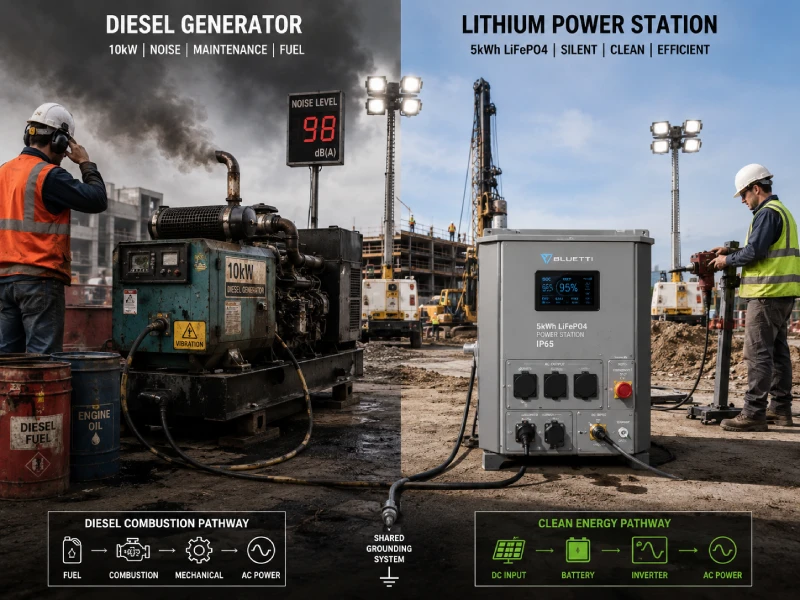
One of the most significant shifts in the energy industry is the transition from combustion-based generation to electrochemical storage. This shift is redefining the portable power station vs generator discussion at a structural level. Instead of generating electricity on demand through fuel combustion, portable power stations store electricity in high-density lithium batteries—typically LiFePO4 chemistry—offering higher efficiency and lower operational complexity.
Key Procurement Drivers for EPCs and Distributors
For B2B buyers, the decision is rarely based on upfront cost alone. The modern procurement framework includes multiple evaluation layers:
- Total Cost of Ownership (TCO) over 3–7 years
- Maintenance cycles and service accessibility
- Energy efficiency and conversion losses
- Regulatory compliance (noise, emissions, safety standards)
- Scalability for future system expansion
These factors are reshaping how companies interpret the portable power station vs generator trade-off in real-world deployments.
Common Industrial Application Scenarios
Typical use cases where this comparison is critical include:
- Construction sites requiring temporary power for tools and lighting
- Off-grid field operations and geological surveys
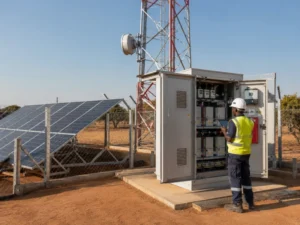
- Telecom tower backup systems
- Emergency response and disaster recovery operations
- Rental equipment fleets for short-term industrial projects
In each of these scenarios, the selection between portable energy storage and fuel-based generation significantly impacts operational efficiency and cost structure.
What Is a Portable Power Station? (Lithium-Based Energy Storage System Explained)
A portable power station is a compact energy storage system designed to store electricity in internal lithium batteries and deliver it through integrated inverters. Unlike traditional generators, it does not rely on mechanical combustion. Instead, it operates as a fully electronic energy conversion system.
Core Components of a Portable Power Station
Modern industrial-grade portable power stations typically include:
- LiFePO4 battery pack – provides long cycle life and thermal stability
- Battery Management System (BMS) – ensures safety, balancing, and performance optimization
- Pure sine wave inverter – converts DC to AC power for equipment compatibility
- Charging controller – supports AC, solar, and hybrid charging inputs
This architecture allows portable power stations to operate efficiently across multiple environments without fuel logistics or mechanical wear.
How Portable Power Stations Work in Industrial Applications
Energy is stored in lithium cells and released through controlled discharge when connected devices require power. The system automatically regulates output voltage and current through its inverter and BMS, ensuring stable performance for sensitive electronics and industrial tools.
This makes them particularly suitable for environments where noise reduction, emission control, and indoor operation are required.
Solar Integration and Hybrid Charging Capability
One of the key advantages in the portable power station vs generator discussion is renewable integration. Portable power stations can be charged via photovoltaic systems, enabling hybrid energy architectures that reduce dependency on grid electricity or fuel supply chains.
This capability is especially valuable for EPC contractors deploying semi-permanent or off-grid infrastructure.
What Is a Generator? (Fuel-Based Traditional Power System Overview)
A generator is a mechanical energy conversion system that produces electricity by burning fuel—typically diesel or gasoline—to rotate an internal alternator. This rotation induces electrical current through electromagnetic induction.
Core Components of a Generator
- Internal combustion engine
- Alternator
- Fuel tank and fuel delivery system
- Voltage regulation system
- Cooling and exhaust systems
While generators are widely used in industrial environments, they require continuous fuel supply and regular maintenance to ensure stable performance.
Operational Limitations in Modern Use Cases
Despite their widespread adoption, generators present several limitations in modern procurement frameworks:
- High fuel dependency and price volatility
- Noise pollution and operational restrictions in urban environments
- Frequent maintenance cycles (oil changes, engine servicing)
- Carbon emissions and regulatory compliance challenges
These limitations are increasingly influencing the portable power station vs generator decision in favor of cleaner, quieter alternatives.
Early Technical Perspective: Why This Comparison Is No Longer Simple
Historically, generators dominated temporary and backup power markets due to their ability to deliver high power output on demand. However, advancements in lithium battery energy density, inverter efficiency, and system integration have fundamentally changed the equation.
Today, the portable power station vs generator comparison is no longer just about power availability—it is about efficiency, sustainability, lifecycle economics, and deployment flexibility.
Expert Tip
For B2B procurement teams, the most overlooked factor is system utilization rate. Generators often operate below optimal load efficiency, leading to fuel waste and higher operational cost per kWh. Portable power stations, by contrast, maintain high conversion efficiency across a wider load range, making them more cost-stable in variable-demand environments.
From a supply chain perspective, this efficiency difference directly impacts long-term profitability for rental operators and EPC service providers.
Portable Power Station vs Generator: Key Technical and Commercial Comparison
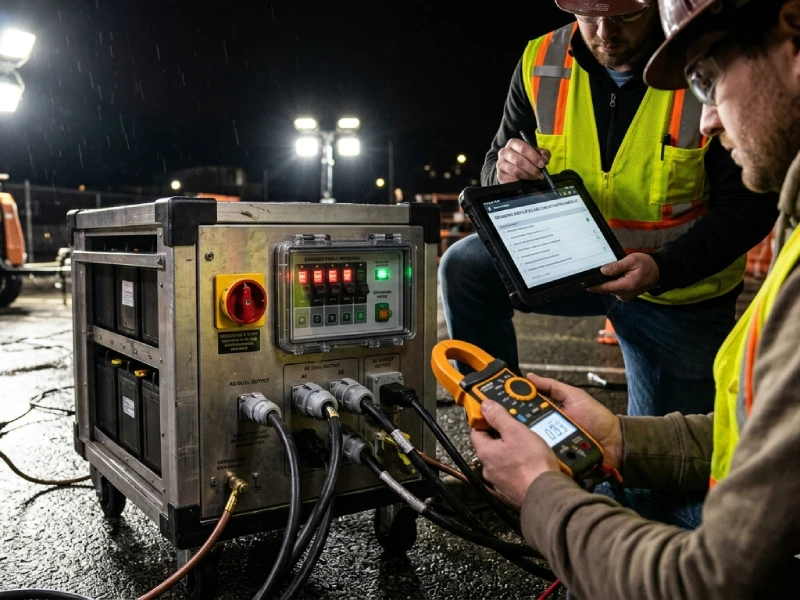
When evaluating portable power station vs generator for industrial or commercial deployment, B2B buyers must go beyond surface-level specifications. The real decision depends on system efficiency, lifecycle economics, operational constraints, and integration flexibility within broader energy architectures. In modern procurement models, especially for EPC contractors and distributors, this comparison directly impacts project profitability and long-term asset performance.
This section provides a structured, engineering-level breakdown of the most critical evaluation dimensions used in professional energy procurement.
Energy Efficiency and Conversion Performance
One of the most fundamental differences in the portable power station vs generator comparison lies in how energy is produced and consumed.
A generator converts chemical energy from fuel into mechanical energy and then into electrical energy. Each conversion stage introduces energy losses, typically resulting in overall efficiency rates between 25% and 40% depending on load conditions and generator quality.
By contrast, a portable power station stores electricity directly in lithium batteries and delivers it through an inverter. The absence of mechanical conversion significantly reduces energy loss, with system efficiency often exceeding 85%–95% in high-quality LiFePO4-based systems.
For B2B buyers managing high-utilization equipment fleets, this efficiency gap translates directly into measurable operational cost differences over time.
Total Cost of Ownership (TCO) Analysis
While generators often appear cost-effective at initial purchase, their long-term ownership cost structure tells a different story.
In the portable power station vs generator evaluation, TCO must include:
- Fuel consumption over operational lifetime
- Scheduled maintenance (oil, filters, engine servicing)
- Unplanned downtime costs
- Labor costs for operation and refueling
- Transport and logistics of fuel supply
Portable power stations eliminate fuel logistics entirely. Once charged, operational costs are effectively reduced to electricity input, which can be further minimized through solar integration. Over a 3–5 year cycle, lithium-based systems often deliver significantly lower TCO in intermittent and medium-load applications.
Maintenance Requirements and Operational Complexity
Maintenance is another critical differentiator in the portable power station vs generator decision framework.
Generators rely on mechanical engines, which require regular maintenance cycles including:
- Oil changes every 100–250 operating hours
- Air and fuel filter replacement
- Spark plug or injector maintenance
- Engine inspection and calibration
These requirements increase downtime and require skilled technicians, especially in remote or distributed deployment scenarios.
Portable power stations, however, are largely maintenance-free due to their solid-state architecture. The absence of combustion components significantly reduces mechanical failure risk and eliminates routine servicing in most operational contexts.
Noise, Emissions, and Environmental Compliance
Environmental and regulatory constraints are becoming decisive factors in procurement decisions. In urban construction zones, residential areas, and environmentally sensitive regions, emissions and noise levels are strictly regulated.
Generators typically produce noise levels ranging from 65 dB to over 100 dB depending on load, which limits their usability in noise-restricted environments. They also emit CO₂, NOx, and particulate matter, requiring compliance with increasingly strict environmental regulations.
In contrast, portable power stations operate silently and produce zero direct emissions during operation. This makes them suitable for indoor use, nighttime operations, and ESG-compliant projects.
Deployment Flexibility and Installation Constraints
Another major factor in the portable power station vs generator comparison is deployment flexibility.
Generators require:
- Ventilation for exhaust gas discharge
- Fuel storage infrastructure
- Stable outdoor placement
- Safety clearance zones
Portable power stations require none of these conditions. They can be deployed indoors, inside vehicles, on rooftops, or in mobile field operations without additional infrastructure. This dramatically expands their usability in fast-deployment scenarios.
System Scalability and Integration Potential
Modern energy systems are increasingly modular. For EPC contractors, scalability is a key consideration when selecting between portable power stations and generators.
Generators scale primarily through parallel engine units, which increases complexity, noise, and fuel requirements. In contrast, portable power stations can be modularly connected in parallel or integrated with solar PV systems, inverters, and microgrid controllers.
This makes lithium-based systems significantly more adaptable for hybrid microgrid architecture, particularly in off-grid industrial applications.
Portable Power Station vs Gas Generator: Scenario-Based Performance Analysis
Rather than evaluating systems in isolation, B2B procurement teams increasingly assess performance based on real-world application scenarios. The portable power station vs generator decision varies significantly depending on operational environment and load profile.
Construction and EPC Site Power Supply
Construction environments require high reliability, mobility, and safety compliance. While generators provide high continuous power output, their noise and emissions often create regulatory challenges in urban or indoor construction zones.
Portable power stations offer silent operation and zero emissions, making them suitable for interior construction, finishing work, and nighttime operations where restrictions apply.
Remote Field Operations and Surveying
For geological surveys, mining exploration, and remote infrastructure inspection, fuel logistics become a major operational burden. In such cases, portable power stations integrated with solar charging significantly reduce supply chain dependency.
This is one of the most compelling use cases where the portable power station vs generator comparison strongly favors lithium-based systems.
Telecom and Critical Infrastructure Backup
Telecom towers and distributed infrastructure require reliable backup power with minimal maintenance. Generators have traditionally dominated this segment, but increasing downtime and servicing costs are driving adoption of lithium-based alternatives.
Portable power stations offer instant switchover capability, reduced maintenance, and improved system reliability in distributed backup architectures.
Equipment Rental and Fleet Business Models
For rental companies, asset utilization rate and maintenance cost per unit are critical profitability drivers. Generators require frequent servicing and fuel management, reducing uptime and increasing operational overhead.
Portable power stations, with minimal maintenance requirements and longer lifecycle stability, offer higher fleet availability and lower operational complexity, improving ROI for rental operators.
The Rise of Solar Generator Systems: Hybrid Energy Architecture
A major evolution in the portable power station vs generator discussion is the emergence of hybrid solar generator systems. These systems combine lithium energy storage with photovoltaic charging, creating a decentralized and renewable energy ecosystem.
What Is a Solar Generator System?
A solar generator system integrates:
- Portable power station (LiFePO4 battery system)
- Solar photovoltaic panels
- Charge controller or MPPT system
- Optional grid or AC charging input
This configuration enables continuous energy availability without reliance on fuel supply chains.
Strategic Value for EPC Contractors and Distributors
For B2B buyers, solar hybrid systems provide:
- Reduced operating cost through renewable charging
- Improved ESG compliance for international projects
- Enhanced system resilience in off-grid environments
- New revenue models for energy-as-a-service offerings
Expert Tip
From a systems engineering perspective, hybridization is not just an upgrade—it is a structural shift. Combining solar input with lithium storage eliminates the primary weakness of both standalone generators and battery-only systems: dependency on external energy supply stability.
Supply Chain and OEM Considerations for B2B Buyers
Beyond technical performance, procurement decisions in the portable power station vs generator market are heavily influenced by supply chain reliability and OEM capabilities.
Battery Cell Quality and Consistency
For lithium-based systems, cell quality directly determines cycle life, safety, and performance stability. Industrial buyers typically prioritize Grade A LiFePO4 cells with verified cycle life exceeding 3000–6000 cycles.
OEM/ODM Customization Capability
Distributors and EPC contractors often require customized solutions, including:
- Voltage and capacity configuration adjustments
- Private label branding
- Region-specific certification compliance
- Integration with external energy systems
Certification and Compliance Requirements
Global deployment requires adherence to standards such as CE, UN38.3, IEC safety certifications, and transport compliance regulations. These certifications ensure safe logistics and market access across regions.
Expert Tip
In B2B procurement strategy, supplier consistency often outweighs unit price optimization. A stable OEM partner reduces supply chain volatility, ensures predictable lead times, and strengthens downstream project execution reliability.
Why Portable Power Stations Are Rapidly Replacing Generators in 2026
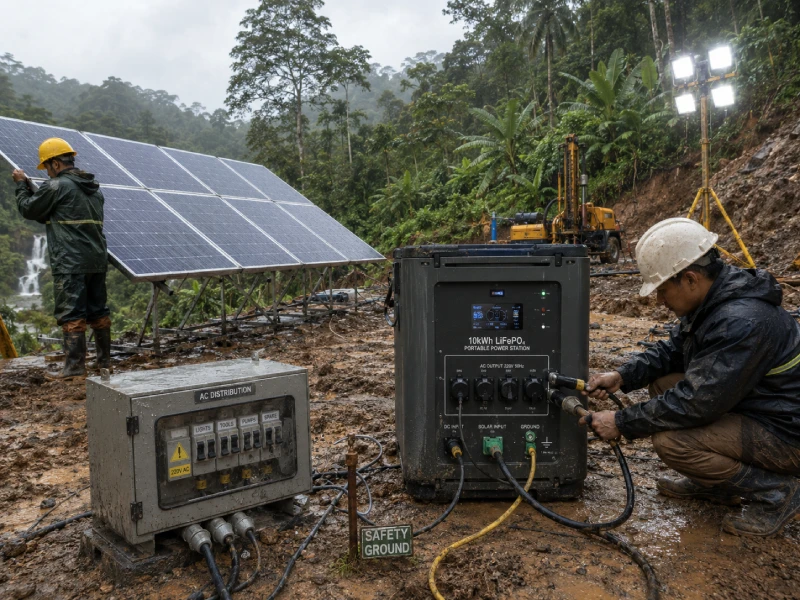
The global energy transition is no longer theoretical—it is already reshaping procurement behavior across construction, telecom, emergency response, and distributed infrastructure markets. In the ongoing portable power station vs generator debate, the momentum is clearly shifting toward lithium-based energy storage systems as the default choice for modern B2B applications.
This shift is driven by a combination of regulatory pressure, technological advancement, and evolving operational requirements. For EPC contractors, distributors, and procurement managers, understanding this transition is essential for maintaining long-term competitiveness.
Global Electrification and ESG Compliance Pressure
One of the strongest drivers influencing the portable power station vs generator landscape is the global push toward decarbonization. Governments and large enterprises are increasingly enforcing ESG (Environmental, Social, and Governance) standards across infrastructure projects.
Diesel generators, while still widely used, face growing restrictions due to emissions regulations and noise pollution standards. In contrast, portable power stations operate with zero direct emissions and significantly lower environmental impact, making them more suitable for compliance-heavy markets such as Europe, North America, and urban Asia-Pacific regions.
Rapid Decline in Lithium Battery System Costs
Over the past decade, lithium battery costs have declined significantly due to scale manufacturing, improved supply chains, and technological advancements in energy density. This cost reduction has fundamentally altered the portable power station vs generator economic equation.
Where generators once dominated due to lower upfront cost, lithium systems now offer competitive or even lower total lifecycle cost in medium-load and intermittent-use scenarios, particularly when factoring in fuel and maintenance expenses.
Demand for Silent, Modular, and Mobile Energy Systems
Modern industrial operations require flexibility. Projects are increasingly distributed, temporary, and mobile. In such environments, noise restrictions and operational safety constraints often limit generator usage.
Portable power stations provide silent operation, indoor usability, and modular scalability. This makes them ideal for urban construction, event infrastructure, mobile workstations, and sensitive environments such as hospitals or data support operations.
Shift Toward Hybrid Microgrid Architecture
Another key factor reshaping the portable power station vs generator comparison is the rise of hybrid microgrids. Instead of relying on a single power source, modern systems integrate solar PV, battery storage, and backup generation into a unified architecture.
In this configuration, portable power stations serve as the core energy buffer, reducing generator runtime and optimizing fuel consumption. This hybrid model is increasingly adopted in off-grid industrial zones and remote infrastructure projects.
Decision Framework: How B2B Buyers Should Evaluate Portable Power Station vs Generator
For procurement managers and technical directors, selecting between portable power stations and generators should follow a structured decision framework rather than intuition or legacy practice. Below is a practical evaluation model used in professional energy system procurement.
Step 1: Load Profile Analysis
The first step is to determine whether the application is:
- Continuous high-load operation (favoring generators)
- Intermittent or variable load (favoring portable power stations)
- Mixed usage with peak shaving requirements (hybrid systems)
Understanding load characteristics is essential to correctly interpret the portable power station vs generator trade-off.
Step 2: Operational Environment Constraints
Key environmental factors include:
- Indoor vs outdoor usage
- Noise restrictions (urban vs rural deployment)
- Emissions regulations
- Ventilation availability
Portable power stations have a clear advantage in constrained environments where generators are restricted or impractical.
Step 3: Lifecycle Cost Evaluation (TCO Model)
A proper portable power station vs generator evaluation must include Total Cost of Ownership over at least 3–5 years. This includes:
- Fuel consumption projections
- Maintenance and service intervals
- Downtime and productivity loss
- Replacement cycle of key components
In many B2B scenarios, lithium-based systems outperform generators in lifecycle cost despite higher initial investment.
Step 4: Scalability and Future Expansion
EPC contractors must also consider future scalability. Portable power stations offer modular expansion through parallel connection and hybrid integration with solar PV systems. Generators, by contrast, scale linearly and often require complete system replacement for capacity upgrades.
Step 5: Supply Chain Stability and OEM Support
Long-term procurement success depends on supplier reliability. Key factors include:
- Consistency of lithium cell sourcing
- Production capacity and lead time stability
- After-sales support infrastructure
- Customization capabilities for different markets
A stable OEM partner reduces procurement risk and improves downstream project execution efficiency.
Strategic Market Outlook: Where Portable Power Stations Are Winning
The adoption curve of portable energy storage is accelerating across multiple industries. The portable power station vs generator market is gradually segmenting into distinct application layers rather than a single competitive battlefield.
High-Growth Segments for Portable Power Stations
- Urban construction and interior renovation projects
- Telecom infrastructure backup systems
- Outdoor events and mobile operations
- Emergency disaster recovery systems
- Off-grid renewable energy integration projects
These segments prioritize noise reduction, mobility, and compliance—areas where portable power stations outperform traditional generators.
Where Generators Still Maintain Advantage
Despite the shift, generators remain relevant in specific scenarios:
- Heavy industrial continuous load applications
- Remote mining operations with high energy demand
- Long-duration power generation without recharge infrastructure
However, even in these segments, hybrid systems are increasingly replacing standalone generator setups.
Industry Transition Trend
The most significant trend is not replacement but integration. In modern energy architecture, generators are becoming secondary backup sources, while portable power stations serve as primary load management and energy stabilization units.
Final Conclusion: Which One Wins—Portable Power Station or Generator?
The answer to the portable power station vs generator question is no longer binary. Instead, it depends on application context, operational strategy, and long-term procurement goals.
From a purely technical perspective:
- Generators remain strong in continuous high-load, fuel-accessible environments
- Portable power stations dominate in mobility, efficiency, and compliance-driven applications
- Hybrid systems represent the future of industrial energy architecture
From a B2B procurement perspective, the strategic advantage is clearly shifting toward lithium-based energy systems due to lower lifecycle cost, reduced operational complexity, and stronger regulatory alignment.
Expert Final Insight
In modern energy procurement, the most successful EPC contractors and distributors are no longer choosing between portable power stations and generators in isolation. Instead, they are designing hybrid ecosystems that optimize each technology where it performs best.
This systems-level approach is becoming the defining factor in competitive advantage across the global energy storage and distributed power market.
Partner with SolarDyna for Next-Generation Portable Energy Solutions
For procurement teams, distributors, and EPC contractors evaluating modern energy infrastructure, the shift toward lithium-based portable power systems is no longer a trend—it is a long-term strategic upgrade in reliability, efficiency, and operational cost control.
As a specialized manufacturer of industrial-grade energy storage systems, SolarDyna provides end-to-end support for global partners seeking scalable and field-proven portable power solutions.
- Request OEM/ODM customization for portable power station and hybrid energy systems
- Access engineering-grade sample units for real-world testing and validation
- Receive technical consultation for solar + battery + generator hybrid integration
- Develop long-term distribution or project-based partnership models with factory support
With increasing demand for reliable, low-maintenance, and compliant energy systems, selecting a proven manufacturing partner is critical. SolarDyna helps ensure that every deployment is engineered for performance, scalability, and long-term operational stability.
As global energy systems continue to evolve, success will depend not only on technology selection, but also on the strength of the supply chain and engineering support behind it.technology stack will define operational success in the years ahead.
Frequently Asked Questions: Portable Power Station vs Generator
Q1: What is the main difference between a portable power station and a generator?
A portable power station stores electricity in a lithium battery (typically LiFePO4) and delivers it through an inverter, while a generator produces electricity by burning fuel such as diesel or gasoline. The key difference in the portable power station vs generator comparison is that one stores energy, while the other generates it on demand through combustion.
Q2: Which is more cost-effective in long-term industrial use?
Although generators often have a lower initial purchase cost, portable power stations usually deliver lower total lifecycle cost due to reduced fuel consumption, minimal maintenance, and higher energy efficiency. Over 3–5 years of usage, lithium-based systems can significantly reduce operational expenses, especially in intermittent or mobile applications.
Q3: Can a portable power station replace a generator completely?
In many light to medium-load applications, yes. Portable power stations can fully replace generators in construction lighting, telecom backup, mobile offices, and emergency response systems. However, for continuous high-power industrial loads or remote mining operations, generators may still be required or used in hybrid configurations.
Q4: How long does a portable power station last compared to a generator?
High-quality LiFePO4 portable power stations typically offer 3000–6000 charge cycles, translating to 8–12 years of operational life depending on usage patterns. Generators can also last many years, but only with strict maintenance schedules, regular part replacement, and consistent fuel quality.
Q5: Are portable power stations safe for indoor use?
Yes. One of the key advantages in the portable power station vs generator comparison is indoor safety. Portable power stations produce zero emissions, no carbon monoxide, and operate silently, making them suitable for indoor construction, warehouses, and enclosed environments. Generators require outdoor ventilation due to exhaust gases.
Q6: How do weather conditions affect both systems?
Generators can operate in a wide range of outdoor environments but are sensitive to fuel freezing, overheating, and humidity corrosion. Portable power stations are typically designed with IP-rated enclosures (IP54–IP65), making them more resistant to dust, rain, and coastal humidity when properly specified.
Q7: Can portable power stations be integrated with solar panels?
Yes. Most modern portable power stations support solar input via MPPT controllers, allowing direct charging from photovoltaic panels. This makes them ideal for off-grid applications and hybrid energy systems, reducing dependency on fuel logistics and grid electricity.
Q8: What should EPC contractors consider when choosing between the two?
Key factors include load type, deployment environment, maintenance capability, and total lifecycle cost. In most modern projects, the decision in the portable power station vs generator evaluation is no longer binary. Many EPC contractors now adopt hybrid systems where generators provide backup while lithium storage handles daily operational loads.
Still Choosing Between Portable Power Station vs Generator?
The decision between a portable power station vs generator directly impacts lifecycle cost, maintenance workload, and project reliability. We help EPC contractors, distributors, and industrial users design efficient lithium-based or hybrid power systems tailored for real-world deployment.
✔ OEM/ODM portable power station customization for industrial applications
✔ Engineering support for off-grid, construction, and backup power design
✔ Hybrid system solutions (solar + battery + generator integration)
✔ Stable supply capability for large-scale energy deployment projects
Get a tailored recommendation from our engineering team for your portable power station vs generator selection