If you’ve been tracking solar trends lately, you’ve likely noticed a massive shift away from old-school lead-acid batteries toward Lithium Iron Phosphate (LiFePO4). But with so many sizes on the market, why is the 5KWH Solar Lithium Battery 51.2V 100AH suddenly the industry standard for residential setups?
In this guide, we’ll break down why this specific capacity is the key solution for homeowners looking to kill their electricity bills and secure their backup power.
1. The Math Behind the 5kWh Capacity
Most mid-sized households consume between 15kWh and 30kWh of electricity per day. While a single 5kWh battery won’t run a central AC unit for 24 hours, it handles the “Essential Load” perfectly.
What 5kWh powers: Your fridge, LED lighting, Wi-Fi router, and laptop chargers for roughly 8 to 12 hours.
The 51.2V Advantage: Unlike older 12V or 24V systems, a 51.2V nominal voltage reduces current flow, which means less heat, thinner (and cheaper) wiring requirements, and much higher round-trip efficiency when paired with modern hybrid inverters.
2. LiFePO4: Beyond the Hype
We get asked a lot: “Why not just stick with cheaper batteries?” The answer is simple: Cycle Life.
A standard lead-acid battery might give you 500 cycles at 50% depth of discharge. Our 5KWH Solar Lithium Battery offer over 6,000 cycles at 90% DOD.
The Reality Check: You would have to replace your lead-acid bank 10 times before this Lithium battery even starts to show significant degradation. When you calculate the “Cost Per Cycle,” LiFePO4 is actually the cheapest energy on the planet.
3. Smart Storage Batteries
What separates a high end solar battery from a generic battery box is the BMS (Battery Management System). Our current 51.2V model features an integrated smart BMS that communicates directly with your inverter (Growatt, Victron, Deye, etc.).
This communication prevents “cell drift” and ensures every cell in the pack charges and discharges at the same rate. If the temperature spikes or a cell underperforms, the system throttles itself to prevent damage. It’s “set it and forget it” technology.
4. Scalability: The “Start Small” Strategy
One of the best things about the 100Ah battery is its modular nature. You don’t need to drop $20,000 on a massive 30kWh system on day one.
Because our units support parallel connection (up to 15 units), many of our clients start with one 5kWh unit to cover night-time basics. As their budget allows or their energy needs grow (like buying an EV), they simply bolt another unit to the wall and plug it in.
5. What You Need to Know
Before you hit “buy,” keep these three things in mind:
Inverter Compatibility: Ensure your inverter supports 48V/51.2V Lithium protocols (CAN or RS485).
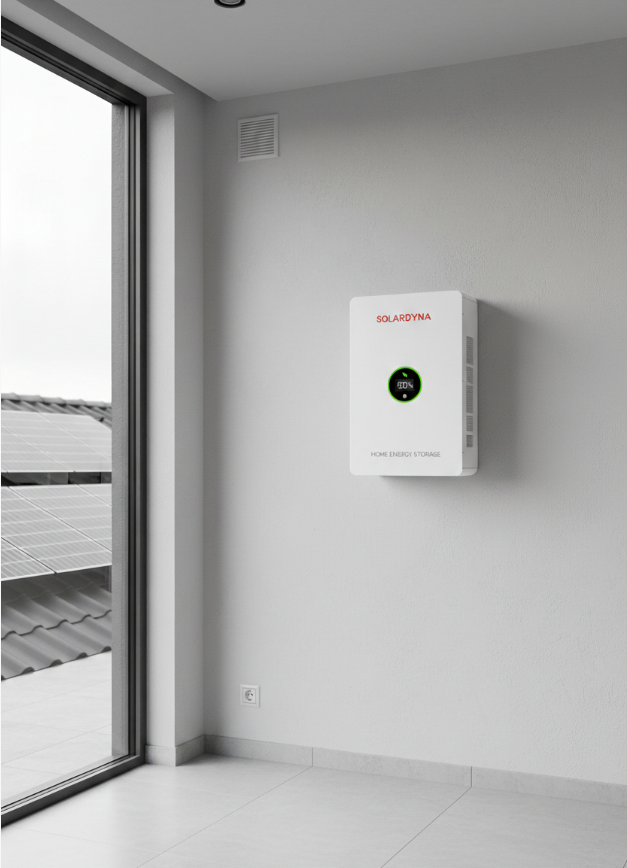
Environment: While LiFePO4 is incredibly safe, it hates freezing temperatures. Install your solar energy storage in a garage or utility room where temperatures stay above 0°C for optimal charging.
Circuit Separation: Work with your electrician to move your essential loads (fridge, lights, internet) to a sub panel backed up by the battery.
The 5KWH Solar Lithium Battery isn’t just a gadget; it’s an insurance policy against rising utility rates. It’s compact, incredibly safe, and offers a return on investment that lead-acid simply can’t touch.
Ready to take your home off-grid?