Battery Energy Storage System (BESS): Key Challenges and Why Procurement Decisions Define Long-Term ROI
Rising electricity costs, tightening grid regulations, and increasing pressure to deliver predictable ROI are forcing EPC contractors, distributors, and procurement managers to rethink how they deploy energy infrastructure. While the battery energy storage system (BESS) market is expanding rapidly, many projects still fail to meet financial expectations due to poor system design, inconsistent battery quality, or unreliable suppliers. What looks cost-effective upfront often results in higher lifecycle costs, unexpected downtime, and reduced system efficiency.
For B2B decision-makers evaluating battery energy storage system (BESS) solutions, the real challenge is not understanding what a BESS is—but identifying which system will deliver stable long-term performance under real-world operating conditions. This article helps EPC contractors, technical directors, and procurement managers evaluate how BESS works, identify hidden risks, and select the right supplier for sustainable project returns.
Why BESS Projects Fail: Hidden Risks in Supplier Selection
Despite the growing adoption of commercial and industrial energy storage systems, a significant number of projects underperform due to overlooked technical and supply chain risks. In many cases, procurement decisions are driven primarily by upfront pricing rather than total cost of ownership, leading to long-term operational inefficiencies.
1. The Illusion of “Same Specification” Systems
Many suppliers offer systems with similar nominal specifications—same kWh capacity, same voltage range, and similar form factors. However, these surface-level similarities often mask critical differences in:
- Battery cell consistency and grading standards
- BMS algorithm sophistication
- Thermal management system design
- Integration compatibility with PCS and EMS
For EPC contractors, this creates a dangerous scenario where two systems appear identical on paper but deliver vastly different real-world performance. Over time, these differences translate into capacity loss, reduced efficiency, and higher maintenance costs.
2. Lifecycle Cost vs. Initial Investment
A common mistake in commercial battery storage system procurement is focusing solely on initial CAPEX. While a lower upfront cost may improve short-term project feasibility, it often leads to:
- Faster battery degradation (especially with low-grade cells)
- Higher energy losses due to poor round-trip efficiency
- Increased downtime caused by system instability
In contrast, a well-designed energy storage system with optimized components can significantly reduce the Levelized Cost of Energy (LCOE) over its lifetime, even if the initial investment is higher.
3. Battery Inconsistency and Degradation Risks
Battery consistency is one of the most critical yet underestimated factors in BESS performance. Systems built with mixed or poorly matched cells often experience:
- Uneven charge/discharge cycles
- Accelerated capacity degradation
- Increased risk of thermal events
For large-scale BESS system deployments, even small inconsistencies at the cell level can compound into significant performance losses at the system level.
4. BMS and Compatibility Failures
The Battery Management System (BMS) acts as the control center of any battery energy storage system. However, not all BMS solutions are created equal. Poorly designed systems may:
- Fail to accurately estimate State of Charge (SOC)
- Lack predictive fault detection capabilities
- Struggle with integration across different PCS brands
For EPC contractors working with multi-vendor systems, compatibility issues between BMS, PCS, and EMS can lead to commissioning delays and operational inefficiencies.
5. Lack of Standardized Certification and Compliance
Another major risk lies in insufficient compliance with international standards. Reliable BESS system suppliers should provide certifications such as:
- IEC standards for electrical safety and performance
- UL certifications for system reliability
- UN38.3 for safe transportation of lithium batteries
Failure to meet these standards not only increases safety risks but can also delay project approvals and grid connection processes.
6. Supply Chain Instability and Delivery Risks
In today’s global market, supply chain reliability is just as important as product performance. Delays in battery delivery, inconsistent production quality, or lack of logistics experience can disrupt entire project timelines.
For distributors and EPC contractors, choosing a supplier with proven manufacturing capacity and global delivery experience is essential to ensuring project continuity.
Download the BESS Procurement Checklist
Before moving forward with any supplier, B2B buyers should evaluate systems based on a structured checklist that includes:
- Battery cell quality and traceability
- BMS functionality and integration capability
- System efficiency and lifecycle cost metrics
- Certification and compliance status
- Supplier manufacturing and delivery capabilities
Embedding this checklist into your procurement process can significantly reduce project risk and improve long-term ROI for any battery energy storage system deployment.
What Is a Battery Energy Storage System (BESS)?
A battery energy storage system (BESS) is an integrated solution designed to store electrical energy and dispatch it when needed to optimize energy usage, reduce operational costs, and enhance grid stability. Unlike standalone battery packs, a modern BESS system operates as a coordinated ecosystem that combines hardware, software, and control logic to manage energy flows intelligently.
For EPC contractors and technical decision-makers, understanding a BESS at the system level—not just as a battery—is essential. A well-engineered system ensures stable performance across varying load conditions, environmental temperatures, and grid fluctuations, which directly impacts ROI and project bankability.
Core Components of a BESS System
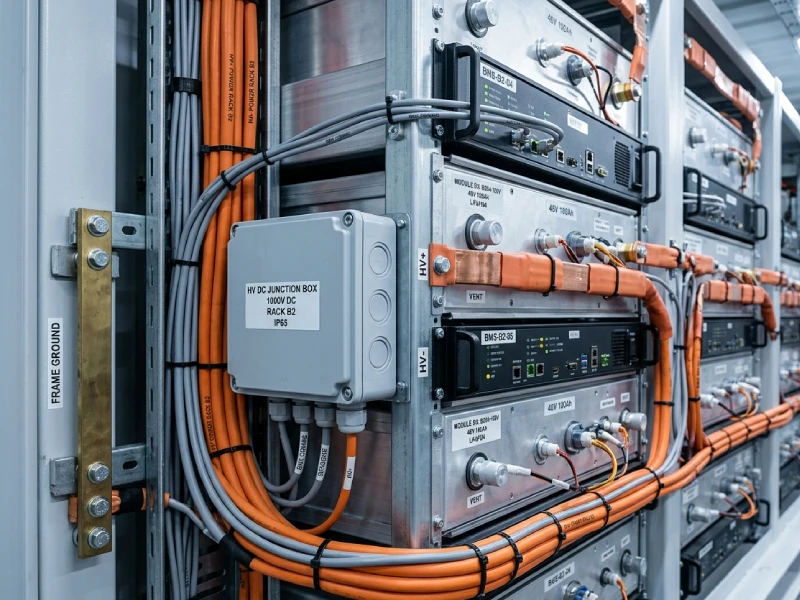
A commercial or industrial energy storage system typically consists of four key subsystems:
- Battery Pack: Stores energy using lithium-ion chemistry (most commonly LiFePO4 for safety and longevity)
- Battery Management System (BMS): Monitors and protects battery health
- Power Conversion System (PCS): Converts DC electricity to AC and vice versa
- Energy Management System (EMS): Optimizes energy flow based on demand, pricing, and system conditions
The effectiveness of a battery energy storage system (BESS) depends on how well these components are integrated—not just their individual specifications.
How BESS Works: From Energy Storage to Intelligent Dispatch
At its core, a BESS system operates through three primary phases: charging, storing, and discharging. However, in real-world applications, the process is far more complex due to dynamic energy pricing, load variability, and grid interaction.
Charging Phase: Energy Capture and Storage Efficiency
During the charging phase, electricity from sources such as solar PV systems or the utility grid is converted into DC power by the PCS and stored within the battery cells.
Key engineering considerations include:
- Charge rate optimization to minimize thermal stress
- Balancing strategies across battery cells
- Minimizing conversion losses in the PCS
For solar-integrated systems, charging typically occurs during off-peak hours or when excess solar generation is available, allowing businesses to maximize energy utilization.
Discharging Phase: Delivering Power When It Matters Most
In the discharging phase, stored energy is released to support loads during peak demand periods, grid outages, or high electricity price intervals.
Common use cases for commercial and industrial applications include:
- Peak shaving to reduce demand charges
- Backup power during outages
- Load shifting to optimize energy costs
The ability of a battery energy storage system to deliver consistent output under varying load conditions is a key determinant of system reliability.
Energy Management Optimization: The Role of EMS
The Energy Management System (EMS) acts as the decision-making layer of the entire energy storage system. It continuously analyzes:
- Real-time load demand
- Electricity pricing signals
- Battery state of charge (SOC)
- Grid conditions
Based on these inputs, the EMS determines when to charge, discharge, or remain idle—ensuring optimal performance and economic return.
For EPC contractors, EMS flexibility is crucial, especially when integrating with existing infrastructure or hybrid systems combining solar, diesel generators, and grid power.
Key Technical Factors That Impact BESS Performance
Not all battery energy storage systems are created equal. Beyond basic specifications, several technical factors significantly influence system performance, safety, and long-term value.
Battery Cell Technology: Why LiFePO4 Dominates BESS Applications
Lithium Iron Phosphate (LiFePO4) has become the preferred chemistry for most commercial battery storage systems due to its superior safety profile and long cycle life.
Key advantages include:
- High thermal stability, reducing fire risk
- Cycle life exceeding 6000 cycles under optimal conditions
- Stable voltage output across discharge cycles
However, not all LiFePO4 cells offer the same performance. Procurement teams should verify:
- Cell grading (A-grade vs. mixed-grade)
- Consistency testing data
- Supplier traceability and batch control
Even within a high-quality BESS system, poor cell selection can significantly reduce overall system lifespan.
BMS (Battery Management System): The Intelligence Layer
The BMS is responsible for monitoring and protecting the battery pack, ensuring safe and efficient operation. A high-quality BMS should provide:
- Accurate State of Charge (SOC) and State of Health (SOH) estimation
- Cell balancing to maintain uniform performance
- Real-time fault detection and diagnostics
Advanced BMS solutions also incorporate predictive analytics, enabling early detection of potential failures and reducing downtime.
In large-scale battery energy storage system (BESS) deployments, BMS performance directly affects system reliability and maintenance costs.
System Compatibility: PCS and EMS Integration
Integration between PCS and EMS is often overlooked but plays a critical role in overall system efficiency. Compatibility challenges may arise when:
- Using multi-vendor components
- Integrating with existing solar PV systems
- Operating in hybrid grid/off-grid environments
For EPC contractors, selecting a BESS system supplier that offers proven integration with major inverter and PCS brands can significantly reduce commissioning risks.
Round-Trip Efficiency and Energy Losses
Round-trip efficiency measures how much energy can be retrieved from the system compared to what was stored. High-performance energy storage systems typically achieve efficiencies above 90%.
Factors affecting efficiency include:
- PCS conversion losses
- Internal battery resistance
- Thermal management effectiveness
Lower efficiency directly translates into higher operational costs over time, making it a critical parameter for ROI calculations.
Thermal Management and Safety Engineering
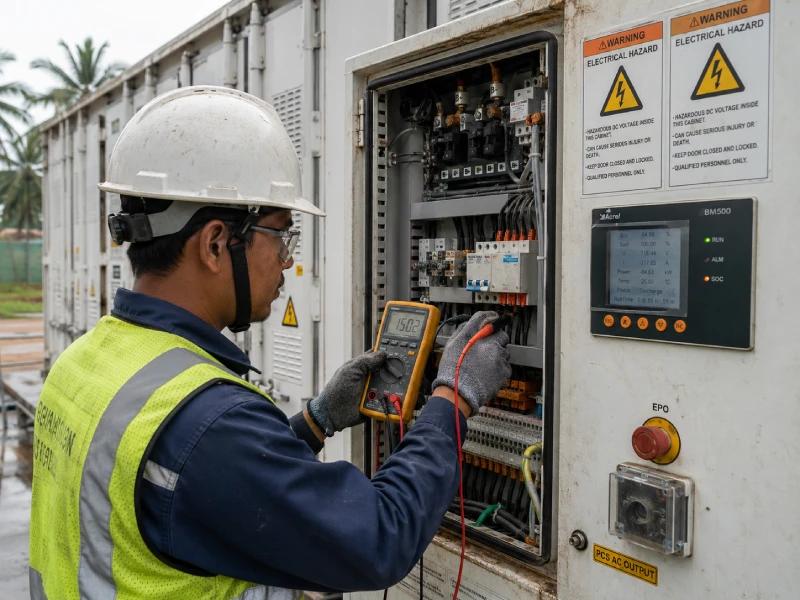
Temperature control is essential for maintaining battery performance and safety. Poor thermal management can lead to:
- Accelerated degradation
- Reduced capacity
- Increased risk of thermal runaway
High-quality battery energy storage systems incorporate:
- Active cooling systems (air or liquid)
- Thermal insulation between modules
- Fire suppression systems
These features are particularly important for large-scale or containerized BESS deployments.
Certification and Compliance Standards
Compliance with international standards is a non-negotiable requirement for any commercial BESS system. Key certifications include:
- IEC standards for electrical performance and safety
- UL certifications for system reliability
- UN38.3 for transportation safety
For EPC contractors, certified systems reduce project approval timelines and ensure compliance with local regulations.
Expert Tip: Evaluate System Efficiency, Not Just Capacity
Expert Tip: When comparing battery energy storage system options, avoid focusing solely on nominal capacity (kWh). Instead, evaluate:
- Round-trip efficiency
- Degradation rate over time
- Usable capacity under real operating conditions
A lower-cost system with poor efficiency can increase total energy costs by 15–25% over its lifetime, ultimately reducing project profitability.
For B2B buyers, this means that true value lies in system performance over time—not just initial specifications.
Beyond the Product: What Makes a Reliable BESS Supplier
For EPC contractors, distributors, and procurement managers, selecting a battery energy storage system is not just about comparing technical specifications—it is about evaluating the long-term reliability of the supplier behind the system. In real-world projects, supplier capability often has a greater impact on project success than individual component performance.
A high-quality BESS system backed by a weak supplier can lead to delays, inconsistent quality, and lack of technical support. Conversely, a strong manufacturing partner ensures stable supply, consistent performance, and long-term service continuity.
Manufacturing Capability & Quality Control
A reliable battery energy storage system (BESS) supplier must demonstrate robust manufacturing infrastructure and strict quality control processes. This includes:
- Automated production lines to ensure consistency and scalability
- Battery cell sorting and grading systems (capacity, resistance, voltage matching)
- End-of-line testing for each battery module and system
- Traceability systems for raw materials and production batches
For B2B buyers, these factors directly affect product consistency across large-volume orders. In utility-scale or commercial deployments, even minor inconsistencies can lead to uneven system performance and increased maintenance costs.
Additionally, suppliers with vertically integrated manufacturing capabilities—covering battery modules, BMS development, and system assembly—are better positioned to control quality and reduce integration risks.
OEM / ODM Customization for EPC Projects
Standardized products rarely meet the complex requirements of real-world projects. A competitive energy storage system supplier should offer flexible OEM/ODM capabilities, allowing EPC contractors to tailor solutions based on:
- Project-specific capacity requirements (kWh / MWh scale)
- Installation environments (indoor, outdoor, containerized systems)
- Grid conditions and application scenarios
- Integration with existing solar PV or hybrid systems
Customization capabilities not only improve system performance but also reduce engineering complexity during installation and commissioning.
For distributors, OEM flexibility also enables product differentiation in competitive markets, strengthening brand positioning and customer retention.
After-Sales Support & Warranty Structure
One of the most overlooked aspects of battery energy storage system procurement is after-sales support. Even the most advanced system requires ongoing monitoring, maintenance, and technical assistance.
Key evaluation criteria include:
- Warranty duration (typically 10 years or more for LiFePO4 systems)
- Performance guarantees (capacity retention over time)
- Remote monitoring and diagnostics capabilities
- Availability of local or regional service teams
A strong after-sales framework reduces downtime, ensures rapid issue resolution, and protects long-term investment value.
For EPC contractors managing multiple projects, reliable technical support can significantly reduce operational risk and improve client satisfaction.
Logistics & Global Delivery Capability
Global deployment of BESS systems requires specialized logistics expertise, particularly for lithium-based batteries. Suppliers must demonstrate:
- Compliance with UN38.3 transportation standards
- Experience in handling hazardous goods shipping
- Efficient coordination of sea and air freight
- Ability to meet project timelines across different regions
Delays in delivery can disrupt entire project schedules, leading to financial penalties and reputational damage. Therefore, logistics capability is a critical factor in supplier evaluation.
For distributors, reliable delivery timelines also ensure stable inventory management and consistent market supply.
How to Choose the Right BESS Supplier: A Practical Checklist
To minimize risk and maximize ROI, B2B buyers should evaluate potential suppliers using a structured checklist. A reliable battery energy storage system partner should meet the following criteria:
- Provides fully integrated system solutions (not just battery modules)
- Offers internationally recognized certifications (IEC, UL, UN38.3)
- Demonstrates strong manufacturing and quality control capabilities
- Supports OEM/ODM customization for project-specific needs
- Has proven project experience in commercial or industrial applications
- Provides long-term technical support and warranty coverage
This checklist helps procurement managers and EPC contractors move beyond price comparison and focus on long-term value creation.
Get a Custom BESS Solution for Your Project
Selecting the right battery energy storage system (BESS) is a strategic decision that directly impacts project profitability, operational stability, and long-term scalability. Working with an experienced supplier ensures that your system is not only technically sound but also aligned with your business objectives.
Request a Quotation
To receive an accurate quotation, provide the following project details:
- Project size (kWh / MWh capacity)
- Application scenario (commercial, industrial, solar integration, backup power)
- Installation environment and location
- Grid conditions and technical requirements
A detailed quotation enables suppliers to recommend the most suitable BESS system configuration for your project.
Download Technical Datasheet
Technical documentation is essential for evaluating system performance and compatibility. A comprehensive datasheet should include:
- System architecture and component specifications
- Electrical parameters and efficiency ratings
- Safety features and certification details
- Operating conditions and environmental limits
Reviewing these details allows technical directors to validate system suitability before procurement.
Contact SolarDyna Experts
For complex projects, direct consultation with technical experts is critical. A professional energy storage system supplier should offer:
- 1-on-1 technical consultation
- System design and optimization support
- Integration guidance with existing infrastructure
Engaging early with experienced engineers helps identify potential challenges and optimize system performance from the design stage.
Conclusion: Turning BESS Knowledge into Competitive Advantage
As the global energy landscape evolves, battery energy storage systems are becoming a critical component of modern power infrastructure. However, successful deployment requires more than just understanding how a BESS system works—it demands a strategic approach to supplier selection, system design, and lifecycle management.
For EPC contractors, distributors, and procurement managers, the key to long-term success lies in evaluating total system value rather than initial cost. By focusing on performance, reliability, and supplier capability, businesses can unlock the full potential of battery energy storage systems and achieve sustainable returns on investment.
In an increasingly competitive market, the right battery energy storage system (BESS) is not just a technical solution—it is a strategic asset that drives efficiency, resilience, and growth.
Looking for the Right Battery Energy Storage System (BESS) for Your Project?
Choosing the right battery energy storage system (BESS) is critical for maximizing ROI, ensuring system stability, and reducing long-term operational risks. We provide customized BESS solutions for EPC contractors, distributors, and commercial & industrial energy projects.
✔ OEM/ODM customization for commercial and utility-scale projects
✔ Engineering support for system design, integration, and optimization
✔ Certified solutions (IEC, UL, UN38.3) with global delivery capability
Talk to our experts for a custom battery energy storage system design tailored to your project requirements
Frequently Asked Questions (FAQ) About Battery Energy Storage System (BESS)
1. What is the most important factor when selecting a battery energy storage system (BESS)?
For B2B buyers, the most critical factor is not just system capacity (kWh), but overall lifecycle performance. This includes round-trip efficiency, battery degradation rate, and system integration quality. A high-quality battery energy storage system should deliver stable performance over 10+ years, minimizing total cost of ownership (TCO) rather than just reducing upfront investment.
2. How does a battery energy storage system (BESS) improve ROI for commercial and industrial projects?
A battery energy storage system (BESS) improves ROI by enabling peak shaving, load shifting, and energy arbitrage. It allows businesses to store energy when electricity prices are low and use it during peak periods. Additionally, integrating BESS with solar systems reduces reliance on the grid, further lowering operational costs and improving energy independence.
3. Why is LiFePO4 the preferred battery chemistry for BESS applications?
LiFePO4 batteries are widely used in energy storage systems due to their superior safety, long cycle life (typically over 6000 cycles), and thermal stability. Compared to other lithium-ion chemistries, LiFePO4 significantly reduces the risk of thermal runaway, making it ideal for large-scale commercial and industrial BESS deployments.
4. What certifications should a reliable BESS system have?
A compliant BESS system should include certifications such as IEC (for safety and performance), UL (for system reliability), and UN38.3 (for transportation safety). These certifications ensure that the system meets international standards and can be safely deployed across different regions and regulatory environments.
5. How important is BMS in a battery energy storage system?
The Battery Management System (BMS) is essential to the performance and safety of any battery energy storage system. It monitors parameters such as State of Charge (SOC), temperature, and voltage, while also protecting the system from overcharging, deep discharge, and thermal risks. A high-quality BMS can significantly extend battery lifespan and improve system reliability.
6. Can a BESS system be integrated with existing solar PV installations?
Yes, most modern battery energy storage systems (BESS) are designed for seamless integration with solar PV systems. Through compatible PCS and EMS configurations, BESS can store excess solar energy and discharge it when needed, improving energy utilization and reducing grid dependency. Compatibility with existing inverters should always be verified during procurement.
7. What are the key risks when choosing a BESS supplier?
Major risks include inconsistent battery quality, lack of system integration capability, insufficient certifications, and weak after-sales support. Choosing an experienced BESS system supplier with proven manufacturing capability, strong quality control, and global delivery experience is essential to minimizing project risks and ensuring long-term performance.
8. What information should be prepared before requesting a BESS quotation?
To receive an accurate proposal for a battery energy storage system, buyers should prepare key project details such as required capacity (kWh/MWh), application scenario (commercial, industrial, solar integration), installation environment, and grid conditions. Providing complete information allows suppliers to recommend optimized system configurations and improve project feasibility.