Why Solar Inverter Types Matter in Modern EPC Solar Projects
The selection of solar inverter types is one of the most decisive engineering and procurement factors in any photovoltaic project. For EPC contractors, solar distributors, and industrial energy developers, the choice between on-grid solar inverter, off-grid solar inverter, and hybrid solar inverter systems directly determines system architecture, project ROI, lifecycle cost, and long-term operational stability.
In modern solar deployment, solar inverter types are no longer simple power conversion devices. They have evolved into intelligent energy control systems that influence grid interaction, energy storage integration, and overall system efficiency. This article provides a comprehensive technical and commercial breakdown of different solar inverter types, helping B2B buyers make structured and profitable decisions in solar project planning and procurement.
With global energy transition accelerating and electricity pricing volatility increasing across industrial markets, demand for optimized solar inverter types has significantly grown. EPC companies and system integrators are now required to evaluate not only cost but also scalability, grid compliance, and energy storage readiness when selecting inverter technologies.
Why Solar Inverter Types Are a Critical Decision in Commercial PV Systems
In any photovoltaic system, the inverter serves as the central intelligence unit that controls energy conversion and system synchronization. Different solar inverter types define how solar energy is consumed, stored, or exported to the grid, making inverter selection a core factor in system design.
For B2B solar projects, this decision is closely tied to financial modeling, engineering constraints, and regulatory compliance. A mismatch in solar inverter types can lead to inefficient energy utilization, grid instability issues, or increased maintenance costs over the system lifecycle.
Key reasons inverter selection impacts project success
- Energy efficiency: Different solar inverter types directly affect conversion efficiency and system losses
- Project economics: CAPEX and OPEX vary significantly across inverter architectures
- Grid compliance: Utility requirements differ by region and system type
- System reliability: Stability depends on inverter topology and design quality
- Expansion capability: Future scalability is determined by inverter compatibility
Because of these factors, experienced EPC contractors treat solar inverter types selection as a strategic engineering decision rather than a simple component purchase.
Overview of Main Solar Inverter Types in Modern Energy Systems
There are three primary solar inverter types widely used in residential, commercial, and utility-scale photovoltaic systems. Each category is designed for specific operational environments and energy strategies.
Core categories of solar inverter types
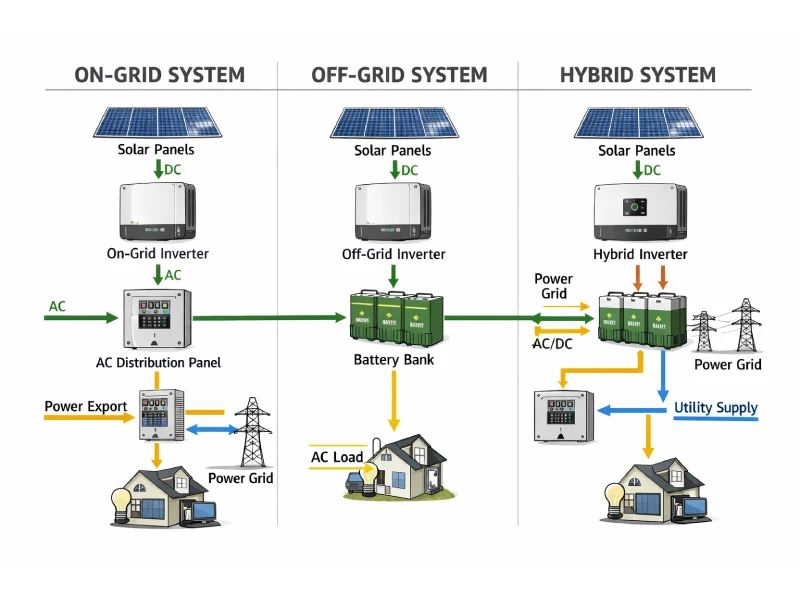
- On-grid solar inverter (grid-tied inverter): Designed for direct grid connection without battery storage
- Off-grid solar inverter: Independent system requiring battery storage for standalone operation
- Hybrid solar inverter: Integrated system combining solar, grid, and battery storage management
These solar inverter types differ significantly in terms of architecture, cost structure, energy control logic, and application suitability. Choosing the correct type is essential for achieving optimal system performance and financial return.
Market evolution of solar inverter types
Over the past decade, solar inverter types have evolved from simple DC-to-AC converters into advanced energy management platforms. The integration of battery storage and smart grid functionality has significantly increased the importance of hybrid systems in modern solar infrastructure.
- Early stage: Basic grid-tied inverter systems dominated the market
- Transition phase: Off-grid systems expanded in remote applications
- Current stage: Hybrid solar inverter types are becoming the mainstream solution for flexible energy management
This evolution reflects the increasing complexity of energy demand patterns and the need for more intelligent power control systems in industrial and commercial environments.
On-Grid Solar Inverter Systems in B2B Applications
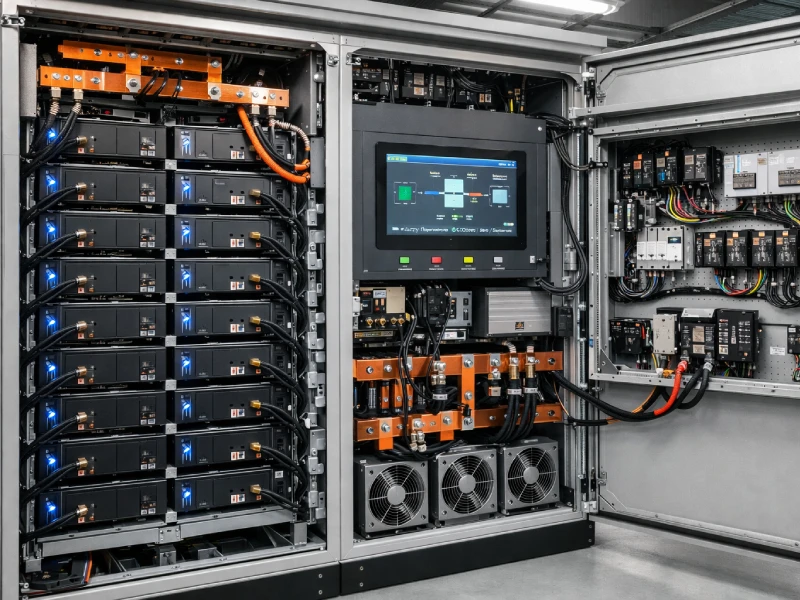
Among all solar inverter types, on-grid solar inverters remain the most widely deployed solution in utility-scale and commercial photovoltaic projects. These systems are directly connected to the utility grid and operate by synchronizing solar-generated electricity with grid parameters.
Because of their simplified architecture and high efficiency, on-grid systems are typically preferred for large-scale EPC projects where grid stability is reliable and energy storage is not required.
Technical foundation of on-grid solar inverter types
- DC power from solar panels is converted into AC power
- Output is synchronized with grid frequency and voltage
- Excess energy is exported to the utility grid
- No battery storage system is required
Business value of on-grid systems
- Lowest cost structure among mainstream solar inverter types
- High conversion efficiency and stable output performance
- Reduced maintenance complexity and operational cost
- Ideal for high-volume EPC and utility-scale deployment
However, on-grid systems depend entirely on grid availability, which limits their applicability in regions with unstable electricity infrastructure or frequent outages.
Typical use cases
- Utility-scale solar farms with stable grid access
- Commercial rooftop solar installations
- Industrial energy optimization projects
- Large EPC turnkey solar developments
Off-Grid Solar Inverter Systems for Independent Power Applications
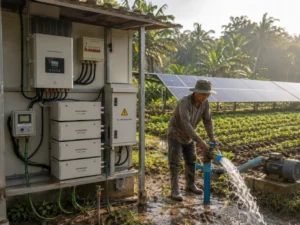
Among all solar inverter types, the off-grid solar inverter plays a critical role in energy systems where utility grid access is unavailable, unstable, or economically impractical. These systems are widely adopted in remote industrial sites, infrastructure projects, and regions with weak grid coverage, where energy independence is not optional but a core operational requirement.
In B2B solar project development, off-grid solar inverter types are typically selected when reliability and autonomy outweigh cost considerations. Unlike on-grid systems, off-grid architectures rely heavily on battery storage and energy management systems to ensure continuous power supply regardless of solar generation conditions.
How off-grid solar inverter types operate in real systems
Off-grid systems are designed as fully autonomous energy networks. Their operational logic is fundamentally different from other solar inverter types, as they must balance generation, storage, and consumption internally without external grid support.
- Solar PV modules generate DC electricity during daylight hours
- Energy is stored in battery banks for continuous availability
- The inverter converts stored DC energy into stable AC output
- Power supply remains uninterrupted regardless of grid conditions
This independence makes off-grid solar inverter types highly suitable for mission-critical applications where power interruption is unacceptable.
Technical advantages of off-grid solar inverter systems
From a system engineering perspective, off-grid solar inverter types offer several advantages that are particularly valuable in non-grid-connected environments.
- Energy independence: Fully autonomous operation without grid dependency
- System reliability: Stable power supply in remote or unstable regions
- Scalability: Modular expansion through additional PV and battery capacity
- Infrastructure flexibility: No need for utility grid infrastructure investment
These benefits make off-grid systems a strategic solution for industries operating in geographically challenging or infrastructure-limited regions.
Limitations and cost considerations in B2B deployment
Despite their advantages, off-grid solar inverter types also introduce higher system complexity and cost structure compared to other inverter categories. B2B buyers must carefully evaluate lifecycle economics before project implementation.
- Higher initial investment due to battery storage systems
- Increased system design complexity and engineering requirements
- Battery degradation and replacement lifecycle costs
- More advanced energy management system requirements
In many EPC projects, the total cost of ownership (TCO) becomes a critical factor when selecting off-grid solar inverter types, especially in medium to large-scale deployments.
Typical industrial applications of off-grid systems
- Remote mining operations and extraction facilities
- Telecommunication base stations in rural regions
- Island electrification and isolated microgrids
- Oil and gas infrastructure in off-grid environments
- Military and emergency backup power systems
These applications demonstrate that off-grid solar inverter types are not niche solutions but essential infrastructure components in global energy diversification strategies.
Hybrid Solar Inverter Systems: The Next Generation of Energy Integration
Hybrid systems represent the most advanced category among all solar inverter types. They integrate solar PV generation, battery storage, and grid connectivity into a unified intelligent energy management platform. This allows dynamic control of energy flow based on real-time demand, electricity pricing, and grid stability conditions.
In modern B2B solar markets, hybrid solar inverter types are increasingly becoming the preferred solution for commercial and industrial applications due to their flexibility and optimization capabilities.
Operating principle of hybrid solar inverter types
Hybrid systems are designed to intelligently prioritize energy sources based on system conditions. This enables maximum energy efficiency and operational flexibility across different usage scenarios.
- Solar energy is prioritized for direct consumption
- Excess energy is stored in battery systems
- Stored energy is used during peak demand or nighttime
- Grid power is used as backup or export channel
This multi-layered control structure differentiates hybrid solar inverter types from conventional on-grid or off-grid systems.
Why hybrid solar inverter systems are growing rapidly
The increasing adoption of hybrid solar inverter types is driven by structural changes in global energy systems, including rising electricity prices, grid instability, and policy support for energy storage integration.
- Energy storage integration trend: Batteries are becoming standard in new solar installations
- Grid instability concerns: Industrial users require backup power capability
- Energy cost optimization: Peak shaving and load shifting reduce electricity bills
- Policy incentives: Many markets support hybrid and storage-based systems
As a result, hybrid solar inverter types are transitioning from premium solutions to mainstream adoption in commercial energy systems.
Business advantages of hybrid solar inverter types
From a B2B perspective, hybrid systems offer significantly higher strategic value compared to traditional solar inverter types.
- Energy cost optimization: Reduce peak demand charges and grid dependency
- Operational resilience: Maintain power supply during outages
- Smart energy management: Improve system-level energy efficiency
- Higher ROI potential: Optimize self-consumption ratio
These advantages make hybrid systems particularly attractive for commercial buildings, manufacturing facilities, and smart industrial parks.
Typical applications of hybrid solar inverter systems
- Commercial and industrial buildings with high energy demand
- Manufacturing plants requiring stable power supply
- Smart microgrid and distributed energy systems
- Data centers and critical infrastructure facilities
- High-value commercial properties with energy optimization goals
Hybrid solar inverter types are increasingly being positioned as the standard architecture for next-generation energy systems due to their adaptability and long-term scalability.
Technical Comparison of Solar Inverter Types for B2B Decision Making
A clear understanding of solar inverter types is essential for EPC contractors, distributors, and energy developers when designing cost-efficient and scalable photovoltaic systems. Each inverter category presents different trade-offs in terms of cost structure, system complexity, energy independence, and long-term operational performance.
In commercial solar project planning, selecting the correct solar inverter types is not only a technical decision but also a financial optimization strategy that directly affects ROI, lifecycle cost, and system reliability.
Core comparison of solar inverter types
- On-grid solar inverter: High efficiency, lowest cost, grid-dependent operation, ideal for stable utility environments
- Off-grid solar inverter: Fully independent system, higher cost, requires battery storage, suitable for remote areas
- Hybrid solar inverter: Flexible architecture, integrates grid + battery + solar, optimized for energy management and backup power
These solar inverter types represent three fundamentally different system philosophies: cost optimization, energy independence, and intelligent energy management.
How to Choose the Right Solar Inverter Type for Your Project
Selecting the appropriate solar inverter types requires a structured evaluation of project conditions, energy demand patterns, and financial targets. B2B buyers must consider both technical constraints and long-term operational objectives.
1. Based on project application scenario
- Utility-scale solar farms: On-grid solar inverter systems are preferred due to high efficiency and low CAPEX
- Remote industrial sites: Off-grid solar inverter systems ensure autonomous operation
- Commercial and industrial facilities: Hybrid solar inverter systems provide optimal balance of cost and flexibility
2. Based on grid stability conditions
- Stable and reliable grid infrastructure → On-grid solar inverter types
- Unstable or partially reliable grid → Hybrid solar inverter types
- No grid access → Off-grid solar inverter types
3. Based on financial and ROI considerations
Different solar inverter types significantly affect project economics. On-grid systems typically deliver the lowest initial investment, while hybrid systems provide higher long-term value through energy optimization and peak shaving capabilities.
- Lowest CAPEX: On-grid systems
- Balanced cost and flexibility: Hybrid systems
- Highest independence but higher cost: Off-grid systems
Common Mistakes in Solar Inverter Type Selection
Many B2B buyers underestimate the complexity of selecting solar inverter types, leading to suboptimal system performance and increased lifecycle costs.
Frequent procurement and design mistakes
- Focusing only on initial purchase price instead of total lifecycle cost
- Ignoring local grid code compliance requirements
- Overlooking future expansion or system scalability needs
- Underestimating battery integration requirements in hybrid systems
A structured evaluation of solar inverter types helps avoid these common pitfalls and improves long-term project profitability.
OEM and Manufacturer Considerations in Solar Inverter Selection
For industrial buyers, selecting a reliable manufacturer is as important as choosing the correct solar inverter types. OEM and ODM capabilities directly influence system compatibility, customization flexibility, and supply chain reliability.
Why manufacturer capability matters
- Custom grid-code adaptation for different international markets
- Flexible voltage, frequency, and system configuration options
- Stable mass production capacity for large EPC projects
- Technical support during design, installation, and commissioning
Advanced manufacturers providing multiple solar inverter types can significantly reduce integration risk and improve project execution efficiency.
Integrated energy system advantage
Leading suppliers such as SolarDyna provide full-range solutions across different solar inverter types, enabling EPC contractors to simplify procurement, improve compatibility, and accelerate deployment timelines.
Future Trends in Solar Inverter Types and Energy Systems
The evolution of solar inverter types is being driven by global energy transition trends, digitalization, and increased adoption of distributed energy resources.
- Rapid expansion of hybrid solar inverter systems as the industry standard
- Integration of AI-driven energy management platforms
- Increased deployment of battery storage across all system types
- Stronger focus on smart grid interoperability and demand response
These trends indicate that future solar inverter types will evolve from standalone devices into fully integrated energy intelligence systems.
Conclusion: Strategic Value of Solar Inverter Types in B2B Solar Projects
The selection of solar inverter types—on-grid, off-grid, or hybrid—is a strategic decision that determines system efficiency, operational resilience, and long-term financial performance. Each type serves a distinct role in modern energy infrastructure, and the optimal choice depends on project-specific conditions and business objectives.
Among all solar inverter types, hybrid systems are emerging as the most future-proof solution due to their flexibility, energy optimization capability, and compatibility with battery storage technologies.
As a full-range solar solution manufacturer, SolarDyna supports all major solar inverter types with OEM/ODM customization, engineering support, and scalable production capacity for global EPC and distribution partners.
For technical consultation, project evaluation, or OEM cooperation, contact our engineering team to explore tailored solutions for your solar projects.
Looking for the Right Solar Inverter Solution for Your Project?
Selecting the right solar inverter types is critical for system efficiency, ROI, and long-term stability. We provide on-grid, off-grid, and hybrid solar inverter solutions designed for EPC contractors, distributors, and industrial energy developers.
✔ OEM/ODM customization for EPC and distributor projects
✔ Engineering support for system design and grid integration
✔ Reliable manufacturing capacity for large-scale solar deployment
Speak with our engineering team for a custom solar inverter system design tailored to your project requirements
Frequently Asked Questions About Solar Inverter Types for B2B Projects
Q1: What are the main solar inverter types used in commercial and industrial PV systems?
A: The main solar inverter types include on-grid solar inverters, off-grid solar inverters, and hybrid solar inverters. On-grid systems connect directly to the utility grid, off-grid systems operate independently with battery storage, and hybrid systems combine both grid connection and energy storage for flexible energy management.
Q2: Which solar inverter type is most suitable for EPC utility-scale projects?
A: For utility-scale solar projects, on-grid solar inverter systems are typically the preferred choice among solar inverter types due to their high efficiency, lower cost structure, and ability to feed electricity directly into the grid. They are widely used in large solar farms with stable grid infrastructure.
Q3: When should a project choose off-grid solar inverter systems?
A: Off-grid solar inverter systems are recommended when there is no stable grid access or when energy independence is required. Among all solar inverter types, off-grid solutions are ideal for remote industrial sites, mining operations, telecom stations, and island-based energy systems where grid connection is not feasible.
Q4: What are the advantages of hybrid solar inverter systems compared to other types?
A: Hybrid systems are the most flexible among solar inverter types. They combine solar power generation, battery storage, and grid interaction. This allows users to store excess energy, reduce peak electricity costs, and maintain backup power during outages, making them highly suitable for commercial and industrial applications.
Q5: How do solar inverter types impact system cost and ROI?
A: Different solar inverter types significantly affect project economics. On-grid systems have the lowest initial investment but no storage capability. Off-grid systems require higher investment due to batteries. Hybrid systems have medium-to-high cost but provide better long-term ROI through energy optimization and peak shaving benefits.
Q6: What technical factors should be considered when selecting solar inverter types?
A: Key technical factors include grid stability, load demand, battery compatibility, system scalability, and efficiency rating. Evaluating these parameters ensures the selected solar inverter types align with both engineering requirements and long-term operational goals of the project.
Q7: Can different solar inverter types be integrated into one energy system?
A: Yes, hybrid solar inverter systems are specifically designed to integrate features of multiple solar inverter types. They allow simultaneous grid connection, battery storage, and solar energy utilization, enabling flexible energy management strategies in complex commercial systems.
Q8: What should B2B buyers look for in a solar inverter manufacturer?
A: B2B buyers should evaluate manufacturing capability, OEM/ODM support, certifications (such as CE, IEC, UL), production capacity, and engineering support. A reliable supplier of solar inverter types should also provide system integration support and long-term after-sales service for EPC and distributor projects.