Understanding solar battery ROI is critical for EPC contractors, industrial energy users, and commercial developers evaluating energy storage investments. As global electricity tariffs become more volatile and demand charges increase, solar + storage systems are no longer optional—they are becoming a core infrastructure asset for energy cost optimization and resilience.
In modern commercial energy storage projects, solar battery ROI is no longer defined by simple electricity savings. Instead, it reflects a multi-layer financial structure that includes peak shaving, time-of-use arbitrage, backup power value, and grid interaction capabilities. This shift requires a more engineering-driven evaluation model rather than a traditional financial assumption.
This article provides a structured, EPC-level analysis of solar battery ROI, including technical parameters, financial models, degradation behavior, and real-world benchmark scenarios. It is designed specifically for procurement managers, technical directors, and energy project developers seeking long-term supply chain reliability and investment predictability.
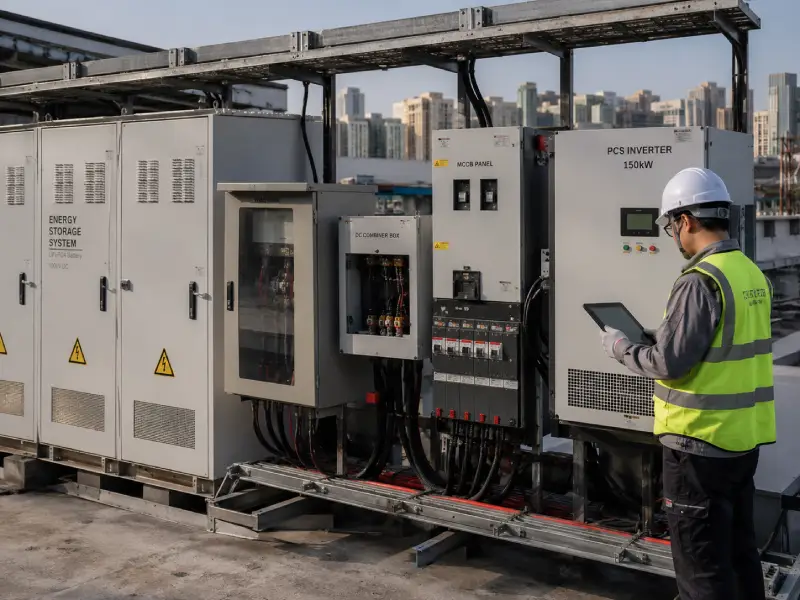
1. Executive Summary: Why Solar Battery ROI Is a System-Level Engineering Metric
1.1 Solar Battery ROI Has Evolved Beyond Simple Payback Calculations
Historically, battery storage economics were evaluated using simple payback period calculations based on electricity savings. However, modern solar battery ROI models must incorporate multiple revenue and cost layers that interact dynamically over system lifetime.
These include:
- Peak shaving savings from demand charge reduction
- Time-of-use energy arbitrage (charging at low tariff, discharging at high tariff)
- Backup power value during grid outages
- Grid services participation (where applicable)
This multi-variable structure means that commercial energy storage ROI cannot be accurately estimated without load profile simulation and tariff modeling.
1.2 Why Traditional ROI Models Fail in EPC Projects
In many EPC bidding scenarios, simplified ROI assumptions are still used, which leads to significant deviation between projected and actual performance. The most common failures include:
- Ignoring battery degradation over time
- Using static load assumptions instead of dynamic load curves
- Overestimating round-trip efficiency under real operating conditions
- Failing to include EMS dispatch constraints
These issues directly distort solar battery ROI calculations and can reduce actual project IRR by 10–25% in real-world deployments.
Expert Engineering Insight:
The accuracy of ROI forecasting in commercial ESS projects depends more on load behavior modeling than on battery specification alone. System-level interaction defines long-term financial performance.
2. What Actually Drives Solar Battery ROI in Commercial Energy Storage Systems
2.1 Electricity Tariff Structure and Peak Demand Charges
One of the strongest drivers of solar battery ROI is the structure of electricity tariffs. In industrial and commercial sectors, electricity costs are often dominated not by energy consumption alone, but by peak demand charges.
In such systems, even a small reduction in peak demand can lead to disproportionately large cost savings, making peak shaving one of the most important ROI contributors in commercial energy storage systems.
2.2 Battery Cycle Life and Degradation Behavior
Lithium iron phosphate (LiFePO4) chemistry has become the industry standard for commercial ESS applications due to its high cycle life and thermal stability. Typical cycle life ranges between 6000 and 8000 cycles under optimal conditions.
However, real-world degradation depends heavily on:
- Depth of discharge (DoD)
- Charging/discharging C-rate
- Ambient temperature conditions
- System-level thermal management design
Degradation directly affects long-term solar battery ROI because usable capacity decreases over time, reducing annual energy shifting capability.
2.3 System Efficiency and Energy Loss Factors
Round-trip efficiency is another key parameter influencing battery storage payback period. Commercial systems typically operate between 85% and 95% efficiency depending on inverter quality, battery chemistry, and EMS optimization.
Even a 5% efficiency difference can significantly affect cumulative ROI over a 10–15 year project lifecycle.
3. Engineering ROI Model for Commercial Solar Battery Storage Systems
3.1 Standard ROI Formula in Commercial Energy Storage Projects
In order to accurately evaluate solar battery ROI, EPC engineers and energy developers must move beyond simplified payback assumptions and adopt a structured financial model that reflects real operating conditions of commercial energy storage systems.
The baseline ROI formula used in engineering-level ESS evaluation is defined as:
ROI = (Annual Net Benefit − OPEX) / CAPEX
However, in real-world commercial energy storage ROI modeling, this formula must be expanded to include:
- Battery degradation cost allocation
- Energy loss due to system inefficiency
- Tariff variability over time
- Dispatch strategy optimization (EMS behavior)
Without incorporating these variables, ROI projections can significantly overestimate system profitability.
3.2 Payback Period vs IRR vs NPV: What EPCs Actually Use
Different stakeholders in the energy storage value chain evaluate solar battery ROI using different financial metrics:
- Payback Period: Primary metric for EPC contractors and installers, focusing on investment recovery time
- IRR (Internal Rate of Return): Used by investors and project developers to evaluate capital efficiency
- NPV (Net Present Value): Used for long-term asset valuation and financial planning
In practice, EPC bidding processes often prioritize payback period, while institutional investors require IRR-based validation for project approval.
A mature battery storage payback period analysis must align all three metrics to avoid structural financial mismatch between stakeholders.
3.3 Load Profile-Based Simulation: The Core of Accurate ROI Modeling
The most critical factor affecting solar battery ROI accuracy is the load profile model. Unlike static assumptions, real industrial consumption patterns fluctuate significantly throughout the day, week, and season.
Engineering-grade ESS simulations typically use:
- 15-minute interval load data sampling
- Seasonal demand variation adjustment
- Peak clustering behavior analysis
- Dynamic tariff mapping (TOU pricing structures)
Without this level of detail, ROI modeling becomes statistically unreliable, especially in high-demand industrial environments.
Expert Engineering Insight:
Most ROI deviations in commercial ESS projects originate from incorrect load profile assumptions rather than battery performance limitations. Accurate simulation is the foundation of financial predictability.
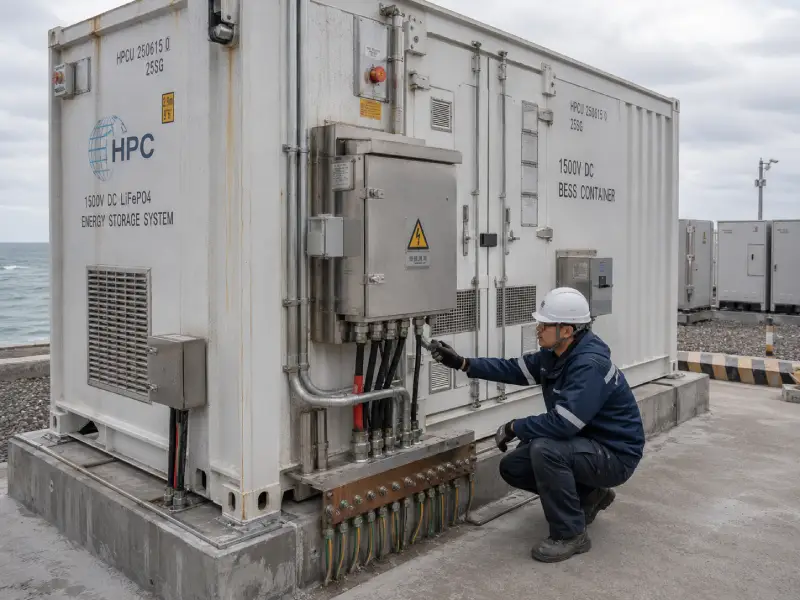
4. Real-World Commercial Solar Battery ROI Scenarios (Industry Benchmark Models)
4.1 Industrial Manufacturing Facilities (High Demand Charge Environment)
Industrial manufacturing plants represent the most favorable environment for solar battery ROI due to their high and predictable peak demand charges.
Typical characteristics include:
- High daytime and production-driven load spikes
- Stable operational schedules
- High demand charge sensitivity
Under these conditions, commercial ESS systems typically achieve a payback period of 3–5 years depending on tariff structure and system sizing.
4.2 Commercial Buildings (Retail, Logistics, Office Complexes)
Commercial buildings present a more complex ROI structure due to variable occupancy and irregular energy consumption patterns.
As a result, solar battery ROI in this segment generally ranges between 4–7 years, depending on:
- Load predictability
- Peak demand intensity
- Energy pricing structure
4.3 EV Charging + Solar + Storage Hybrid Systems
Hybrid systems integrating EV charging infrastructure introduce a highly dynamic load environment. In these systems, solar battery ROI is heavily dependent on utilization rate.
A utilization threshold above 60% is typically required to achieve stable economic performance in such configurations.
5. Key Risks That Directly Impact Solar Battery ROI in EPC Projects
5.1 Battery Degradation Mismatch Between Specification and Reality
One of the most underestimated risks in solar battery ROI calculations is the difference between nominal cycle life and actual operational cycle life.
Manufacturers often specify ideal laboratory conditions, while real-world environments introduce:
- Partial cycling behavior
- Temperature fluctuation stress
- Irregular charge/discharge patterns
This mismatch can reduce usable lifetime capacity and negatively affect long-term ROI.
5.2 Thermal Management and Environmental Stress
Temperature is a critical factor in LiFePO4 system performance. Elevated ambient temperatures accelerate degradation, while low temperatures reduce discharge efficiency.
Improper thermal design can therefore significantly reduce commercial energy storage ROI over time.
5.3 EMS Dispatch Inefficiency
Energy Management Systems (EMS) determine how and when energy is charged or discharged. Poor EMS logic can reduce system profitability by 10–30%, even if hardware performance is optimal.
This makes software optimization equally important as hardware quality in determining final solar battery ROI.
5.4 Supplier Quality and Cell Consistency Risk
Variability in cell grading and batch consistency introduces long-term uncertainty in system performance.
Inconsistent battery packs lead to:
- Imbalanced degradation rates
- Reduced usable capacity
- Higher maintenance requirements
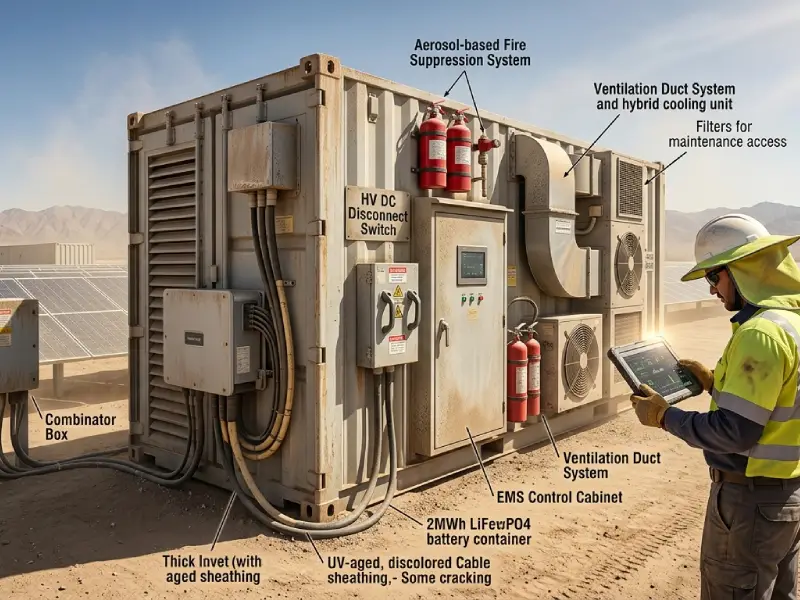
6. Engineering Strategies to Improve Solar Battery ROI in Commercial Projects
6.1 Load Profile Optimization: The Most Underrated ROI Lever
Improving solar battery ROI is not primarily a hardware upgrade problem—it is a load alignment problem. The most effective way to increase returns in commercial energy storage systems is to accurately match battery dispatch behavior with real consumption patterns.
EPC engineers typically use 15-minute interval load data to identify:
- Peak demand clustering windows
- Idle load baselines
- Seasonal consumption variations
By aligning discharge cycles with true peak demand periods, system operators can significantly increase the financial efficiency of commercial energy storage ROI.
6.2 Right-Sizing Strategy vs Oversizing Risk
One of the most common design mistakes in battery storage payback period calculations is oversizing the system based on theoretical maximum demand rather than real operational load.
Oversizing leads to:
- Higher CAPEX without proportional ROI gain
- Lower cycle utilization efficiency
- Extended payback period
Right-sizing, however, ensures that the system operates near optimal utilization thresholds, maximizing lifetime value extraction.
6.3 High-Cycle LiFePO4 Chemistry Selection for Long-Term ROI Stability
Lithium iron phosphate (LiFePO4) chemistry remains the dominant choice for commercial ESS due to its balance of:
- High cycle life (6000–8000 cycles)
- Thermal stability
- Lower degradation rate compared to NMC chemistries
This chemistry directly influences long-term solar battery ROI by maintaining usable capacity over extended operational lifecycles.
6.4 Intelligent EMS Optimization and Dispatch Logic
Modern Energy Management Systems (EMS) play a decisive role in determining financial outcomes of energy storage projects. Even with high-quality hardware, inefficient dispatch logic can reduce ROI by 10–30%.
Advanced EMS systems optimize:
- Time-of-use tariff response
- Predictive peak shaving
- Load forecasting integration
This makes software intelligence a core determinant of solar battery ROI, not just a secondary control layer.
Expert Engineering Insight:
In mature ESS markets, ROI differentiation is increasingly driven by EMS algorithms rather than battery chemistry alone. Hardware sets the ceiling, but software defines realized value.
7. Why Manufacturing Quality Determines Solar Battery ROI Performance
7.1 Cell Grading Consistency and Its Impact on Lifecycle Economics
Cell consistency is a foundational factor in determining long-term solar battery ROI. Variability in cell capacity or internal resistance leads to uneven degradation across battery packs.
This results in:
- Reduced usable system capacity over time
- Increased balancing losses
- Shortened effective lifecycle
For EPC buyers, this translates directly into reduced financial predictability and lower IRR.
7.2 Battery Management System (BMS) Precision and Safety Architecture
A high-precision BMS ensures voltage balancing accuracy, temperature monitoring stability, and safe operating limits across all cells.
Poor BMS design increases operational risk and reduces usable energy window, directly impacting commercial energy storage ROI.
7.3 OEM/ODM Manufacturing Stability and Batch Consistency
For large-scale deployments, manufacturing consistency is as important as individual component quality. Batch inconsistency leads to unpredictable performance behavior across installations.
This unpredictability is one of the hidden risks affecting long-term battery storage payback period calculations in EPC procurement decisions.
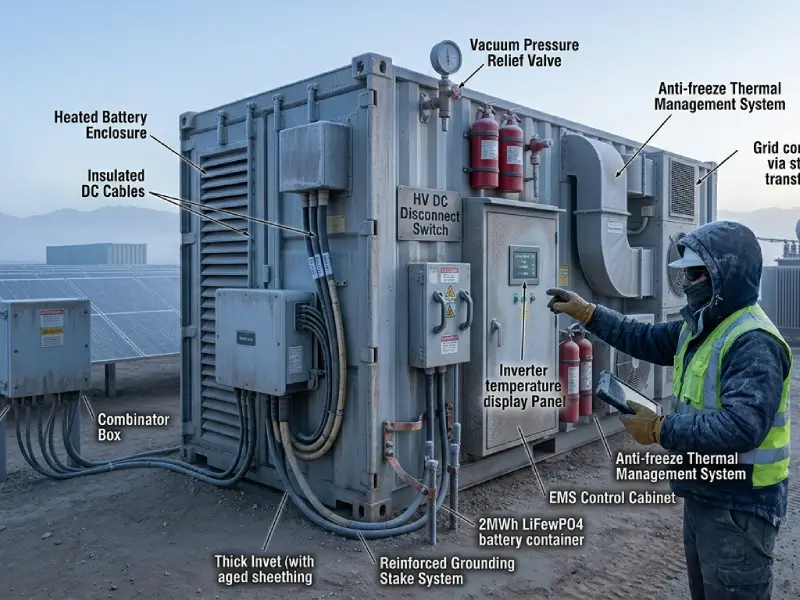
8. Solar Battery ROI Benchmark Framework for EPC Decision-Making
8.1 ROI Benchmark Categories by Application Type
Instead of relying on fixed ROI numbers, EPC engineers evaluate solar battery ROI using application-based benchmark ranges:
- Industrial Manufacturing Facilities: Highest ROI sensitivity due to demand charge reduction potential
- Commercial Buildings: Moderate ROI with higher variability due to occupancy patterns
- EV Charging + Storage Systems: ROI strongly dependent on utilization rate and traffic flow stability
8.2 Decision Matrix: When Energy Storage Becomes Economically Viable
A commercial ESS project typically becomes financially viable when:
- Peak-to-off-peak tariff differential is significant
- Load profile shows consistent peak clustering
- System utilization exceeds critical cycle thresholds
These conditions define the threshold where solar battery ROI transitions from marginal to strong investment performance.
9. Conclusion: Engineering Reality of Solar Battery ROI in Commercial ESS Systems
9.1 Solar Battery ROI Is a Multi-Layer Engineering System, Not a Single Metric
Throughout this analysis, it becomes clear that solar battery ROI is not a static financial indicator but a dynamic system-level outcome influenced by tariff structures, load behavior, system design, and operational intelligence.
In modern commercial energy storage projects, ROI emerges from the interaction between electrical engineering, financial modeling, and operational control systems rather than any single component.
9.2 Why EPCs and Developers Prioritize Engineering-Grade Manufacturers
In mature energy storage markets, procurement decisions are no longer driven solely by price. Instead, EPC contractors and developers prioritize suppliers capable of delivering long-term system stability and predictable lifecycle performance.
Key evaluation criteria include:
- Consistent manufacturing quality across production batches
- Verified performance data under real operating conditions
- Stable battery degradation curves aligned with engineering assumptions
- Comprehensive technical support across system design and commissioning stages
These factors directly determine the reliability of commercial energy storage ROI and ultimately affect project bankability in financing and EPC approval processes.
9.3 SolarDyna Engineering Advantage: From Manufacturing to ROI Validation
Within this engineering framework, SolarDyna positions itself not only as a component supplier, but as a system-level energy storage solution provider focused on ROI predictability and deployment reliability.
Unlike conventional battery suppliers that focus primarily on product delivery, SolarDyna emphasizes end-to-end engineering alignment, including:
- Factory-level cell grading and consistency control to ensure predictable degradation behavior
- Engineering validation of LiFePO4 battery performance under different load profiles
- System integration support for PCS, EMS, and battery architecture optimization
- Technical advisory support for EPC contractors during system design and commissioning
This integrated approach reduces uncertainty in solar battery ROI calculations and improves long-term operational stability across commercial and industrial deployments.
9.4 Final Engineering Takeaway
The real determinant of solar battery ROI is not only system design, but also the reliability of execution—from cell manufacturing to EMS logic to long-term operational stability.
For EPC contractors and industrial energy buyers, selecting a manufacturing partner capable of maintaining consistent engineering quality is essential for achieving predictable ROI outcomes.
📌 SolarDyna Engineering Perspective:
Solar battery ROI is ultimately a function of engineering integrity across the entire energy storage value chain. SolarDyna focuses on ensuring that each layer—from battery production to system deployment—supports stable, measurable, and financeable project performance.
10. Frequently Asked Questions (EPC & Commercial Energy Storage ROI)
Q1. What is solar battery ROI in commercial energy storage systems?
Solar battery ROI refers to the total financial return generated by a commercial energy storage system, including energy cost savings, demand charge reduction, peak shaving benefits, and operational optimization across its lifecycle.
Q2. What is a realistic battery storage payback period for industrial projects?
In industrial and commercial applications, the typical battery storage payback period ranges from 3 to 7 years, depending on electricity tariff structure, system sizing accuracy, and load profile behavior.
Q3. How does load profile affect solar battery ROI?
Load profile is one of the most critical factors affecting solar battery ROI. Poorly matched load forecasting can reduce system efficiency and significantly extend payback periods due to suboptimal charge-discharge cycles.
Q4. Why is EMS optimization important for commercial energy storage ROI?
Energy Management System (EMS) determines when and how the battery operates. Poor EMS logic can reduce commercial energy storage ROI by 10–30% by failing to optimize peak shaving and tariff arbitrage opportunities.
Q5. Does LiFePO4 battery technology improve ROI stability?
Yes. LiFePO4 chemistry improves long-term solar battery ROI due to higher cycle life, improved thermal stability, and reduced degradation rate compared to alternative lithium chemistries.
Q6. What are the most common mistakes in ESS ROI calculations?
Common mistakes include ignoring degradation curves, using static load assumptions, overestimating efficiency, and failing to model real EMS dispatch behavior in commercial energy storage systems.
Q7. How does supplier quality impact solar battery ROI?
Manufacturing consistency directly affects system reliability. Variations in cell grading or batch quality can reduce usable capacity and negatively impact long-term battery storage ROI.
Q8. How does SolarDyna help improve project ROI predictability?
SolarDyna supports EPC contractors and developers by providing engineering-grade battery systems with stable manufacturing consistency, validated performance data, and system integration support for PCS and EMS optimization, helping improve predictability of solar battery ROI.
Need a Reliable Solar Battery ROI Analysis for Your Energy Storage Project?
Accurate solar battery ROI evaluation requires more than simple payback calculation. It depends on load profile modeling, EMS dispatch strategy, and system-level engineering design for commercial energy storage projects.
✔ Commercial ESS system design for EPC contractors & industrial buyers
✔ Battery sizing optimization for peak shaving & energy arbitrage
✔ Technical validation of LiFePO4 system performance & lifecycle assumptions
Speak with our engineering team to receive a project-specific commercial energy storage ROI model