Choosing the best lithium battery solar solution has become a critical decision for EPC contractors, solar distributors, system integrators, and energy project developers. As solar installations continue to evolve from simple power generation systems into integrated energy solutions, battery storage performance increasingly determines project reliability, operational efficiency, and long-term customer satisfaction.
For professional solar projects, selecting a battery is no longer only about comparing capacity or upfront cost. The right energy storage solution must match the project design, inverter compatibility, operating environment, safety requirements, and future expansion plans. This is why experienced buyers evaluate batteries based on complete lifecycle value rather than a single purchase price.
This guide explains how to evaluate lithium batteries for solar storage from an engineering and procurement perspective, helping B2B decision-makers understand the key factors behind reliable solar energy storage projects.
Why the Best Lithium Battery Solar Solution Matters for Modern Energy Projects
The demand for solar energy storage is growing because businesses and infrastructure operators require more control over energy usage. Solar panels can generate electricity during daylight hours, but battery storage allows that energy to be used when demand is higher or when grid availability becomes uncertain.
For EPC companies and commercial solar developers, the battery system is one of the most important components affecting the overall project outcome. A poorly selected battery may create challenges including reduced system efficiency, complicated maintenance, compatibility issues, and unexpected replacement costs.
A reliable lithium battery for solar applications should support the complete project lifecycle. This includes installation, commissioning, daily operation, maintenance, and future system upgrades.
Key Factors That Influence Battery Selection Decisions
Professional buyers typically evaluate several technical and commercial factors before approving a battery solution:
- Battery chemistry and safety characteristics
- Cycle performance and expected service life
- Compatibility with solar inverters and energy management systems
- Communication capability and monitoring functions
- Supplier manufacturing consistency
- Technical documentation and project support
A battery supplier that understands these requirements can help reduce engineering risks and improve project execution efficiency.
What Defines the Best Lithium Battery for Solar Storage Projects?
The best lithium battery for solar storage is not simply the battery with the largest capacity or the lowest initial price. In professional applications, battery selection requires a balance between performance, reliability, integration capability, and long-term operating value.
1. Battery Chemistry: Why LiFePO4 Is Widely Used in Solar ESS Applications
Lithium iron phosphate, commonly known as LiFePO4, has become one of the most widely considered battery chemistries for stationary energy storage applications. Its characteristics make it suitable for solar energy storage systems that require frequent charging and discharging cycles.
Compared with traditional lead-acid batteries, LiFePO4 solar battery solutions generally offer advantages in areas such as energy efficiency, maintenance requirements, and operational stability.
For commercial and industrial projects, battery chemistry selection should be based on application requirements rather than marketing claims. Different projects may have different priorities depending on installation conditions, energy demand patterns, and system design.
Thermal Stability and Safety Considerations
Safety is a major consideration in solar energy storage projects. Since batteries operate continuously over many years, stable thermal characteristics and effective protection mechanisms are essential parts of a reliable system design.
A well-designed lithium battery for solar system applications integrates multiple protection layers, including battery management systems, temperature monitoring, and electrical protection strategies.
For EPC teams, understanding the relationship between battery chemistry and project conditions helps ensure that the selected storage system matches the actual operating environment.
Cycle Performance and Long-Term Value
Solar storage systems are designed for repeated energy cycling. The battery charges when solar generation exceeds demand and discharges when energy is needed. Therefore, cycle performance plays an important role in determining the long-term economic value of the project.
When comparing different battery options, project developers should consider the total ownership cost instead of focusing only on initial procurement expenses.
A battery with a lower purchase price may require earlier replacement or additional maintenance support, while a properly selected energy storage solution can provide more predictable operation throughout the project lifecycle.
Lifecycle Cost: Why Battery Price Is Not the Only Decision Factor
One of the most common challenges in battery procurement is balancing budget requirements with long-term performance expectations. Many projects initially compare suppliers based on product pricing, but experienced EPC buyers understand that the actual project cost includes more than the first purchase order.
The lifecycle cost of a solar energy storage system includes equipment investment, installation complexity, maintenance requirements, operational efficiency, and future replacement planning.
Important Lifecycle Evaluation Factors
| Evaluation Factor | Why It Matters |
|---|---|
| Cycle capability | Affects how frequently the battery can support charging and discharging operations. |
| System efficiency | Influences usable energy output and overall project performance. |
| Warranty conditions | Provides clarity on long-term project risk management. |
| Supplier support | Helps reduce engineering delays and operational uncertainty. |
For distributors and project developers, selecting a reliable solar ESS battery supplier means reducing uncertainty across the entire supply chain.
Battery Management System (BMS): The Intelligence Behind Solar Storage
A battery management system is one of the most important elements of modern energy storage solutions. The BMS monitors battery operation and helps maintain safe and efficient performance during daily use.
For a professional solar ESS battery, the BMS is not simply an additional component. It is a critical part of system integration that supports monitoring, protection, and communication between the battery and other energy system components.
Key BMS Functions for Solar Energy Storage
- Cell voltage monitoring
- Temperature monitoring
- Over-current protection
- Charging and discharging control
- Communication with inverter or EMS platforms
For EPC contractors, communication compatibility is especially important because the battery must operate correctly with the inverter, energy management system, and other project equipment.
Expert Tip: Evaluate the Battery as Part of the Complete ESS Architecture
Expert Tip: Battery selection should always be considered from a complete energy storage system perspective rather than as an individual product purchase.
Before confirming a battery solution, engineering teams should evaluate inverter compatibility, installation environment, communication requirements, and future expansion possibilities.
A battery that performs well in isolated testing may not deliver the expected project value if system integration is overlooked. For this reason, SolarDyna focuses on supporting project-based battery selection by considering real application requirements.
By approaching storage design from an engineering perspective, project teams can improve reliability, simplify deployment, and create more predictable long-term operating results.
How EPC Companies Choose a Reliable Lithium Battery Supplier
For EPC contractors and solar project developers, choosing a lithium battery supplier is not only a procurement decision. It is a strategic decision that directly affects project execution, customer satisfaction, and long-term system performance.
The energy storage market includes many battery providers with different manufacturing capabilities, technical backgrounds, and service models. However, not every supplier can support the requirements of professional solar projects.
A reliable supplier should provide not only battery products but also technical cooperation throughout the project lifecycle, from initial system evaluation to installation support and after-sales communication.
1. Manufacturing Capability and Quality Consistency
One of the most important factors when selecting a solar battery supplier is manufacturing consistency. For large-scale procurement, EPC companies need confidence that every delivered battery batch meets the expected technical requirements.
A professional battery manufacturer should have structured quality management processes covering production, testing, inspection, and product verification.
Key areas that B2B buyers should evaluate include:
- Production process control
- Battery cell consistency management
- Quality inspection procedures
- Product traceability systems
- Supply capacity for project schedules
For distributors and installers, stable manufacturing capability helps reduce unexpected supply chain disruptions and improves customer confidence.
2. Technical Documentation and Engineering Support
In professional solar projects, technical documentation is an important part of project execution. A battery system must integrate with other components, including solar inverters, energy management platforms, and electrical infrastructure.
Before purchasing a lithium battery for solar system applications, engineering teams usually need access to detailed technical information, including:
- Battery specifications
- Installation guidelines
- Communication protocols
- Operating parameters
- Warranty documentation
Clear technical information allows EPC teams to complete system design more efficiently and reduce communication delays during installation.
3. Customization Capability for Different Solar Applications
Different solar storage projects have different requirements. A residential backup system, a commercial energy storage project, and an industrial application may require different battery configurations.
A flexible solar battery manufacturer should be able to support project-specific requirements, including system configuration, communication compatibility, and application-based recommendations.
Customization capability is especially valuable for distributors and system integrators who serve different regional markets and customer segments.
Selecting Lithium Batteries for Different Solar Storage Applications
The selection process for a solar ESS battery depends heavily on the project application. A battery solution designed for one scenario may not always be the ideal choice for another.
Understanding application requirements helps EPC teams design storage systems that deliver stable performance and better lifecycle value.
Residential Solar + Battery Storage Systems
Residential solar storage systems are commonly designed to improve energy independence, increase solar self-consumption, and provide backup power capability.
For residential applications, important battery considerations include:
- Compact system design
- Simple installation process
- Reliable daily operation
- Compatibility with residential inverters
A suitable battery solution should allow homeowners to maximize the value of their solar investment while maintaining safe and convenient operation.
Commercial and Industrial Solar Battery Storage Projects
Commercial solar battery storage projects usually involve more complex energy management requirements. Businesses may use storage systems to improve energy utilization, manage electricity demand, or increase operational resilience.
For commercial and industrial customers, EPC companies need to consider:
- Load characteristics
- Energy consumption patterns
- Installation environment
- Expansion requirements
- System integration capability
In these projects, battery performance must align with the overall energy strategy rather than being evaluated as a standalone component.
Off-Grid Solar Energy Storage Solutions
Off-grid applications require a high level of reliability because the storage system may become the primary energy source when grid connection is unavailable.
These projects may include remote infrastructure, communication facilities, or independent power systems where stable operation is essential.
For off-grid applications, project teams typically focus on:
- Battery reliability
- Environmental adaptability
- Maintenance requirements
- Long-term availability of technical support
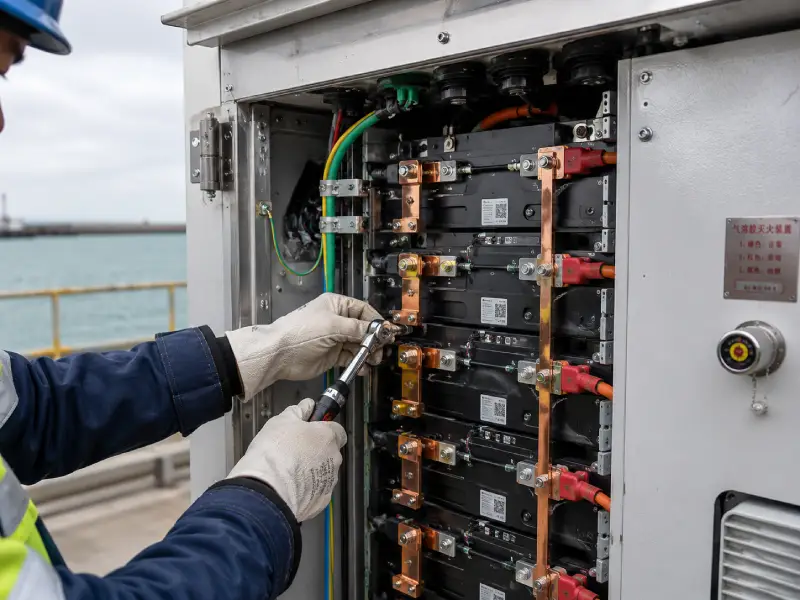
Lithium Battery Selection Checklist for Solar Projects
Before approving a battery solution, EPC teams should complete a structured evaluation process. A clear checklist helps prevent technical mismatches and improves project planning.
Project Evaluation Checklist
| Checklist Item | Questions to Confirm |
|---|---|
| Energy requirement | What is the required storage capacity and daily energy usage? |
| Operating environment | Where will the battery system be installed? |
| System compatibility | Does the battery communicate correctly with the inverter and EMS? |
| Safety requirements | What protection functions are required for the project? |
| Future expansion | Can the system be expanded if energy demand increases? |
| Supplier support | Does the supplier provide technical assistance during deployment? |
This evaluation method helps project teams move from product comparison toward complete solution planning.
Why SolarDyna Supports Engineering-Focused Solar Battery Projects
SolarDyna approaches energy storage from an engineering perspective, focusing on how battery solutions perform in real solar applications.
For professional customers, the value of a battery supplier is not only measured by the product itself. Reliable cooperation requires technical communication, project understanding, and consistent support throughout the deployment process.
Engineering-Oriented Solar Battery Solutions
SolarDyna supports customers by helping evaluate battery requirements based on project conditions, including system design considerations, application scenarios, and integration requirements.
Instead of providing a one-size-fits-all product recommendation, a project-focused approach helps ensure that the selected storage solution matches the actual application.
For EPC contractors, this approach can simplify system design discussions and improve confidence during project implementation.
Supporting Distributors, Installers, and EPC Partners
Long-term partnerships in the solar industry require more than product supply. Distributors and installation partners need dependable cooperation that supports customer delivery and market development.
A professional battery partner should help businesses with:
- Product selection assistance
- Technical communication
- Project requirement analysis
- Application support
- Long-term cooperation planning
By combining product capability with engineering support, SolarDyna helps partners build more reliable solar energy storage solutions.
Lithium Battery vs Traditional Solar Storage Technologies
When evaluating energy storage solutions, many EPC companies and project developers compare lithium batteries with traditional battery technologies. The goal is not simply to select a newer technology, but to identify the solution that best matches the technical and commercial requirements of the project.
Modern solar projects require storage systems that can support repeated charging and discharging, stable operation, and efficient energy management. This is why lithium-based storage solutions have become an important consideration for many solar applications.
Lithium Battery Compared with Lead-Acid Battery Solutions
Lead-acid batteries have been used in energy storage applications for many years. However, as solar projects become more demanding, many system designers are evaluating lithium battery solutions because of differences in efficiency, maintenance requirements, and operational characteristics.
| Evaluation Criteria | Lithium Battery | Lead-Acid Battery |
|---|---|---|
| Energy efficiency | Generally suitable for applications requiring frequent cycling | More limited for intensive cycling applications |
| Maintenance requirements | Typically requires less routine maintenance | May require more maintenance attention |
| System design flexibility | Supports compact and scalable configurations | Often requires larger installation space |
| Application suitability | Widely considered for modern solar storage systems | More suitable for specific traditional applications |
For EPC teams, the selection should always be based on project requirements, including operating conditions, expected usage patterns, and total lifecycle value.
Key Considerations Before Purchasing a Solar ESS Battery
Selecting the right storage solution requires more than reviewing product specifications. Professional buyers should evaluate whether the battery system can integrate successfully into the entire solar project.
1. Confirm Energy Requirements Before Battery Selection
Battery capacity should be determined according to actual energy demand rather than choosing the largest available option.
Project teams should analyze:
- Daily energy consumption
- Peak power requirements
- Backup duration needs
- Charging and discharging patterns
A properly sized battery system improves project economics and prevents unnecessary investment.
2. Evaluate Installation Environment
Environmental conditions can influence battery performance. Before selecting a solar energy storage battery, engineers should consider where the system will operate.
Important factors include:
- Indoor or outdoor installation
- Temperature conditions
- Ventilation requirements
- Protection level requirements
A battery solution designed for the actual environment can improve reliability and reduce operational challenges.
3. Check Inverter and EMS Compatibility
A solar storage system is made up of multiple components working together. The battery must communicate properly with the inverter and energy management system to ensure stable operation.
Before final approval, EPC teams should confirm:
- Communication protocols
- System integration requirements
- Monitoring capabilities
- Control strategy compatibility
This is one of the reasons why experienced project teams evaluate battery suppliers based on technical capability, not only product specifications.
Frequently Asked Questions About Best Lithium Battery Solar Solutions
Q1. What is the best lithium battery for solar storage projects?
The ideal battery depends on the specific project requirements, including system size, application type, energy demand, and integration conditions.
For many solar energy storage projects, LiFePO4-based solutions are considered because they offer characteristics suitable for stationary energy storage applications, including stable operation and compatibility with frequent cycling.
The right choice should always be based on engineering evaluation rather than a single product feature.
Q2. Why are LiFePO4 batteries commonly used in solar energy storage systems?
LiFePO4 batteries are widely evaluated for solar storage applications because their characteristics align with many stationary energy storage requirements.
These include:
- Stable battery chemistry
- Long-term cycling capability
- Low maintenance requirements
- Compatibility with modern ESS designs
However, project conditions should always be reviewed before selecting any battery technology.
Q3. How do EPC companies evaluate lithium battery suppliers?
Professional EPC companies usually evaluate suppliers based on multiple factors, including manufacturing capability, technical support, documentation quality, product consistency, and long-term cooperation ability.
A supplier should be able to support the complete project process, from technical discussions to installation and operation.
Q4. What information should be prepared before requesting a battery solution?
To receive an accurate recommendation, project teams should prepare information such as:
- Required storage capacity
- Power demand
- Application scenario
- Installation environment
- Inverter information
- Communication requirements
Providing these details helps suppliers recommend a more suitable configuration.
Q5. Can lithium batteries be integrated with existing solar systems?
In many cases, lithium battery systems can be integrated into existing solar installations. However, compatibility depends on the inverter, control system, electrical design, and communication requirements.
Engineering evaluation before installation helps ensure smooth integration and reliable operation.
Q6. Why Choosing the Right Battery Partner Creates Long-Term Project Value
For solar EPC companies and energy storage developers, battery selection is a long-term decision. The chosen solution affects system reliability, customer experience, and future business opportunities.
A successful energy storage project requires coordination between technology, engineering design, supply chain management, and after-sales support.
The best lithium battery solar solution is therefore not simply the battery with the highest specification. It is the solution that delivers reliable performance under real project conditions.
Q7. Work with SolarDyna for Project-Based Solar Storage Solutions
SolarDyna focuses on supporting solar energy storage projects with an engineering-oriented approach. By understanding application requirements and system integration challenges, SolarDyna helps customers evaluate suitable battery configurations for different project scenarios.
For EPC contractors, distributors, and solar system integrators, a dependable battery partner can help improve project execution, simplify technical coordination, and support long-term customer relationships.
Selecting the Right Solar Battery Requires Engineering Confidence
The selection of a solar storage battery should be approached as an engineering decision rather than a simple purchasing decision.
A reliable energy storage solution should balance:
- Battery performance
- System compatibility
- Safety considerations
- Lifecycle value
- Supplier reliability
As solar energy projects continue to develop, choosing a trusted battery partner becomes increasingly important for achieving stable and scalable energy storage deployment.
By evaluating technology, integration capability, and long-term cooperation potential, EPC companies and solar businesses can build stronger energy storage projects and deliver greater value to their customers.
Need the Right Lithium Battery Solution for Your Solar ESS Project?
Choosing the right best lithium battery solar solution requires more than comparing capacity and price. SolarDyna provides LiFePO4 battery solutions engineered for EPC contractors, distributors, and commercial energy storage projects.
✔ LiFePO4 ESS solutions with safety-focused engineering design
✔ Technical support for inverter compatibility and system integration
✔ Reliable supply capability for EPC and large-scale solar projects
Talk with our engineering team for a custom lithium battery configuration based on your project requirements