As commercial electricity prices continue to rise worldwide, businesses are under growing pressure to improve energy efficiency, stabilize operating costs, and increase power resilience. At the same time, the rapid expansion of commercial energy storage systems (ESS) is fundamentally reshaping how EPC contractors, solar developers, and industrial facility owners design photovoltaic infrastructure.
In this transition, hybrid inverter benefits are becoming increasingly important for modern solar projects. Unlike conventional string inverters that only convert DC electricity into AC power, hybrid solar inverters integrate photovoltaic generation, battery storage management, backup power control, and intelligent energy dispatch into a unified platform.
For EPC companies and procurement managers, understanding hybrid inverter benefits is no longer just a technical consideration. It directly impacts project profitability, ESS integration complexity, operational reliability, grid compliance, and long-term maintenance costs.
Today’s commercial energy market demands more than simple solar generation. Industrial facilities increasingly require:
- Peak shaving capabilities
- Battery energy storage integration
- Backup power continuity
- Smart energy management
- Diesel generator hybridization
- Microgrid compatibility
- Future EV charging integration
These evolving requirements explain why hybrid inverter systems are rapidly replacing traditional inverter architectures in commercial and industrial projects worldwide.
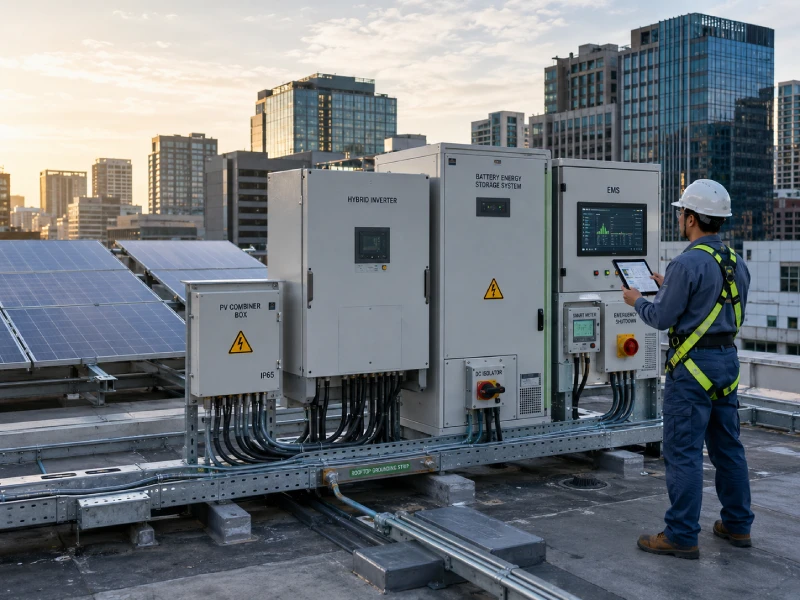
Why Hybrid Inverters Are Becoming the Core of Modern Commercial ESS
The global commercial energy landscape is changing faster than at any point in the past two decades. Traditional solar-only systems are no longer sufficient for many commercial applications because electricity consumption patterns, utility pricing structures, and grid reliability conditions have evolved dramatically.
In many countries, industrial users now face:
- Time-of-use electricity pricing
- Peak demand penalties
- Grid instability
- Frequent voltage fluctuations
- Renewable energy curtailment
- Power outage risks
Under these conditions, conventional PV systems without energy storage often fail to maximize economic value. Excess daytime solar production may be exported to the grid at low compensation rates, while facilities still pay high electricity costs during evening peak periods.
This is where commercial hybrid inverter systems become strategically important.
A hybrid inverter enables dynamic coordination between:
- Solar generation
- Battery charging/discharging
- Grid import/export
- Critical load backup
- Diesel generator interaction
- Energy management systems (EMS)
Rather than functioning as a simple power conversion device, the hybrid inverter acts as the central intelligence layer of a modern ESS architecture.
Commercial Energy Storage Demand Is Accelerating Globally
Commercial ESS deployment is growing rapidly across Europe, Southeast Asia, the Middle East, Africa, and Latin America due to rising electricity costs and increasing renewable energy adoption.
Several factors are accelerating this transition:
- Rising industrial energy consumption
- Government incentives for energy storage
- Grid modernization policies
- Corporate carbon reduction targets
- Expansion of distributed solar infrastructure
- Increasing demand for resilient backup power
For EPC contractors, this shift creates a major opportunity — but also introduces greater technical complexity.
Traditional solar projects mainly focused on:
- PV module sizing
- String design
- Inverter efficiency
- Grid connection approval
Modern commercial ESS projects now require additional expertise in:
- Battery communication protocols
- EMS coordination
- Load management logic
- Backup switching strategies
- Thermal management
- Peak shaving optimization
- Microgrid stability
Because hybrid inverters integrate many of these functions into a single architecture, they are becoming increasingly preferred in commercial projects.
Expert Tip from SolarDyna Engineers
In commercial ESS projects, inverter selection should never be based on conversion efficiency alone. Communication compatibility between the inverter, battery management system (BMS), and EMS platform is often more critical for long-term system stability than nominal efficiency differences of 1–2%.
What Is a Hybrid Inverter?
A hybrid inverter is an advanced power conversion device that combines the functionality of:
- A solar inverter
- A battery inverter
- An intelligent energy controller
Unlike conventional string inverters that only convert photovoltaic DC electricity into usable AC power, hybrid inverters can simultaneously manage solar generation, battery charging/discharging, and grid interaction.
This integration enables commercial facilities to optimize energy consumption in real time.
How a Hybrid Inverter Works in Commercial ESS Applications
In a typical commercial ESS system, the hybrid inverter continuously monitors:
- Solar generation output
- Facility electricity demand
- Battery state of charge
- Grid conditions
- Energy pricing schedules
Based on these variables, the inverter intelligently determines:
- Whether solar power should supply loads directly
- Whether batteries should charge or discharge
- Whether electricity should be imported from the grid
- Whether excess power should be exported
This dynamic energy routing capability is one of the most important hybrid inverter benefits for industrial facilities with fluctuating power demand.
Key Components Inside Modern Hybrid Inverters
Modern commercial hybrid inverters integrate multiple subsystems within a unified platform.
| Component | Function |
|---|---|
| MPPT Controller | Optimizes solar energy harvesting efficiency |
| Battery Interface | Manages battery charging/discharging |
| BMS Communication Module | Coordinates battery safety and performance |
| Grid Synchronization System | Maintains stable utility interaction |
| EMS Logic Controller | Optimizes energy dispatch strategies |
| Protection Circuitry | Provides fault protection and operational safety |
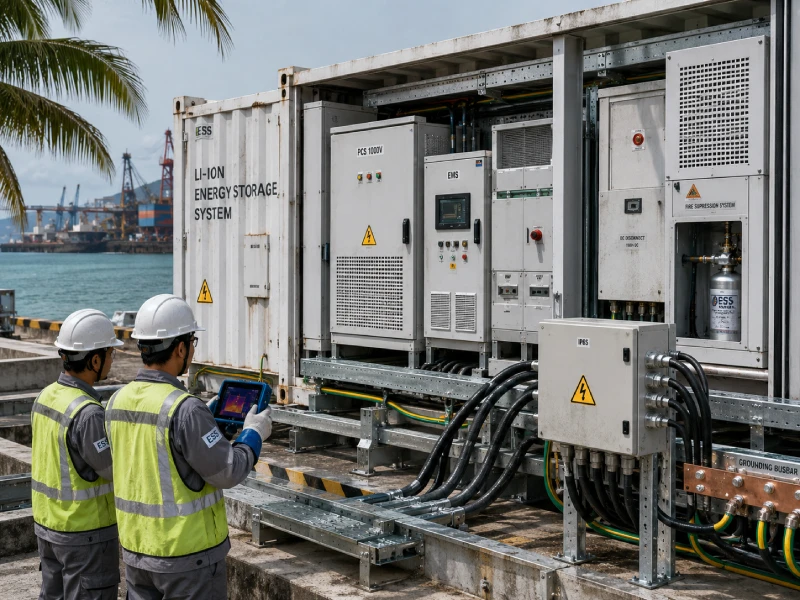
Real Operational Benefits of Hybrid Inverters in Commercial Applications
For EPC contractors and industrial facility operators, the true value of hybrid inverter systems lies not only in power conversion efficiency, but in long-term operational performance.
The following hybrid inverter benefits are among the most important reasons why commercial ESS adoption continues to accelerate globally.
Reducing Peak Demand Charges
In many commercial electricity pricing structures, peak demand charges account for a significant portion of monthly utility costs.
Hybrid inverters allow batteries to discharge during high-demand periods, reducing grid consumption during expensive tariff windows.
This strategy is commonly known as:
- Peak shaving
- Load shifting
- Demand charge management
For factories, logistics centers, hotels, shopping malls, and manufacturing plants, these savings can substantially improve ESS ROI.
Improving Solar Self-Consumption
Without energy storage integration, many commercial solar systems export excess daytime electricity back to the utility grid.
However, export compensation rates are often significantly lower than retail electricity prices.
A hybrid inverter allows surplus solar energy to be stored in LiFePO4 batteries instead of being exported immediately.
Stored energy can later be used during:
- Evening peak periods
- Cloudy conditions
- Grid outages
- High-tariff periods
This capability significantly increases on-site solar utilization rates.
Supporting Backup Power for Critical Loads
Power continuity is increasingly important for commercial operations.
Unexpected outages can result in:
- Production downtime
- Equipment damage
- Data loss
- Revenue interruption
Hybrid inverter systems can automatically isolate critical loads and maintain backup power during utility failures.
Typical backup applications include:
- Data centers
- Telecom infrastructure
- Hospitals
- Industrial automation systems
- Cold chain storage
Compared with conventional diesel-only backup systems, hybrid ESS architectures can also reduce fuel consumption and maintenance requirements.
Lowering ESS Integration Complexity
One of the most overlooked hybrid inverter benefits is simplified ESS integration.
Traditional ESS projects often require separate devices for:
- Solar conversion
- Battery conversion
- Energy management
- Backup switching
This increases:
- Wiring complexity
- Installation labor
- Communication risks
- Commissioning time
- Failure points
Hybrid inverter architectures consolidate multiple functions into a single platform, reducing engineering complexity for EPC contractors.
What EPC Contractors Often Overlook When Selecting a Hybrid Inverter
As commercial ESS deployment expands globally, inverter selection mistakes are becoming one of the leading causes of system instability, commissioning delays, and unexpected maintenance costs.
Many procurement teams still compare hybrid inverters primarily based on:
- Rated power output
- Efficiency percentages
- Initial equipment pricing
- Brand visibility
However, experienced EPC contractors understand that the long-term reliability of a commercial ESS project depends far more on system integration capability than on specification-sheet marketing.
In real-world projects, inverter failures rarely originate from isolated hardware defects alone. Most operational issues arise from:
- Communication incompatibility
- Poor thermal design
- Improper battery matching
- Weak parallel synchronization logic
- Unstable off-grid switching
- Insufficient environmental protection
Understanding these engineering-level considerations is essential for reducing lifecycle risk in commercial solar and storage projects.
Battery Communication Compatibility Is More Critical Than Power Rating
One of the most common misconceptions in commercial ESS procurement is assuming that any LiFePO4 battery can operate seamlessly with any hybrid inverter.
In reality, battery-inverter communication compatibility is often the single most important factor affecting system stability.
Modern commercial battery systems rely on continuous communication between:
- The inverter
- The battery management system (BMS)
- The EMS platform
This communication enables real-time control of:
- Charge/discharge current
- State of charge (SOC)
- Temperature protection
- Voltage balancing
- Fault shutdown logic
If communication protocols are incompatible or poorly optimized, the ESS may experience:
- Random shutdowns
- Battery protection triggering
- Charge limitation errors
- SOC calculation inaccuracies
- Reduced battery lifespan
- Commissioning failures
Commercial ESS projects increasingly use closed-loop communication architectures, where the battery BMS actively controls inverter charging behavior.
This creates additional integration complexity because different battery manufacturers may use:
- CAN protocols
- RS485 communication
- Modbus standards
- Proprietary communication logic
For EPC contractors, selecting a hybrid inverter with validated battery compatibility can significantly reduce commissioning risk.
Expert Tip from SolarDyna Engineers
In large commercial ESS projects, communication testing should always be performed before container deployment or large-scale installation. Many field commissioning delays originate not from inverter defects, but from incompatible firmware versions between the inverter and battery BMS.
Parallel Operation Stability in Large ESS Projects
As commercial ESS capacities continue to increase, many projects now require multiple hybrid inverters operating in parallel.
Parallel operation introduces significant engineering complexity because all inverters must synchronize:
- Voltage
- Frequency
- Phase angle
- Load sharing
- Battery charging behavior
Improper synchronization may result in:
- Load imbalance
- Overcurrent faults
- Inverter oscillation
- Unstable microgrid behavior
- Unexpected shutdowns
This becomes especially critical in:
- Factories
- Island microgrids
- Telecom infrastructure
- Remote industrial facilities
- Commercial backup power systems
Advanced hybrid inverter systems should support:
- Stable multi-unit synchronization
- Black start capability
- Grid-forming functionality
- Dynamic load balancing
- Seamless grid transition
These functions are particularly important for commercial projects requiring uninterrupted power continuity.
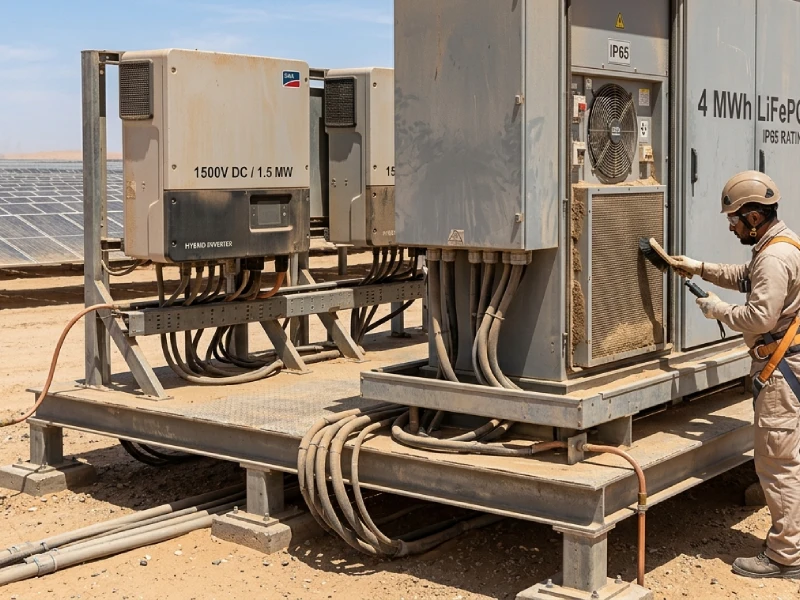
Thermal Management Directly Impacts Inverter Lifespan
Thermal stress remains one of the most underestimated factors affecting commercial inverter reliability.
Industrial ESS installations frequently operate in harsh environments such as:
- High-temperature industrial zones
- Coastal regions with salt corrosion
- Dust-heavy mining environments
- Tropical climates with high humidity
- Outdoor containerized ESS systems
Under these conditions, poor thermal management can accelerate:
- Capacitor aging
- IGBT degradation
- Cooling fan failure
- PCB corrosion
- Power derating
Over time, these issues increase maintenance frequency and reduce system lifespan.
For this reason, EPC contractors should evaluate:
- Cooling architecture design
- Airflow optimization
- Ingress protection ratings
- Corrosion-resistant coatings
- Operating temperature ranges
- Environmental certification standards
Engineering-grade hybrid inverter systems designed for commercial ESS applications typically prioritize long-term operational stability rather than only maximizing compactness or lowering manufacturing cost.
Hybrid Inverter vs PCS: What’s the Difference in Commercial Energy Storage?
As energy storage projects become larger and more sophisticated, many EPC contractors face an important technical question:
Should the project use a hybrid inverter architecture or a PCS-based ESS architecture?
Although these technologies are sometimes confused in the market, they serve different operational roles and are optimized for different project scales.
What Is a PCS in Energy Storage?
PCS stands for Power Conversion System.
A PCS is a bidirectional converter primarily designed for large-scale battery energy storage applications.
Unlike many hybrid inverters that integrate solar MPPT functionality internally, PCS systems are typically deployed in separate AC-coupled architectures.
In large ESS installations, the PCS mainly manages:
- Battery charging/discharging
- AC/DC power conversion
- Grid interaction
- Frequency regulation
- Power stabilization
PCS systems are commonly used in:
- Utility-scale ESS projects
- MW-scale commercial storage plants
- Grid stabilization systems
- Renewable power stations
When a Hybrid Inverter Is the Better Choice
For many commercial and industrial projects, hybrid inverters provide a more integrated and cost-effective solution.
Hybrid inverter systems are particularly suitable for:
- Commercial buildings
- Factories
- Agricultural facilities
- Retail centers
- Telecom sites
- Distributed solar + storage systems
Compared with PCS architectures, hybrid inverter systems typically offer:
- Simpler deployment
- Lower wiring complexity
- Reduced installation costs
- Integrated solar management
- Faster commissioning
- Smaller installation footprint
These advantages make hybrid systems highly attractive for distributed commercial ESS applications.
When PCS Architecture Becomes Necessary
PCS-based ESS systems become more suitable when projects require:
- Very large battery capacities
- Independent solar architecture
- Complex grid services
- Centralized utility-scale dispatch
- Advanced frequency regulation
- Large microgrid coordination
In MW-scale projects, PCS systems often provide:
- Higher scalability
- Greater centralized control
- Advanced utility interaction
- Flexible AC-coupled integration
However, PCS architectures also typically require:
- More engineering coordination
- Additional equipment
- More complicated commissioning
- Higher installation costs
| Feature | Hybrid Inverter | PCS System |
|---|---|---|
| Solar MPPT Integration | Integrated | External PV inverter required |
| Deployment Complexity | Lower | Higher |
| Suitable Project Scale | Distributed C&I ESS | MW-scale ESS |
| Installation Speed | Faster | More complex |
| Initial Integration Cost | Lower | Higher |
Which Commercial Applications Benefit Most from Hybrid Inverters?
Not all commercial energy users face the same operational challenges. The ideal ESS architecture depends heavily on:
- Electricity tariff structure
- Load characteristics
- Grid stability
- Backup power requirements
- Renewable energy penetration
- Expansion plans
However, several commercial sectors are particularly well suited for hybrid inverter deployment.
Factories with High Peak Electricity Tariffs
Industrial manufacturing facilities often experience:
- Large daytime loads
- High startup current demand
- Expensive peak tariffs
- Power factor penalties
Hybrid inverter systems combined with LiFePO4 batteries can reduce electricity costs through:
- Peak shaving
- Load shifting
- Solar self-consumption optimization
For facilities operating multiple production shifts, ESS integration may significantly improve long-term energy cost predictability.
Commercial Buildings with Demand Charges
Shopping malls, office buildings, hotels, and mixed-use developments often face substantial demand charges during peak operating periods.
Hybrid inverter ESS systems help reduce these costs by discharging batteries during:
- HVAC peak demand
- Elevator load spikes
- Evening operational peaks
- High occupancy periods
Additionally, hybrid ESS systems may improve energy resilience during grid instability.
Telecom Base Stations
Telecom infrastructure requires highly reliable backup power because network interruptions can result in major service disruptions.
Hybrid inverter systems provide:
- Fast backup response
- Battery optimization
- Solar-diesel hybridization
- Reduced generator runtime
- Remote monitoring capability
These advantages are especially important in remote regions with unstable utility infrastructure.
Agricultural and Irrigation Systems
Agricultural facilities increasingly deploy solar + storage systems to support:
- Irrigation pumps
- Cold storage facilities
- Livestock operations
- Remote agricultural equipment
Hybrid inverters can improve operational stability while reducing diesel dependency in off-grid or weak-grid agricultural projects.
Island and Weak-Grid Applications
Island regions and remote industrial locations often experience:
- Frequent blackouts
- Voltage instability
- High diesel costs
- Limited grid infrastructure
In these environments, hybrid inverter systems play a critical role in:
- Microgrid stabilization
- Renewable integration
- Diesel reduction
- Backup continuity
- Energy cost optimization
Recommended Hybrid ESS Architecture for Commercial Projects
For EPC contractors and commercial project developers, selecting the right hybrid inverter is only one part of building a reliable ESS solution. The overall system architecture directly affects:
- Energy efficiency
- System scalability
- Operational stability
- Maintenance complexity
- Installation costs
- Future expansion capability
In commercial solar and storage projects, poor architectural planning often creates long-term operational problems that are difficult and expensive to correct after deployment.
This is why engineering-grade ESS design should always consider:
- Load profile characteristics
- Battery chemistry
- Grid conditions
- Backup requirements
- Environmental conditions
- Future capacity expansion
AC-Coupled vs DC-Coupled Architecture
Commercial ESS systems are commonly designed using either AC-coupled or DC-coupled architectures.
Each approach offers different advantages depending on project requirements.
DC-Coupled ESS Architecture
In a DC-coupled system, solar PV and battery storage share a common DC bus connected through the hybrid inverter.
This architecture is often preferred for:
- Newly built solar + storage projects
- High solar self-consumption optimization
- Improved charging efficiency
- Reduced conversion losses
Because energy flows directly from PV to batteries without multiple AC/DC conversions, DC-coupled systems can improve overall efficiency under certain operating conditions.
However, DC-coupled systems may also require:
- More integrated engineering planning
- Higher inverter dependency
- Careful DC-side protection design
AC-Coupled ESS Architecture
In AC-coupled systems, solar PV and battery storage operate through separate conversion paths connected on the AC side.
This architecture is often used for:
- Retrofitting existing solar systems
- Large-scale ESS expansion
- Flexible equipment integration
- Independent PV and storage operation
AC-coupled systems may provide greater flexibility in complex commercial projects, especially when integrating multiple power sources.
However, they may also involve:
- Higher equipment count
- Additional synchronization requirements
- More complex commissioning
| Architecture | Best Use Case | Advantages | Challenges |
|---|---|---|---|
| DC-Coupled | New solar + ESS projects | Higher efficiency, simplified architecture | More integrated system dependency |
| AC-Coupled | ESS retrofit projects | Flexible expansion capability | Higher installation complexity |
High-Voltage vs Low-Voltage Battery Design
Battery voltage architecture also significantly impacts commercial ESS performance.
Low-voltage battery systems are commonly used in smaller residential and light commercial applications.
However, large commercial ESS projects increasingly favor high-voltage battery systems because they offer:
- Lower current levels
- Reduced cable losses
- Improved conversion efficiency
- Better scalability
- Reduced copper usage
For large industrial systems, high-voltage hybrid inverter architectures often provide superior operational efficiency and simplified cable management.
Nevertheless, high-voltage systems also require:
- Enhanced electrical protection
- Stricter insulation standards
- Advanced BMS coordination
- Higher engineering expertise
EMS Integration Logic
Modern commercial ESS systems increasingly rely on Energy Management Systems (EMS) to optimize energy dispatch.
The EMS acts as the supervisory control layer that coordinates:
- Hybrid inverter operation
- Battery charging schedules
- Load prioritization
- Grid import/export behavior
- Demand response strategies
Advanced EMS platforms may also integrate:
- Electricity tariff forecasting
- Weather prediction data
- Remote diagnostics
- AI-based optimization logic
- Multi-site fleet management
For EPC contractors managing large commercial portfolios, EMS integration is becoming increasingly important for long-term operational optimization.
Grid-Tied and Off-Grid Switching Logic
Commercial ESS projects increasingly require hybrid operating capability between:
- Grid-connected mode
- Backup mode
- Off-grid operation
- Microgrid coordination
Transition stability between these operating modes is critical.
Poor switching performance may cause:
- Critical load interruption
- Voltage instability
- Equipment shutdown
- Sensitive electronics failure
Engineering-grade hybrid inverter systems should therefore support:
- Fast transfer switching
- Stable frequency control
- Grid-forming capability
- Black start functionality
- Dynamic load balancing
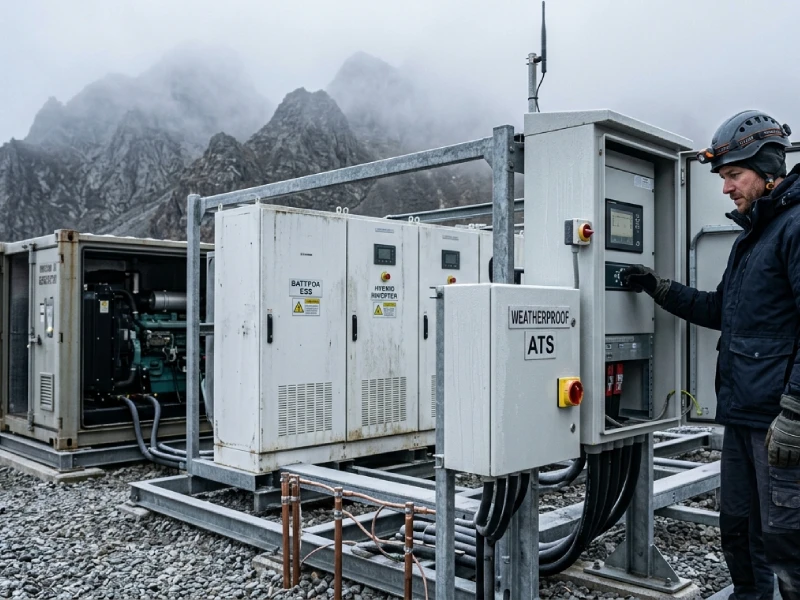
Common Hybrid Inverter Failures in Commercial ESS Projects
Despite the rapid advancement of commercial ESS technology, many system failures still originate from preventable engineering mistakes.
Understanding these risks can help EPC contractors improve:
- System reliability
- Project profitability
- Commissioning efficiency
- Long-term customer satisfaction
Improper Battery Sizing
Battery sizing errors remain one of the most common ESS design problems.
Oversized battery systems may result in:
- Higher unnecessary investment costs
- Reduced battery cycling efficiency
- Longer ROI periods
Undersized systems may cause:
- Insufficient backup duration
- Limited peak shaving capability
- Frequent deep cycling
- Accelerated battery degradation
Proper ESS sizing should consider:
- Load profile analysis
- Peak demand patterns
- Backup requirements
- PV generation curves
- Tariff structure
Poor Heat Dissipation Design
Many inverter failures in commercial ESS projects are thermal-related rather than purely electrical.
Improper airflow design inside ESS cabinets may create:
- Localized overheating
- Cooling inefficiency
- Premature component aging
- Unexpected thermal shutdowns
This issue becomes especially severe in:
- Tropical climates
- Outdoor ESS containers
- Industrial environments with dust accumulation
- Coastal projects with high humidity
Engineering-grade ESS design should always include thermal simulations and environmental risk analysis.
Incorrect Grid Parameter Configuration
Grid code compliance requirements vary significantly across different countries and utility regions.
Improper inverter parameter settings may cause:
- Grid synchronization failure
- Frequent inverter tripping
- Voltage instability
- Power quality issues
Commercial projects should always verify:
- Local utility standards
- Frequency regulation requirements
- Reactive power settings
- Anti-islanding parameters
Incompatible BMS Protocols
Communication mismatch between the inverter and battery management system remains one of the most common commissioning challenges in commercial ESS deployment.
Symptoms may include:
- SOC display errors
- Battery charge limitation
- Unexpected shutdowns
- Communication interruption alarms
This is why validated inverter-battery compatibility testing is increasingly important for commercial EPC projects.
Oversized PV-to-Battery Ratio
Improper PV-to-battery sizing may create energy imbalance inside the ESS architecture.
An excessively large PV array combined with limited storage capacity may lead to:
- Frequent solar curtailment
- Battery overcharging pressure
- Reduced economic efficiency
Balanced ESS design requires optimization between:
- PV production
- Battery capacity
- Load consumption
- Grid export limitations
Expert Tip from SolarDyna Engineers
In commercial ESS projects, the lowest initial hardware cost rarely produces the best long-term economic outcome. Poor system integration often increases maintenance visits, downtime losses, and replacement costs over the lifecycle of the project.
How SolarDyna Supports Engineering-Grade ESS Deployment
As commercial energy storage projects become increasingly complex, EPC contractors require more than hardware supply alone.
Successful ESS deployment depends on coordinated engineering support throughout:
- System design
- Equipment selection
- Compatibility validation
- Commissioning
- Long-term technical support
SolarDyna focuses on supporting commercial and industrial ESS projects through engineering-oriented collaboration rather than purely product-based sales.
Pre-Sales System Design Support
Commercial ESS projects often require customized architecture planning based on:
- Load characteristics
- Battery configuration
- Grid conditions
- Backup requirements
- Installation environment
Technical pre-evaluation helps EPC contractors reduce integration risk before procurement begins.
Battery Compatibility Validation
Battery communication compatibility is critical for stable ESS operation.
Engineering validation processes may include:
- BMS communication testing
- Firmware coordination
- CAN protocol verification
- Charge/discharge logic testing
These procedures help reduce commissioning delays and improve long-term operational stability.
Remote Commissioning Assistance
Commercial ESS deployment frequently involves cross-border engineering coordination.
Remote technical support can assist EPC teams with:
- Parameter configuration
- Grid setting adjustment
- Communication troubleshooting
- System startup optimization
OEM and ODM Engineering Support
Many commercial distributors and integrators require customized ESS solutions tailored for regional market requirements.
OEM and ODM engineering support may include:
- Custom branding
- Localized certifications
- Communication protocol adaptation
- Project-specific configuration
- Custom EMS integration
Technical Documentation and Global Support
Comprehensive technical documentation is essential for commercial project deployment.
EPC contractors often require:
- Single-line diagrams
- Installation manuals
- Communication protocols
- Grid compliance documents
- Commissioning procedures
- Troubleshooting guides
Engineering-focused support documentation can significantly reduce deployment complexity for international projects.
Frequently Asked Questions from EPC Contractors
Q1. Can hybrid inverters support black start functionality?
Some commercial hybrid inverter systems support black start capability, allowing the ESS to restart independently without grid assistance. This function is especially important for microgrids, remote industrial facilities, and backup-critical applications.
Q2. What causes inverter-BMS communication failure?
Common causes include incompatible communication protocols, firmware mismatch, incorrect CAN settings, wiring errors, and unsupported battery configurations.
Q3. How many hybrid inverters can operate in parallel?
The allowable number of parallel units depends on inverter architecture, synchronization logic, and manufacturer design limitations. Commercial systems should always verify parallel operation capability during engineering planning.
Q4. Is a hybrid inverter suitable for MW-scale ESS projects?
Hybrid inverters are highly effective for distributed commercial ESS applications. However, very large utility-scale projects may require PCS-based architectures depending on grid service complexity and centralized dispatch requirements.
Q5. How does a hybrid inverter interact with diesel generators?
Advanced hybrid inverter systems can coordinate with diesel generators to optimize fuel usage, improve load stability, and reduce generator runtime in hybrid microgrid applications.
Q6. What certifications are important for commercial ESS projects?
Certification requirements vary by region and project type. Commercial projects commonly evaluate compliance with IEC, CE, UL, grid code standards, and local utility regulations.
Why Hybrid Inverters Are Becoming the Future of Commercial Solar Energy
The global transition toward distributed renewable energy is accelerating rapidly.
Commercial energy users increasingly require:
- Lower electricity costs
- Higher energy resilience
- Smarter power management
- Reliable backup capability
- Flexible ESS scalability
Under these conditions, the importance of hybrid inverter benefits continues to grow across commercial and industrial applications.
Modern hybrid inverter systems are no longer simply power conversion devices. They have evolved into intelligent energy coordination platforms capable of integrating:
- Solar generation
- LiFePO4 battery storage
- Grid interaction
- Microgrid functionality
- Backup power systems
- Advanced EMS optimization
For EPC contractors and procurement managers, selecting the right hybrid inverter architecture directly affects:
- Project reliability
- Commissioning efficiency
- Lifecycle operating costs
- Future scalability
- Long-term customer satisfaction
As commercial ESS projects become increasingly sophisticated, engineering-grade system integration is becoming more important than simple equipment pricing alone.
Companies that prioritize communication compatibility, thermal stability, scalable architecture, and professional engineering coordination will be better positioned to deliver reliable commercial energy storage projects in the years ahead.
Talk with SolarDyna’s Commercial ESS Engineering Team
Looking for hybrid inverter solutions for commercial and industrial ESS deployment?
SolarDyna supports EPC contractors, distributors, and project developers with:
- Commercial hybrid inverter selection
- LiFePO4 battery compatibility evaluation
- ESS architecture consultation
- OEM & ODM customization
- Remote commissioning support
- Engineering documentation assistance
Contact SolarDyna to discuss your next commercial energy storage project.
Planning a Commercial ESS Project with Hybrid Inverters?
Choosing the right hybrid inverter architecture is essential for commercial ESS reliability, battery compatibility, peak shaving performance, and long-term operational stability. SolarDyna provides engineering-grade hybrid inverter solutions for EPC contractors, distributors, industrial facilities, and commercial energy storage developers worldwide.
✔ LiFePO4 battery compatibility validation & BMS communication support
✔ AC-coupled & DC-coupled ESS architecture engineering assistance
✔ OEM/ODM customization for EPC contractors and global distributors
✔ Remote commissioning support and technical documentation assistance
Talk with SolarDyna’s engineering team for a custom hybrid inverter and commercial ESS solution tailored to your project’s grid conditions, load profile, and battery architecture.