Why Commercial Energy Storage Systems Are Becoming Essential for Modern Businesses
Rising electricity prices, unstable grid infrastructure, growing ESG pressure, and the rapid expansion of renewable energy are forcing commercial and industrial businesses to rethink how energy is managed. Across manufacturing facilities, logistics centers, shopping malls, office buildings, agricultural operations, and EV charging networks, the demand for a reliable commercial energy storage system is accelerating at an unprecedented pace.
For EPC contractors, distributors, project developers, and procurement managers, choosing the right energy storage infrastructure is no longer simply about backup power. Today’s commercial battery solutions are designed to optimize electricity consumption, reduce operational expenses, stabilize energy supply, improve solar self-consumption, and create long-term financial returns.
A modern commercial energy storage system also helps businesses improve resilience against power interruptions while supporting carbon reduction goals and renewable energy integration. As electricity markets become more volatile and demand charges continue rising worldwide, commercial battery energy storage systems are becoming a core part of future-ready energy strategies.
This guide explores how commercial and industrial ESS solutions work, where they are used, how they generate ROI, and what B2B buyers should evaluate when selecting long-term suppliers and technology partners.
Why Commercial Energy Storage Systems Are Reshaping Modern Energy Infrastructure
Commercial and industrial energy consumption patterns are changing rapidly. Traditional grid dependency is no longer sufficient for businesses that require predictable operating costs, stable power quality, and scalable renewable integration. As a result, commercial battery storage systems are evolving from optional infrastructure into strategic business assets.
Rising Electricity Costs Are Increasing Operational Pressure
Electricity prices have become increasingly unpredictable in many global markets. Industrial users often face:
- Peak demand charges
- Time-of-use electricity pricing
- Grid congestion fees
- Energy supply instability
- Carbon-related regulatory costs
For commercial facilities with high daytime loads or energy-intensive production processes, electricity can represent a major percentage of operating expenses. This is especially true for:
- Manufacturing plants
- Cold storage facilities
- Data centers
- Commercial office buildings
- Logistics warehouses
- Retail chains
- EV charging stations
A commercial ESS solution allows businesses to store energy during low-cost periods and discharge stored power during expensive peak hours. This process, commonly called peak shaving or load shifting, can dramatically reduce monthly utility bills.
Expert Tip from SolarDyna:
Many businesses underestimate the long-term impact of demand charges. In some regions, peak demand fees can account for 30–70% of total commercial electricity costs. Properly sized battery energy storage systems can significantly reduce these charges while improving energy predictability.
Grid Instability Is Creating New Risks for Commercial Operations
Grid instability is becoming a growing concern worldwide due to:
- Extreme weather events
- Aging transmission infrastructure
- Rapid urbanization
- Renewable energy intermittency
- Electric vehicle charging growth
For businesses operating sensitive equipment or continuous production lines, even short power interruptions can result in:
- Production downtime
- Equipment damage
- Inventory losses
- Data corruption
- Reduced operational efficiency
Commercial battery energy storage systems provide backup power support and power stabilization capabilities that improve business continuity and operational resilience.
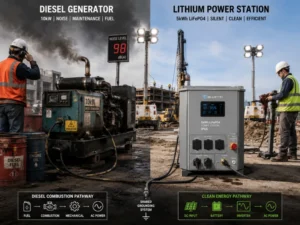
Unlike traditional diesel generators, modern lithium battery storage systems offer:
- Fast response times
- Low maintenance requirements
- Silent operation
- Lower emissions
- Higher energy efficiency
The Rise of Renewable Energy Is Accelerating ESS Adoption
Commercial solar installations continue expanding rapidly across industrial and commercial sectors. However, solar power generation is naturally intermittent and highly dependent on sunlight conditions.
Without battery storage, excess daytime solar production is often wasted or exported back to the grid at low compensation rates. This limits overall project profitability.
By integrating a commercial battery energy storage system with solar infrastructure, businesses can:
- Store excess solar energy
- Increase onsite solar consumption
- Reduce grid dependency
- Improve renewable energy ROI
- Stabilize power output
Commercial solar plus storage systems are particularly valuable for facilities with high evening or nighttime electricity consumption.
What Is a Commercial Energy Storage System?
A commercial energy storage system is an integrated energy infrastructure solution designed to store electricity for later use in commercial and industrial environments. These systems typically use advanced lithium battery technologies such as LiFePO4 batteries combined with intelligent energy management software and power conversion equipment.
Commercial ESS systems are engineered to support:
- Peak shaving
- Load shifting
- Renewable energy integration
- Backup power supply
- Microgrid applications
- Grid services
- Energy optimization
Core Components of a Commercial Battery Energy Storage System
A professional commercial ESS solution includes several critical components working together as a unified system.
1. Lithium Battery Packs
The battery pack is the core energy storage component. Most modern commercial systems use lithium iron phosphate (LiFePO4) chemistry because of its:
- High thermal stability
- Long cycle life
- Excellent safety performance
- Low maintenance requirements
- High charging efficiency
Compared with conventional lead-acid systems, LiFePO4 battery technology offers substantially longer lifespan and higher operational efficiency.
2. Battery Management System (BMS)
The Battery Management System continuously monitors:
- Voltage
- Current
- Temperature
- State of charge
- Battery health
The BMS helps optimize battery performance while preventing overheating, overcharging, and deep discharge conditions.
3. Power Conversion System (PCS)
The PCS converts DC electricity stored in the batteries into AC electricity usable by commercial facilities and the electrical grid.
This component also manages bidirectional energy flow between:
- The battery system
- Solar panels
- The utility grid
- Facility loads
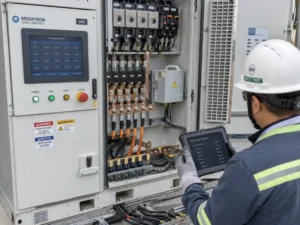
4. Energy Management System (EMS)
The EMS acts as the intelligence center of the entire system. It analyzes electricity demand, pricing schedules, solar generation, and battery status to optimize energy dispatch automatically.
Advanced EMS platforms may include:
- Cloud-based monitoring
- Remote diagnostics
- AI-driven optimization
- Predictive maintenance functions
- Real-time energy analytics
5. Thermal Management and Fire Protection Systems
Temperature control is critical for commercial battery performance and safety.
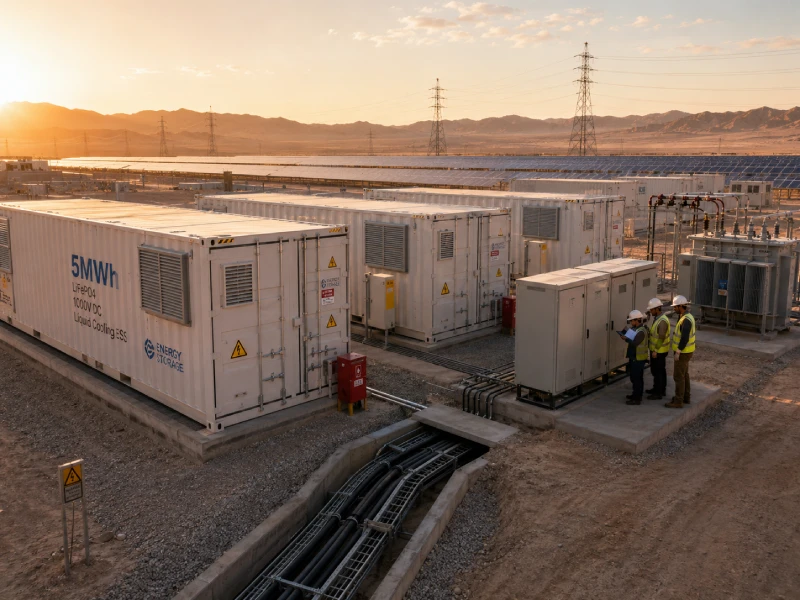
Modern commercial ESS containers often include:
- HVAC cooling systems
- Thermal insulation
- Fire suppression systems
- Smoke detection
- Environmental monitoring sensors
Proper thermal management directly impacts battery lifespan, system efficiency, and operational reliability.
Expert Tip from SolarDyna:
For large-scale commercial and industrial ESS projects, thermal management design is often as important as battery selection itself. Poor cooling design can accelerate battery degradation, reduce efficiency, and shorten overall project lifespan.
How Commercial Energy Storage Systems Work
Commercial energy storage systems intelligently manage electricity flow between energy generation sources, the utility grid, battery storage, and facility loads.
The operating principle typically follows four stages:
- Energy generation or low-cost grid charging
- Battery energy storage
- Intelligent energy management
- Controlled energy discharge
Charging Phase
The battery system charges during periods of:
- Low electricity prices
- Excess solar generation
- Low facility demand
This stored energy becomes available for later use during high-cost periods or grid outages.
Energy Storage Phase
The lithium battery bank stores electrical energy chemically while continuously monitored by the BMS and EMS systems.
High-quality LiFePO4 systems maintain stable performance over thousands of charge-discharge cycles.
Discharge Phase
When facility demand rises or electricity prices peak, the ESS discharges stored power to:
- Reduce grid electricity purchases
- Lower demand charges
- Stabilize power supply
- Support critical equipment
Intelligent Optimization Phase
Advanced EMS software continuously optimizes charging and discharging behavior according to:
- Real-time electricity pricing
- Facility load demand
- Solar generation forecasts
- Battery health conditions
- Grid interaction requirements
This intelligent energy optimization improves both financial returns and operational performance.
Why LiFePO4 Technology Dominates Commercial ESS Applications
Battery chemistry selection is one of the most important decisions in any commercial ESS project. While multiple lithium battery technologies exist, LiFePO4 has emerged as the preferred choice for most commercial and industrial applications.
Superior Safety Performance
Safety is a critical concern for commercial battery installations, especially in high-capacity industrial environments.
LiFePO4 batteries provide:
- Excellent thermal stability
- Lower risk of thermal runaway
- Reduced fire hazards
- Improved operational reliability
This makes LiFePO4 systems particularly suitable for commercial buildings, manufacturing facilities, and energy-intensive operations.
Longer Operational Lifespan
Commercial battery projects require long-term financial returns. LiFePO4 batteries typically deliver:
- 4000–8000+ charge cycles
- Longer calendar life
- Lower degradation rates
- Higher lifecycle value
This extended lifespan significantly reduces total ownership costs over the project lifecycle.
Higher Energy Efficiency
LiFePO4 systems generally achieve high round-trip efficiency, allowing businesses to maximize usable stored energy while minimizing energy losses.
Higher efficiency improves:
- Electricity savings
- Project ROI
- Renewable utilization rates
- Operational sustainability
Lower Maintenance Requirements
Compared with traditional lead-acid batteries, lithium iron phosphate systems require significantly less maintenance.
This reduces:
- Maintenance labor costs
- System downtime
- Replacement frequency
- Operational disruptions
Expert Tip from SolarDyna:
When comparing commercial battery suppliers, procurement teams should evaluate not only battery pricing, but also cycle life guarantees, depth of discharge performance, thermal management quality, and long-term technical support capabilities. These factors have a major impact on total cost of ownership.
Key Applications of Commercial Energy Storage Systems
The adoption of commercial and industrial battery storage systems is expanding rapidly because modern ESS infrastructure can solve multiple operational, financial, and energy management challenges simultaneously. From reducing electricity expenses to stabilizing renewable energy integration, commercial ESS technology has become a critical tool for improving business competitiveness.
For EPC contractors, project developers, distributors, and facility operators, understanding the real-world applications of commercial energy storage systems is essential for selecting the right project configurations and maximizing long-term investment returns.
Peak Shaving and Demand Charge Reduction
Peak shaving is one of the most common and financially attractive applications for a commercial energy storage system.
Many utility providers charge commercial customers based not only on total electricity consumption, but also on peak power demand during short high-load intervals. These demand charges can dramatically increase monthly electricity bills.
Commercial ESS systems help reduce these costs by discharging stored electricity during periods of peak energy consumption.
This process allows businesses to:
- Reduce peak grid demand
- Lower monthly electricity expenses
- Improve energy predictability
- Avoid expensive infrastructure upgrades
- Stabilize operational budgets
Peak shaving is especially valuable for:
- Manufacturing plants
- Cold storage warehouses
- Commercial office towers
- Shopping centers
- Industrial processing facilities
- Large-scale retail operations
For businesses with highly variable electricity demand profiles, properly configured commercial battery storage systems can generate rapid ROI through utility savings alone.
Time-of-Use (TOU) Energy Optimization
Many commercial electricity markets now operate using Time-of-Use pricing structures, where electricity prices vary throughout the day based on grid demand conditions.
Under TOU pricing:
- Electricity is cheaper during off-peak periods
- Electricity becomes significantly more expensive during peak hours
Commercial ESS solutions optimize energy purchasing strategies by:
- Charging batteries during low-cost periods
- Discharging stored power during expensive peak periods
- Reducing reliance on high-cost utility electricity
This strategy helps commercial facilities improve energy cost efficiency without changing operational schedules or production capacity.
Businesses operating night shifts or continuous production cycles often benefit substantially from TOU energy optimization.
Solar Self-Consumption Optimization
The rapid expansion of commercial rooftop solar systems has created strong demand for battery storage integration.
Without storage infrastructure, many businesses export excess daytime solar electricity back to the grid at relatively low compensation rates. This reduces the financial efficiency of solar investments.
A commercial battery energy storage system allows businesses to store excess solar energy for later use, significantly improving onsite renewable energy utilization.
Key advantages include:
- Higher solar self-consumption rates
- Reduced grid dependency
- Improved renewable energy ROI
- Enhanced energy independence
- Reduced electricity procurement costs
Commercial solar plus storage systems are particularly effective for facilities with:
- Evening operational loads
- Variable energy demand
- Limited grid reliability
- High electricity tariffs
Industries increasingly adopting solar-integrated commercial ESS include:
- Logistics and warehousing
- Food processing
- Agriculture
- Hospitality
- Retail chains
- Commercial real estate
Backup Power and Business Continuity
Power interruptions can create severe financial losses for commercial and industrial businesses.
Unexpected outages may result in:
- Production downtime
- Data loss
- Equipment damage
- Inventory spoilage
- Operational disruptions
- Safety risks
Modern commercial ESS solutions provide fast-response backup power that helps maintain operational continuity during grid failures.
Unlike traditional diesel generators, lithium battery storage systems provide:
- Near-instantaneous response times
- Quiet operation
- Low maintenance requirements
- No fuel dependency
- Lower emissions
- Higher operational efficiency
Battery-based backup systems are increasingly deployed in:
- Data centers
- Hospitals
- Telecommunications infrastructure
- Financial institutions
- Semiconductor manufacturing facilities
- Smart factories
For mission-critical operations, battery storage can also work alongside diesel generators to create hybrid backup systems with improved reliability and reduced fuel consumption.
Expert Tip from SolarDyna:
For backup power applications, response speed is just as important as battery capacity. High-quality commercial ESS systems can switch to backup mode within milliseconds, helping protect sensitive industrial equipment and mission-critical operations from power disruption.
Microgrid and Off-Grid Commercial Applications
Commercial energy storage systems play a central role in modern microgrid infrastructure.
Microgrids are localized energy systems capable of operating independently or alongside the utility grid. They often combine:
- Solar power generation
- Battery energy storage
- Diesel generators
- Wind energy systems
- Intelligent EMS platforms
Commercial ESS infrastructure stabilizes energy supply inside microgrids by balancing intermittent renewable generation and maintaining power quality.
Off-grid and microgrid applications are becoming increasingly common in:
- Mining operations
- Remote manufacturing sites
- Island energy systems
- Construction projects
- Remote telecommunications stations
- Oil and gas operations
Battery storage significantly reduces diesel generator runtime, lowering fuel costs, emissions, and maintenance requirements.
In many remote projects, hybrid solar-storage systems now deliver lower long-term operating costs than diesel-only power infrastructure.
Commercial EV Charging Infrastructure Support
The rapid growth of electric vehicle adoption is placing new pressure on commercial electrical infrastructure.
Fast-charging stations require high power capacity, which can create:
- Grid overload risks
- Expensive utility upgrades
- High demand charges
- Power quality instability
Commercial battery storage systems help stabilize EV charging operations by:
- Storing electricity during low-demand periods
- Supplying power during fast charging events
- Reducing peak electricity demand
- Supporting renewable-powered charging infrastructure
This application is especially valuable for:
- Commercial parking facilities
- Fleet operators
- Public charging networks
- Shopping malls
- Logistics centers
- Transportation hubs
Major Benefits of Commercial Energy Storage Systems for B2B Buyers
For procurement managers, EPC contractors, and technical directors, commercial ESS investments are evaluated based on operational reliability, long-term ROI, scalability, and total lifecycle value.
Modern commercial battery energy storage systems provide multiple strategic advantages beyond basic electricity savings.
Lower Operating Costs and Faster ROI
One of the primary drivers behind ESS adoption is long-term operational cost reduction.
Commercial energy storage systems improve financial performance through:
- Peak shaving savings
- Reduced demand charges
- Improved solar utilization
- Lower diesel fuel consumption
- Reduced grid electricity purchases
- Lower maintenance costs
Depending on local electricity pricing structures and system sizing, many projects achieve payback periods ranging from 3 to 7 years.
As battery technology costs continue declining and electricity tariffs continue rising, ESS ROI is becoming increasingly attractive across global commercial markets.
Improved Energy Reliability and Operational Stability
Reliable electricity supply is essential for modern industrial and commercial operations.
Commercial battery storage systems improve energy reliability by:
- Providing backup power support
- Reducing voltage fluctuations
- Improving power quality
- Supporting critical loads
- Reducing downtime risks
This reliability becomes especially important in industries with sensitive equipment or continuous production processes.
Even minor voltage instability can negatively affect:
- Industrial automation systems
- Semiconductor production
- Medical equipment
- IT infrastructure
- Cold chain operations
Commercial ESS infrastructure helps maintain stable operating conditions and protects business continuity.
Enhanced Renewable Energy Integration
As businesses accelerate sustainability initiatives, renewable energy adoption is becoming a major operational priority.
However, solar and wind energy generation are inherently variable.
Battery energy storage systems help solve renewable intermittency challenges by:
- Storing excess renewable electricity
- Balancing energy supply and demand
- Reducing renewable curtailment
- Stabilizing output fluctuations
- Increasing renewable utilization efficiency
For commercial facilities pursuing carbon reduction targets, ESS integration significantly improves renewable energy effectiveness.
Expert Tip from SolarDyna:
The financial performance of a commercial solar project is heavily influenced by self-consumption rates. Integrating battery storage can dramatically improve solar ROI by allowing businesses to consume more of their own generated electricity instead of exporting surplus energy at low feed-in tariffs.
Scalable and Flexible Infrastructure Expansion
Commercial and industrial energy requirements often change over time due to:
- Business expansion
- Production growth
- Electrification initiatives
- EV charging deployment
- Renewable energy expansion
Modern commercial ESS systems are typically designed with modular architecture, allowing businesses to scale capacity gradually according to future operational requirements.
Scalable infrastructure provides several advantages:
- Lower initial capital expenditure
- Flexible future expansion
- Simplified project upgrades
- Improved investment efficiency
This modular approach is especially attractive for EPC contractors managing multi-phase energy infrastructure projects.
Reduced Carbon Emissions and ESG Compliance Support
Environmental sustainability has become an important factor in commercial procurement and corporate strategy.
Governments, investors, and customers increasingly expect businesses to reduce carbon emissions and improve environmental performance.
Commercial ESS solutions support ESG objectives by:
- Increasing renewable energy usage
- Reducing fossil fuel dependence
- Improving energy efficiency
- Lowering carbon emissions
- Supporting clean energy transition goals
Battery storage systems also help businesses comply with:
- Carbon reduction regulations
- Green building certifications
- Energy efficiency standards
- Sustainability reporting requirements
As carbon policies become stricter globally, energy storage infrastructure is expected to become increasingly important for maintaining long-term business competitiveness.
How to Choose the Right Commercial Energy Storage System
Selecting the right commercial battery energy storage system requires careful evaluation of technical performance, project economics, safety standards, supplier capabilities, and long-term operational requirements.
For B2B buyers, choosing the wrong ESS partner can create:
- Unexpected maintenance costs
- System reliability issues
- Project delays
- Reduced ROI
- Supply chain instability
- Operational safety risks
A strategic supplier evaluation process is essential for long-term project success.
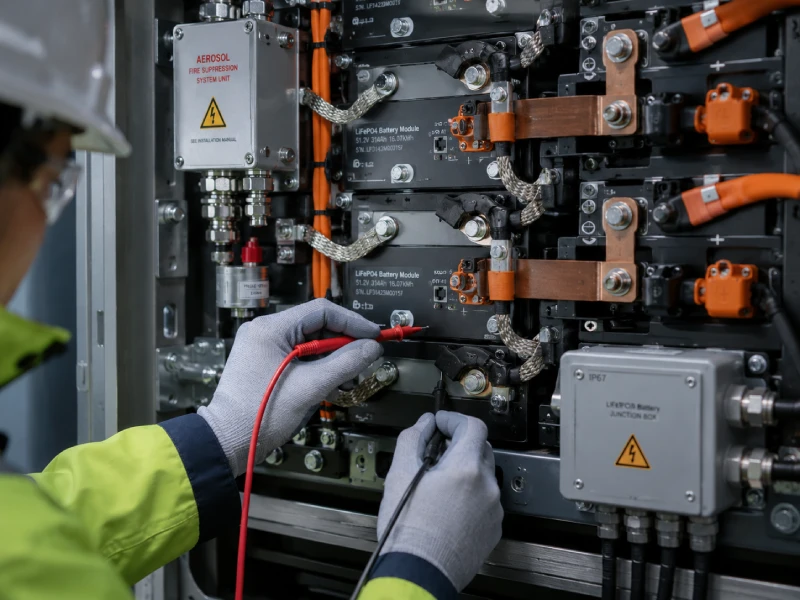
Evaluate Battery Safety Standards and Certifications
Safety should always be a top priority when selecting commercial ESS infrastructure.
Procurement teams should verify whether systems comply with internationally recognized standards such as:
- UL certifications
- IEC standards
- UN38.3 transportation certification
- Fire safety compliance standards
- Grid interconnection requirements
Battery chemistry selection also plays a major role in operational safety.
LiFePO4 batteries are widely preferred because they offer:
- Higher thermal stability
- Lower fire risk
- Improved structural safety
- Better long-term reliability
Assess Battery Lifecycle Performance
Battery lifespan directly impacts long-term project economics.
When evaluating commercial battery suppliers, buyers should analyze:
- Cycle life ratings
- Depth of discharge performance
- Capacity retention guarantees
- Operating temperature range
- Degradation characteristics
High-quality lithium battery systems may deliver over 6000 charge-discharge cycles under proper operating conditions.
Longer battery lifespan reduces:
- Replacement frequency
- Maintenance costs
- Operational disruptions
- Total ownership costs
Analyze Energy Management System (EMS) Intelligence
The Energy Management System is one of the most important components in a modern commercial energy storage system because it directly affects operational efficiency, energy optimization, and long-term project profitability.
While battery hardware receives most of the attention during procurement discussions, intelligent software control is what ultimately determines how effectively a commercial ESS performs in real-world operating conditions.
Advanced EMS platforms continuously analyze:
- Facility load demand
- Electricity pricing schedules
- Battery charging conditions
- Solar generation forecasts
- Grid interaction requirements
- Energy consumption patterns
This allows the system to optimize charging and discharging behavior automatically in real time.
For commercial and industrial operations, intelligent EMS capabilities can significantly improve:
- Electricity cost savings
- Peak shaving efficiency
- Battery lifespan
- Renewable energy utilization
- Operational stability
- Maintenance planning
When comparing suppliers, procurement teams should evaluate whether the EMS platform supports:
- Cloud-based monitoring
- Remote diagnostics
- Predictive maintenance
- AI-based optimization algorithms
- Multi-site management
- Real-time reporting dashboards
- Third-party inverter compatibility
An intelligent EMS is especially important for large-scale commercial ESS deployments operating across multiple facilities or geographically distributed energy networks.
Expert Tip from SolarDyna:
Many commercial ESS projects underperform not because of battery quality, but because of poor EMS optimization. Intelligent energy management software can dramatically improve energy savings, reduce battery stress, and maximize long-term ROI.
Verify Supplier Manufacturing Capabilities
For EPC contractors and distributors, supplier reliability is just as important as technical performance.
Commercial energy storage projects often involve:
- Long project timelines
- Large capital investments
- Complex installation schedules
- Strict delivery requirements
- Multi-year service expectations
An unstable supplier can create severe operational and financial risks.
Before selecting a commercial ESS manufacturer, B2B buyers should evaluate:
- Production capacity
- Quality control systems
- Engineering capabilities
- R&D investment
- Global logistics support
- Supply chain stability
- Technical certification compliance
Experienced commercial ESS manufacturers are generally better equipped to provide:
- Consistent product quality
- Project customization support
- Technical integration assistance
- Faster lead times
- Long-term after-sales service
For international EPC projects, supplier responsiveness and communication efficiency also play a major role in reducing project risk.
Why Long-Term Supplier Partnerships Matter
Commercial battery energy storage systems are long-term infrastructure investments. Unlike small consumer energy products, commercial ESS projects often operate for 10–20 years or longer.
This means supplier partnerships should be evaluated from a long-term strategic perspective rather than purely based on initial pricing.
Reliable long-term suppliers help businesses:
- Reduce operational uncertainty
- Improve spare parts availability
- Ensure technical support continuity
- Maintain software update compatibility
- Improve future expansion flexibility
For distributors and EPC contractors, stable supplier relationships also improve:
- Project delivery consistency
- Customer satisfaction
- Brand reputation
- Market competitiveness
In fast-growing energy storage markets, strong supplier ecosystems are becoming a critical competitive advantage.
Commercial ESS Integration Challenges and How to Avoid Them
Although commercial battery energy storage systems provide major operational and financial advantages, project success depends heavily on proper system design, engineering integration, and supplier expertise.
Many underperforming ESS projects fail not because of battery defects, but because of poor planning and system integration mistakes.
Understanding the most common deployment challenges helps EPC contractors and commercial buyers reduce operational risks and improve project performance.
Improper System Sizing
Incorrect system sizing is one of the most common commercial ESS deployment problems.
Oversized systems may result in:
- Excessive capital expenditure
- Low asset utilization rates
- Reduced ROI performance
Undersized systems may lead to:
- Insufficient peak shaving capacity
- Reduced backup power duration
- Lower energy savings
- Operational limitations
Proper system sizing requires careful analysis of:
- Historical electricity consumption
- Peak demand patterns
- Operational schedules
- Renewable generation capacity
- Future expansion requirements
Accurate energy modeling is essential for maximizing project profitability.
Thermal Management and Environmental Risks
Battery temperature control significantly affects:
- System safety
- Operational efficiency
- Battery lifespan
- Long-term reliability
High ambient temperatures, poor ventilation, and inadequate cooling design can accelerate battery degradation and increase operational risk.
Commercial ESS deployments in hot climates require especially careful thermal management engineering.
Professional commercial battery systems often include:
- Integrated HVAC systems
- Thermal monitoring sensors
- Environmental protection systems
- Smart cooling controls
- Fire suppression technologies
Procurement teams should always evaluate environmental operating specifications before deployment.
Expert Tip from SolarDyna:
In high-temperature regions, thermal management quality can have a greater impact on battery lifespan than battery chemistry alone. Proper cooling design is critical for protecting long-term ESS investment value.
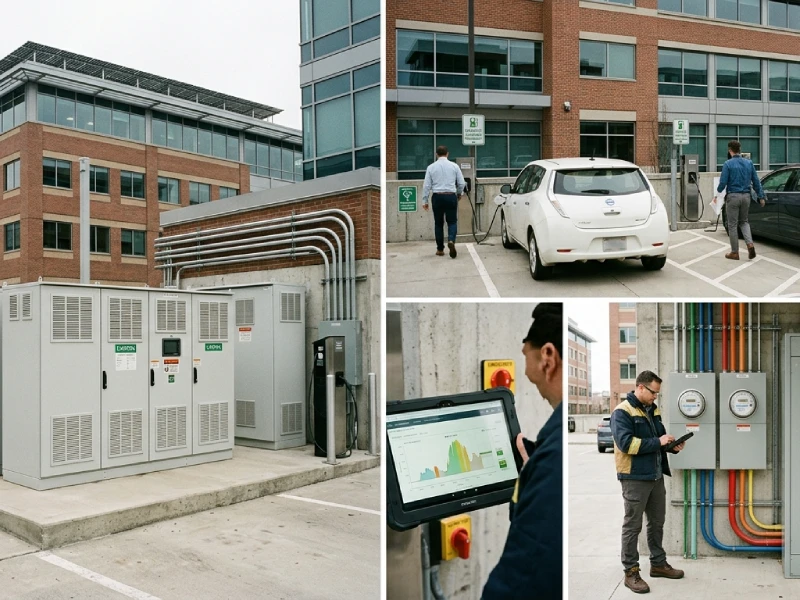
Inverter and Battery Compatibility Problems
Commercial ESS systems involve complex interaction between:
- Battery systems
- Inverters
- PCS equipment
- EMS software
- Grid infrastructure
Poor compatibility between components may result in:
- Communication failures
- Reduced system efficiency
- Operational instability
- Unexpected downtime
- Difficult troubleshooting processes
To avoid integration risks, businesses should prioritize suppliers with proven compatibility experience and strong engineering support capabilities.
Open communication protocols and flexible EMS integration also improve future scalability.
Weak After-Sales Support
Commercial ESS projects require ongoing technical support throughout their operational lifecycle.
Insufficient after-sales service can create:
- Extended downtime
- Delayed troubleshooting
- Higher maintenance costs
- Reduced customer confidence
Reliable ESS suppliers should provide:
- Remote monitoring support
- Technical troubleshooting assistance
- Spare parts availability
- Software updates
- Maintenance training
- Engineering consultation
For international projects, multilingual support and global service capabilities are increasingly important.
Why SolarDyna Commercial Energy Storage Systems Stand Out
As the global commercial ESS market becomes increasingly competitive, EPC contractors and distributors are seeking suppliers capable of delivering not only advanced battery technology, but also long-term engineering reliability, manufacturing consistency, and scalable project support.
SolarDyna focuses on providing commercial and industrial energy storage solutions designed for demanding B2B applications.
Advanced LiFePO4 Battery Technology
SolarDyna commercial battery systems use high-performance LiFePO4 technology optimized for:
- Long operational lifespan
- High safety standards
- Stable thermal performance
- Reliable cycle durability
- Commercial-grade energy density
These systems are engineered to support long-term commercial operation under demanding energy conditions.
Compared with conventional battery technologies, SolarDyna’s lithium storage solutions help businesses improve:
- Operational stability
- Maintenance efficiency
- Lifecycle economics
- Energy reliability
Flexible Commercial and Industrial ESS Configurations
Different commercial applications require different energy storage architectures.
SolarDyna provides flexible ESS configurations including:
- Rack-mounted battery systems
- Containerized ESS solutions
- Hybrid solar-storage systems
- Scalable modular storage platforms
- Commercial backup power systems
This flexibility allows EPC contractors and developers to optimize system design according to:
- Project scale
- Installation environment
- Load requirements
- Expansion plans
- Budget targets
Engineering Support for EPC Contractors and Distributors
Large-scale commercial ESS deployment requires more than hardware supply alone.
SolarDyna supports EPC contractors and B2B partners through:
- Technical consultation
- System sizing assistance
- Project integration guidance
- Customization support
- Remote monitoring integration
- After-sales technical service
Strong engineering collaboration helps reduce:
- Project commissioning risks
- System compatibility issues
- Installation delays
- Operational uncertainty
For distributors, technical support also improves customer confidence and long-term business relationships.
Expert Tip from SolarDyna:
Successful commercial ESS projects depend heavily on system integration expertise. Strong technical collaboration between suppliers, EPC contractors, and installers can significantly improve project efficiency, commissioning speed, and long-term operational reliability.
Stable Manufacturing and Global Supply Chain Support
Supply chain reliability has become increasingly important in the global energy storage industry.
Project developers and distributors require suppliers capable of maintaining:
- Stable production capacity
- Consistent quality standards
- Reliable delivery schedules
- Long-term product availability
SolarDyna focuses on supporting commercial ESS projects with scalable manufacturing capability and stable B2B supply support.
For EPC contractors managing multi-project deployments, dependable supply chain performance helps improve:
- Project scheduling accuracy
- Installation efficiency
- Procurement planning
- Customer satisfaction
Future Trends in Commercial Energy Storage Systems
Commercial energy storage technology is evolving rapidly as global energy infrastructure becomes more decentralized, electrified, and digitally optimized.
Several emerging trends are expected to shape the future of commercial ESS deployment over the next decade.
AI-Driven Energy Management Systems
Artificial intelligence and machine learning are increasingly being integrated into commercial EMS platforms.
AI-enabled systems can improve:
- Load forecasting accuracy
- Battery optimization strategies
- Predictive maintenance scheduling
- Energy trading decisions
- Renewable energy balancing
These intelligent optimization capabilities help businesses maximize energy efficiency while reducing operational costs.
Virtual Power Plant (VPP) Integration
Commercial battery storage systems are increasingly participating in Virtual Power Plant networks.
VPP platforms aggregate distributed energy resources to provide grid support services such as:
- Frequency regulation
- Demand response
- Grid balancing
- Reserve capacity support
This creates new revenue opportunities for commercial ESS owners while improving overall grid stability.
Growing Integration with Renewable Energy and EV Infrastructure
The expansion of renewable energy generation and electric vehicle charging infrastructure will continue increasing demand for commercial battery storage systems.
Future commercial energy ecosystems are expected to integrate:
- Solar generation
- Battery energy storage
- EV charging stations
- Smart building systems
- AI-driven EMS platforms
Commercial ESS infrastructure will become a central component of intelligent distributed energy networks.
Conclusion: Commercial Energy Storage Is Becoming Essential for Competitive Energy Strategy
The global energy transition is fundamentally changing how commercial and industrial businesses manage electricity consumption, operational resilience, and long-term infrastructure planning.
A modern commercial energy storage system is no longer simply a backup power solution. It has evolved into a strategic energy asset capable of improving operational efficiency, reducing electricity costs, supporting renewable energy integration, and strengthening long-term business competitiveness.
For EPC contractors, procurement managers, distributors, and technical decision-makers, selecting the right commercial ESS partner requires careful evaluation of:
- Battery technology quality
- System safety standards
- Engineering integration capability
- EMS intelligence
- Manufacturing reliability
- Long-term technical support
As energy prices continue rising and sustainability requirements become more demanding, businesses that invest in scalable commercial battery energy storage systems will be better positioned to:
- Improve energy independence
- Control operational costs
- Increase energy reliability
- Achieve ESG objectives
- Adapt to future energy market changes
With advanced LiFePO4 technology, flexible commercial ESS configurations, and professional B2B engineering support, SolarDyna is committed to helping commercial and industrial partners build more efficient, resilient, and future-ready energy infrastructure.
Looking for the Right Commercial Energy Storage System for Your Project?
Choosing the right commercial energy storage system is essential for reducing electricity costs, improving energy reliability, and maximizing long-term ROI. We provide scalable commercial & industrial ESS solutions for EPC contractors, distributors, industrial facilities, and renewable energy developers.
✔ Peak shaving, backup power, solar integration, and EV charging support
✔ OEM/ODM customization for EPC and distributor energy projects
✔ Engineering support for ESS sizing, EMS integration, and grid compliance
✔ Reliable manufacturing capacity for large-scale commercial ESS deployment
Speak with our engineering team for a custom commercial ESS solution tailored to your project requirements
Frequently Asked Questions About Commercial Energy Storage Systems
Q1: What is a commercial energy storage system used for?
A commercial energy storage system is primarily used to reduce electricity costs, improve energy reliability, optimize renewable energy usage, and provide backup power for commercial and industrial facilities. Businesses commonly deploy ESS solutions for peak shaving, load shifting, solar self-consumption optimization, EV charging support, and microgrid applications. For EPC contractors and facility operators, commercial battery storage also helps improve long-term energy efficiency and operational resilience.
Q2: How much can a commercial battery energy storage system reduce electricity costs?
The cost savings depend on electricity pricing structures, operational load profiles, battery sizing, and local utility demand charges. In many commercial and industrial applications, a properly configured commercial ESS can significantly reduce peak demand charges and optimize Time-of-Use electricity pricing. Facilities with high daytime consumption or variable load demand often achieve the fastest ROI from battery storage deployment.
Q3: Why is LiFePO4 battery technology preferred for commercial ESS projects?
LiFePO4 batteries are widely preferred because they provide higher thermal stability, longer cycle life, improved safety performance, and lower maintenance requirements compared with many alternative lithium battery chemistries. For commercial and industrial projects, LiFePO4 technology helps reduce long-term operational risk while improving lifecycle economics and system reliability.
Q4: What industries benefit most from commercial energy storage systems?
Industries with high electricity consumption, unstable grid conditions, or critical operational continuity requirements benefit most from commercial ESS deployment. Common sectors include manufacturing, logistics and warehousing, data centers, hospitals, retail centers, agriculture, telecommunications, mining operations, and EV charging infrastructure. Businesses integrating rooftop solar systems also benefit significantly from battery storage optimization.
Q5: How do commercial energy storage systems work with solar power?
Commercial ESS solutions store excess solar energy generated during daytime hours and discharge the stored electricity when solar production decreases or electricity demand rises. This improves solar self-consumption rates, reduces grid dependency, and increases the overall ROI of commercial photovoltaic systems. Solar-plus-storage integration also helps stabilize renewable energy output and improve energy independence.
Q6: What should EPC contractors evaluate when selecting a commercial ESS supplier?
EPC contractors should evaluate battery safety certifications, system scalability, EMS intelligence, thermal management design, engineering support capability, production consistency, delivery reliability, and after-sales service quality. Long-term supplier stability is especially important for large-scale projects because commercial battery energy storage systems often operate for more than 10 years.
Q7: How long does a commercial energy storage system typically last?
The lifespan of a commercial ESS depends on battery chemistry, operating conditions, thermal management quality, and usage patterns. High-quality LiFePO4 commercial battery systems commonly achieve 4000–8000+ charge cycles and may operate reliably for 10–15 years or longer under proper environmental and maintenance conditions.
Q8: Can commercial battery energy storage systems support EV charging infrastructure?
Yes. Commercial ESS systems are increasingly integrated with EV charging stations to reduce peak electricity demand, stabilize charging loads, and minimize expensive utility infrastructure upgrades. Battery storage also helps commercial EV charging facilities improve renewable energy utilization while supporting fast-charging applications more efficiently.