As commercial electricity prices continue to rise and global businesses accelerate investments in renewable energy, hybrid inverter technology is rapidly becoming one of the most important components in modern commercial and industrial energy storage systems. For EPC contractors, solar distributors, project developers, and industrial facility owners, understanding the real hybrid inverter benefits is no longer simply a technical discussion — it is now directly connected to project ROI, long-term system reliability, grid adaptability, and operational profitability.
Traditional PV systems were originally designed for one-directional energy conversion. However, today’s commercial energy environments are far more complex. Modern factories, commercial buildings, EV charging stations, and distributed energy systems require intelligent energy dispatch, battery integration, backup power functionality, peak shaving capability, and advanced energy management strategies. This shift is one of the key reasons why the global demand for hybrid solar inverter solutions continues to grow rapidly across both developed and emerging energy markets.
For B2B buyers, selecting the right hybrid inverter is not simply about choosing a higher conversion efficiency. The decision impacts system architecture, battery compatibility, installation complexity, grid compliance, future scalability, maintenance costs, and overall lifecycle performance. This is especially critical for commercial ESS projects where long-term operational stability and supply chain reliability directly affect project success.
In this guide, we will explore the most important hybrid inverter benefits for commercial and industrial solar projects, explain how hybrid inverter systems work, analyze real engineering deployment challenges, and discuss how EPC contractors and procurement managers can evaluate reliable hybrid inverter suppliers for long-term ESS cooperation.
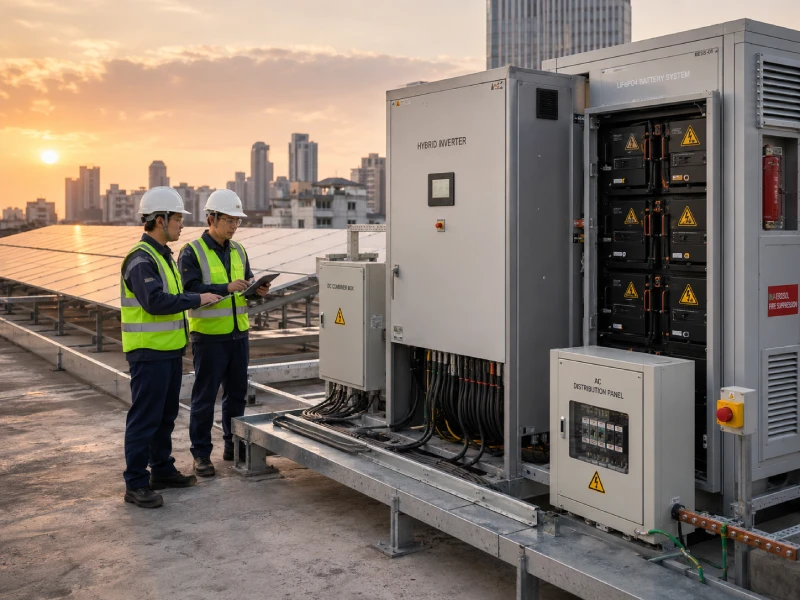
Why Hybrid Inverters Are Becoming the Core of Modern Commercial ESS Architecture
The global energy storage market is evolving rapidly. In the past, commercial photovoltaic systems primarily focused on reducing daytime electricity consumption through grid-tied solar generation. However, modern commercial energy systems now require much more than simple solar production.
Today’s commercial facilities face increasingly complicated energy management challenges:
- Peak demand charges continue to rise
- Grid instability affects manufacturing continuity
- Electric vehicle charging loads are increasing
- Energy resilience has become a strategic priority
- Distributed energy storage adoption is accelerating
- Utility time-of-use electricity pricing is becoming more aggressive
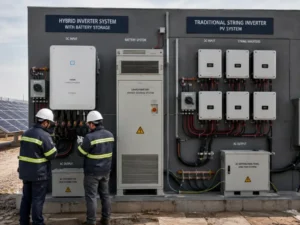
Traditional string inverter systems are often unable to address these modern energy management requirements efficiently because they were not originally designed for integrated battery storage and intelligent energy dispatch. This is where hybrid inverter systems provide significant advantages.
Unlike conventional grid-tied inverters, a hybrid inverter for solar system applications can simultaneously manage photovoltaic generation, battery charging and discharging, utility grid interaction, backup power supply, and intelligent load distribution within a single integrated platform.
For EPC contractors and commercial energy developers, this integrated architecture creates several major operational and economic advantages:
- Simplified system design
- Reduced balance of system (BOS) costs
- Lower installation complexity
- Improved commissioning efficiency
- Enhanced operational flexibility
- Smarter energy management capability
- Reduced long-term maintenance costs
As commercial ESS projects become larger and more technically demanding, hybrid inverter systems are increasingly viewed as the foundation of next-generation distributed energy infrastructure.
The Transition from Conventional PV Systems to Intelligent Energy Ecosystems
Commercial solar systems are no longer standalone photovoltaic installations. Modern ESS deployments increasingly operate as intelligent energy ecosystems capable of dynamically balancing generation, storage, and consumption in real time.
For example, in a modern manufacturing facility, a hybrid energy storage system may need to:
- Power daytime operations directly from solar energy
- Store excess photovoltaic production in batteries
- Discharge stored energy during utility peak pricing periods
- Provide backup power during outages
- Coordinate EV charging demand
- Support critical industrial equipment
- Participate in demand response programs
A conventional inverter architecture often requires multiple external devices to achieve these functions, increasing system complexity and introducing additional communication challenges between components.
By contrast, modern commercial hybrid inverter systems centralize many of these functions into a unified energy management platform. This integration significantly improves operational efficiency while simplifying both deployment and long-term maintenance.
Why EPC Contractors Prefer Hybrid Inverter Systems
For EPC companies, profitability depends not only on hardware pricing, but also on engineering efficiency, installation speed, commissioning reliability, and long-term project stability. Hybrid inverter systems offer several practical engineering advantages that directly improve project execution.
Reduced BOS Complexity
Traditional ESS systems often require multiple independent components including:
- Separate PV inverter
- Battery inverter
- External battery charge controller
- Additional EMS gateway devices
- Standalone backup switching systems
Hybrid inverter systems consolidate these functions into fewer integrated components, helping EPC teams reduce:
- Cable complexity
- Installation time
- Commissioning risks
- Potential communication failures
- On-site labor costs
This simplified architecture becomes especially valuable in large-scale commercial rooftop projects where installation timelines directly affect project profitability.
Improved Grid Compliance Flexibility
Grid regulations are becoming increasingly complex in many international markets. Commercial ESS projects must often comply with:
- Grid export limitations
- Reactive power requirements
- Frequency response standards
- Anti-islanding regulations
- Demand response integration protocols
Advanced hybrid inverter platforms are typically designed with more flexible firmware architecture, allowing EPC contractors to configure system parameters remotely and adapt to regional grid requirements more efficiently.
This flexibility can significantly reduce commissioning delays and improve project deployment timelines.
Expert Tip from SolarDyna Engineers
Many commercial ESS deployment issues are not caused by inverter hardware failures, but by poor communication integration between the inverter, battery management system (BMS), and EMS platform. When selecting a hybrid inverter supplier, EPC contractors should prioritize manufacturers with proven multi-platform battery compatibility testing and remote firmware upgrade capability.
What Is a Hybrid Inverter in a Commercial Energy Storage System?
A hybrid inverter is an advanced power conversion device that combines photovoltaic inverter functionality with battery energy management capability inside a single integrated system.
Unlike traditional solar inverters that only convert DC electricity from solar panels into usable AC electricity, a hybrid inverter with battery storage can intelligently manage multiple energy flows simultaneously.
These energy flows typically include:
- Solar generation input
- Battery charging and discharging
- Grid electricity interaction
- Backup power supply
- Load prioritization
- Energy optimization strategies
In commercial and industrial ESS applications, this multi-directional energy control capability is essential for achieving energy optimization and operational resilience.
Core Components of a Commercial Hybrid Inverter
Modern hybrid inverter systems contain several integrated functional modules that work together to coordinate energy generation, storage, and consumption.
DC to AC Conversion Module
This component converts direct current generated by photovoltaic panels into alternating current suitable for commercial facility loads and utility grid interaction.
Battery Charge and Discharge Controller
The integrated battery management logic coordinates battery charging and discharging cycles based on:
- Solar generation availability
- Electricity pricing schedules
- Facility energy demand
- Backup reserve settings
- Battery SOC conditions
Grid Synchronization System
Commercial hybrid inverters must continuously synchronize with utility grid voltage and frequency conditions to ensure stable operation and regulatory compliance.
Energy Management Communication Interface
Modern ESS systems rely heavily on communication between:
- Hybrid inverter
- Battery management system
- Energy management system
- Smart meters
- Monitoring platforms
Reliable communication architecture is critical for achieving stable system operation and intelligent energy dispatch.
How Hybrid Inverters Manage Commercial Energy Flow
One of the most important hybrid inverter benefits is intelligent real-time energy coordination.
During daytime operation, solar energy can directly power facility loads while simultaneously charging connected battery systems. Excess energy may either be exported to the utility grid or stored locally depending on project configuration and electricity pricing strategy.
During evening peak pricing periods, the hybrid inverter can discharge stored battery energy to reduce utility electricity consumption and lower commercial demand charges.
In backup power scenarios, the system can isolate critical loads and continue operating independently during grid outages.
This dynamic energy optimization capability is one of the primary reasons why hybrid inverter systems are becoming increasingly important in modern C&I energy storage projects.
AC-Coupled vs DC-Coupled Hybrid Inverter Architectures
When designing commercial ESS systems, EPC contractors must choose between AC-coupled and DC-coupled hybrid inverter architectures. Each configuration offers different operational advantages depending on project requirements.
| Architecture | Advantages | Limitations | Best Applications |
|---|---|---|---|
| DC-Coupled ESS | Higher charging efficiency Reduced conversion losses Simplified battery charging path | More complex initial design Less suitable for retrofit projects | New commercial ESS installations |
| AC-Coupled ESS | Flexible retrofit capability Easy integration with existing PV systems | Slightly lower system efficiency Additional conversion stages | Commercial solar upgrades and expansion projects |
For EPC contractors, selecting the correct ESS architecture is critical because it directly impacts system efficiency, project cost, installation complexity, scalability, and future upgrade flexibility.
In many retrofit commercial solar projects, AC-coupled hybrid inverter systems offer significant deployment advantages because they allow existing PV infrastructure to remain operational while adding battery storage capability.
Meanwhile, DC-coupled systems are often preferred for new-build commercial ESS projects where maximizing energy efficiency and reducing conversion losses are primary design priorities.
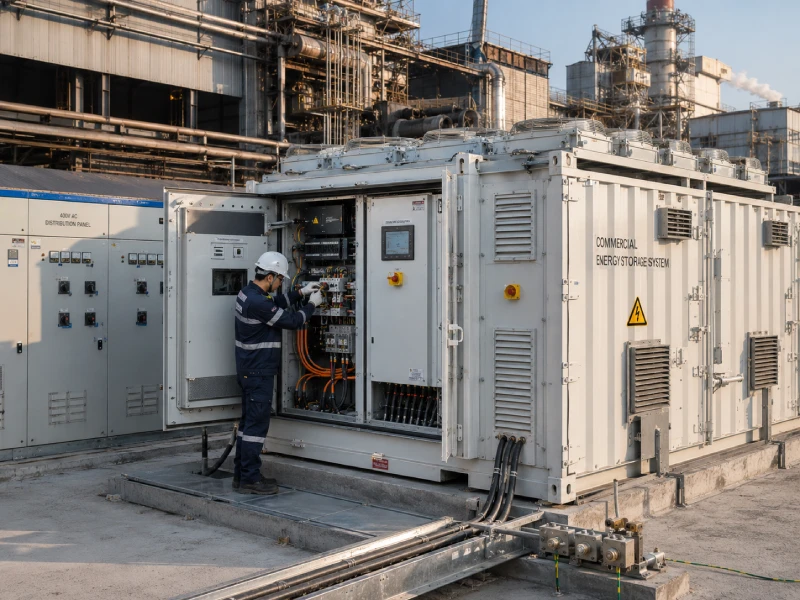
The Real Hybrid Inverter Benefits for Commercial and Industrial ESS Projects
For residential solar users, a hybrid inverter is often viewed as a convenience feature that enables battery backup and energy self-consumption. However, in commercial and industrial energy storage systems, the value proposition is fundamentally different. The real hybrid inverter benefits for EPC contractors, commercial facility owners, and energy investors are closely tied to project economics, operational stability, grid adaptability, and long-term lifecycle performance.
In large-scale ESS projects, even small improvements in energy conversion efficiency, commissioning speed, or maintenance complexity can significantly affect overall project profitability. This is why modern commercial ESS architecture increasingly relies on intelligent three phase hybrid inverter systems rather than traditional standalone inverter configurations.
The following sections explore the most important engineering and operational advantages that hybrid inverter systems provide in real-world commercial energy applications.
Reduced BOS Costs and Simplified Installation Complexity
One of the most overlooked yet financially important advantages of hybrid inverter systems is the reduction in balance of system (BOS) complexity.
In conventional commercial solar plus storage projects, EPC contractors often need to integrate multiple independent devices:
- PV inverter systems
- Battery inverter systems
- External charge controllers
- Automatic transfer switches
- Separate EMS communication hardware
- Additional protection devices
Each additional component increases:
- Cabling requirements
- Installation labor
- Communication integration complexity
- Potential failure points
- Commissioning time
- Maintenance workload
A modern commercial hybrid inverter integrates many of these functions into a centralized architecture, helping EPC teams simplify both electrical design and on-site deployment.
For large rooftop commercial PV projects or industrial ESS installations, simplified wiring and reduced component count can shorten installation schedules significantly. This is especially important in time-sensitive commercial projects where delayed commissioning directly affects project cash flow and return on investment.
Lower Engineering and Labor Costs
Hybrid inverter systems also reduce engineering overhead during project design phases. Because major system functions are already integrated, EPC engineers spend less time coordinating external device compatibility and communication protocols.
This simplification can reduce:
- Electrical design revisions
- Commissioning troubleshooting
- On-site integration risks
- Installation manpower requirements
In highly competitive commercial ESS bidding environments, these cost reductions can substantially improve EPC project margins.
Smarter Peak Shaving and Demand Charge Reduction
For many commercial and industrial facilities, electricity demand charges represent one of the largest operational expenses. Factories, logistics centers, cold storage facilities, hotels, and commercial office complexes often experience short-duration power spikes that dramatically increase utility billing costs.
This is where intelligent hybrid inverter with battery storage systems provide exceptional value.
By combining photovoltaic generation with battery storage and intelligent load management, hybrid inverter systems can dynamically discharge stored energy during peak demand periods, reducing the facility’s dependence on expensive utility electricity.
This process is commonly known as peak shaving.
How Peak Shaving Works in Commercial ESS Systems
During periods of low electricity pricing or high solar production:
- The battery system charges using surplus photovoltaic energy
- The hybrid inverter optimizes charging efficiency
- Energy reserves are stored for later use
During peak pricing periods:
- The hybrid inverter discharges battery energy
- Facility grid consumption decreases
- Demand charges are reduced
- Utility load spikes are minimized
Advanced energy management logic allows modern hybrid inverter systems to automate this process based on:
- Time-of-use electricity pricing
- Historical load profiles
- Weather forecasting
- Battery SOC conditions
- Real-time facility consumption
For commercial energy users, these operational strategies can significantly improve annual energy savings and accelerate ESS investment payback periods.
Improved Energy Resilience and Backup Power Capability
Grid reliability has become a growing concern in many regions due to aging infrastructure, extreme weather events, increasing electricity demand, and renewable energy intermittency.
For industrial facilities, even short-duration power interruptions can create severe operational and financial consequences:
- Production downtime
- Equipment damage
- Data loss
- Cold storage failure
- Manufacturing delays
- Revenue disruption
A major advantage of modern hybrid solar inverter systems is their ability to provide intelligent backup power functionality while coordinating seamlessly with battery storage systems.
Critical Load Management
Commercial hybrid inverter systems can isolate and prioritize critical facility loads during grid outages.
These critical loads may include:
- Security systems
- Server rooms
- Emergency lighting
- Industrial control systems
- Cold chain equipment
- Medical devices
- Telecommunication infrastructure
Instead of attempting to power the entire facility during an outage, hybrid inverter systems intelligently allocate available battery capacity to the most important operational loads.
This selective backup strategy greatly improves overall system efficiency and extends backup duration.
Seamless Grid Transition Capability
Advanced commercial hybrid inverter systems are designed with fast grid transition functionality, enabling rapid switching between grid-connected and off-grid operating modes.
For facilities with sensitive equipment or continuous production requirements, transition speed and system stability are critical engineering considerations.
Modern hybrid inverter platforms increasingly support:
- UPS-level transition performance
- Automatic transfer functionality
- Microgrid coordination capability
- Black start support
These capabilities are becoming increasingly important as commercial facilities seek greater energy independence and operational resilience.
Enhanced Battery Lifecycle Management
Battery performance directly affects the financial viability of commercial ESS projects. Poor battery management can lead to:
- Accelerated degradation
- Reduced storage capacity
- Thermal instability
- Unexpected downtime
- Higher replacement costs
One of the key hybrid inverter benefits is the ability to coordinate intelligent battery management strategies that extend battery operational lifespan.
Intelligent Charging and Discharging Logic
Modern hybrid inverter systems continuously optimize battery operation based on:
- Battery temperature
- State of charge (SOC)
- Load demand
- Solar generation conditions
- Grid pricing schedules
Advanced charging algorithms help prevent:
- Overcharging
- Deep discharge damage
- Thermal overload
- Rapid cycling stress
This intelligent battery coordination is especially important for large commercial LiFePO4 battery systems where long-term operational consistency directly impacts project ROI.
BMS Communication Stability
Reliable communication between the hybrid inverter and battery management system (BMS) is essential for safe and efficient ESS operation.
Commercial hybrid inverter platforms increasingly support:
- CAN communication protocols
- RS485 integration
- Multi-brand battery compatibility
- Remote firmware upgrades
- Real-time battery diagnostics
For EPC contractors, inverter compatibility with multiple battery platforms is highly valuable because it increases procurement flexibility and reduces future integration risks.
Expert Tip from SolarDyna Engineers
In many commercial ESS projects, battery degradation problems are caused not by the battery cells themselves, but by unstable inverter-BMS communication and poor charging logic coordination. Selecting a hybrid inverter platform with validated battery compatibility testing is critical for long-term ESS reliability.
Scalable System Architecture for Growing Commercial Energy Demand
Commercial energy demand rarely remains static. Manufacturing expansion, EV charging deployment, production upgrades, and facility electrification often increase power consumption over time.
As a result, scalability is becoming one of the most important design considerations in modern ESS architecture.
A properly designed hybrid inverter for solar system applications should support flexible future expansion without requiring complete system redesign.
Parallel Inverter Expansion
Many advanced commercial hybrid inverter systems support parallel operation, enabling:
- Higher total system capacity
- Incremental energy storage expansion
- Improved redundancy
- Flexible project scaling
This modular architecture is particularly valuable for:
- Industrial parks
- Commercial campuses
- Logistics centers
- Multi-building facilities
- Large rooftop solar systems
Instead of oversizing the system during the initial deployment phase, facility owners can gradually expand ESS capacity as energy demand grows.
Future Compatibility with EV Charging Infrastructure
Electric vehicle charging is rapidly becoming a major driver of commercial electricity demand.
For commercial properties, integrating EV charging infrastructure without proper energy management can create:
- Transformer overload risk
- Demand charge increases
- Grid instability issues
- Higher electricity costs
Hybrid inverter systems provide intelligent load coordination that helps balance:
- Solar generation
- Battery storage
- Facility consumption
- EV charging demand
This capability allows commercial facilities to expand EV charging infrastructure more efficiently while minimizing utility capacity upgrade costs.
Remote Monitoring and Intelligent O&M Optimization
Long-term operational visibility is essential for commercial ESS projects. Unlike residential systems, industrial and commercial energy storage platforms often operate continuously under dynamic load conditions.
Modern hybrid inverter systems increasingly include advanced remote monitoring functionality that enables:
- Real-time performance tracking
- Predictive fault analysis
- Remote parameter adjustment
- Firmware updates
- Energy optimization analytics
These digital monitoring capabilities help reduce operational and maintenance costs while improving overall system uptime.
Predictive Maintenance Benefits
Predictive maintenance is becoming increasingly important in large-scale ESS projects because unplanned downtime can create substantial financial losses.
Intelligent monitoring systems can identify:
- Abnormal inverter temperatures
- Battery communication instability
- Power quality fluctuations
- Component aging trends
- Grid interaction anomalies
Early detection allows operators to address issues before they develop into critical system failures.
For EPC contractors and commercial facility operators, this proactive maintenance approach improves:
- System reliability
- Asset lifespan
- Operational continuity
- Long-term ROI performance
Common Challenges in Hybrid Inverter Deployment — And How to Avoid Them
Although hybrid inverter technology provides substantial operational advantages, commercial ESS deployment still requires careful engineering planning. Many underperforming energy storage projects fail not because of hardware defects, but because of poor system integration, incorrect sizing, communication instability, or environmental design issues.
For EPC contractors and procurement managers, understanding these common deployment risks is critical for improving project reliability and avoiding costly operational problems.
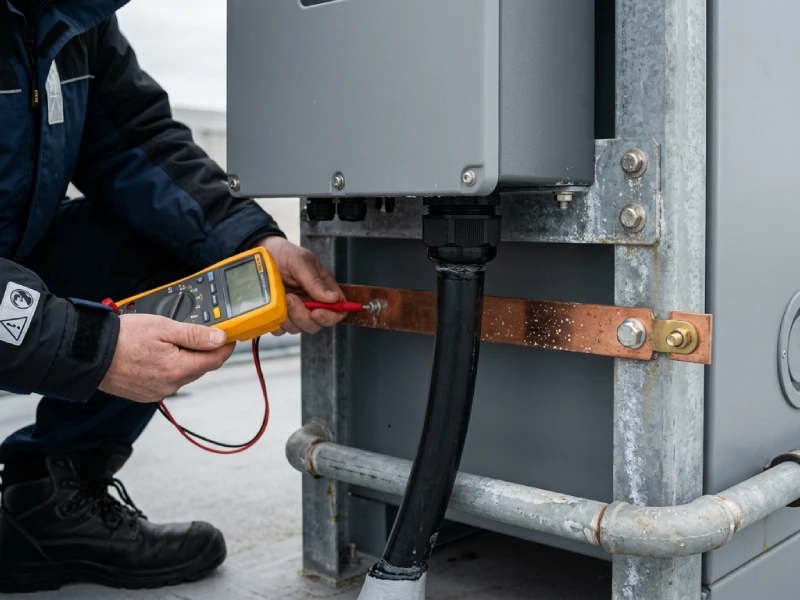
Battery Communication Compatibility Issues
One of the most common challenges in commercial ESS deployment is communication mismatch between the hybrid inverter and battery management system.
Even when hardware specifications appear compatible, communication instability can still occur due to:
- Firmware inconsistency
- Protocol mismatch
- Incomplete BMS integration testing
- Software update conflicts
- Third-party component compatibility limitations
Communication failures may result in:
- Battery charging interruptions
- Inaccurate SOC readings
- Unexpected shutdown events
- Reduced energy optimization performance
- Accelerated battery degradation
To reduce these risks, EPC contractors should prioritize hybrid inverter suppliers that provide:
- Validated battery compatibility lists
- Multi-brand integration experience
- Remote firmware support
- Long-term software maintenance capability
Incorrect Inverter Sizing for Commercial Loads
Improper inverter sizing remains a major cause of ESS performance limitations in industrial applications.
Many commercial facilities contain highly dynamic loads including:
- HVAC systems
- Industrial motors
- Compressors
- Pumps
- Production machinery
- Cold storage equipment
These systems often generate high startup surge currents and fluctuating reactive power demand.
If the hybrid inverter is undersized, the ESS system may experience:
- Overload shutdowns
- Voltage instability
- Reduced operational efficiency
- Premature component wear
Proper commercial ESS design should include:
- Detailed load analysis
- Peak demand profiling
- Reactive power assessment
- Future expansion planning
Engineering-grade system sizing is essential for achieving stable long-term ESS performance.
Poor Thermal Design in Outdoor ESS Environments
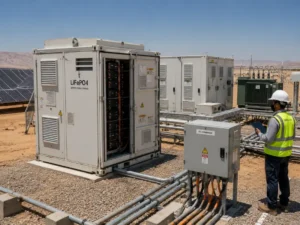
Thermal management is one of the most underestimated factors in commercial ESS reliability. In many outdoor deployments, hybrid inverter systems operate under harsh environmental conditions including:
- High ambient temperatures
- Humidity and condensation
- Dust exposure
- Salt spray corrosion in coastal regions
- Poor ventilation conditions
- Continuous high-load operation
If thermal design is inadequate, inverter components may experience:
- Power derating
- Reduced conversion efficiency
- Accelerated component aging
- Unexpected shutdowns
- Increased maintenance frequency
This issue becomes even more critical in utility-scale rooftop ESS projects where inverter cabinets are exposed to direct sunlight and elevated rooftop temperatures for extended periods.
Engineering Considerations for Thermal Stability
To improve long-term operational stability, EPC contractors should evaluate:
- Inverter cooling architecture
- Heat dissipation efficiency
- Airflow design
- Operating temperature range
- IP protection rating
- Corrosion-resistant materials
Advanced commercial hybrid inverter systems increasingly use intelligent thermal control algorithms that dynamically adjust fan operation and power output based on real-time temperature conditions.
For coastal or tropical ESS deployments, corrosion resistance is equally important. Poor enclosure material quality can significantly shorten equipment lifespan in high-humidity or salt-exposure environments.
Expert Tip from SolarDyna Engineers
In commercial rooftop ESS systems, ambient rooftop temperatures can exceed standard air temperatures by more than 15°C during summer operation. Selecting hybrid inverter systems with industrial-grade thermal protection and verified outdoor operating performance is critical for maintaining long-term energy yield and system reliability.
Real-World Commercial Applications of Hybrid Inverters
The value of hybrid inverter technology becomes most visible when analyzed through real commercial and industrial deployment scenarios. Different industries face different operational challenges, and modern ESS systems must be designed around actual energy usage patterns rather than generic solar assumptions.
Below are some of the most important commercial applications where hybrid inverter benefits create measurable operational and financial advantages.
Factory Peak Shaving and Industrial Energy Optimization
Manufacturing facilities are among the largest adopters of commercial ESS systems because industrial electricity demand often fluctuates significantly throughout the day.
Common industrial loads include:
- CNC machinery
- Industrial motors
- Compressors
- Production automation equipment
- Cooling systems
- Heavy processing machinery
These systems frequently generate short-duration power spikes that increase utility demand charges substantially.
A properly designed hybrid inverter with battery storage system can help factories:
- Reduce peak demand charges
- Stabilize internal power quality
- Improve solar self-consumption rates
- Optimize time-of-use electricity costs
- Reduce grid dependency
Typical Industrial ESS Operation Strategy
During daytime solar production:
- PV energy directly powers factory operations
- Surplus solar energy charges battery systems
- Grid electricity consumption decreases
During peak utility pricing periods:
- The hybrid inverter discharges stored battery energy
- Peak load demand is reduced
- Demand charge penalties are minimized
For energy-intensive manufacturing facilities, this operational strategy can generate significant annual electricity cost savings while improving energy resilience.
Commercial Building Backup Power and Energy Management
Commercial office buildings, shopping centers, hotels, hospitals, and mixed-use developments increasingly rely on intelligent ESS systems to improve operational continuity and energy efficiency.
Unlike industrial facilities, commercial buildings often prioritize:
- Occupant comfort
- Operational continuity
- Backup reliability
- Energy optimization
- Grid flexibility
Modern hybrid solar inverter systems help commercial buildings coordinate:
- HVAC optimization
- Lighting systems
- Critical backup loads
- Elevator emergency support
- Distributed battery storage
Importance of Seamless Backup Transition
In commercial office environments, even short-duration outages can disrupt:
- Data centers
- Security systems
- Communication infrastructure
- Tenant operations
- Financial transactions
This is why advanced commercial ESS systems increasingly require fast transition capability and intelligent critical load prioritization.
Hybrid inverter systems designed for commercial backup applications often include:
- UPS-level switching capability
- Automatic transfer logic
- Grid outage detection
- Critical load subpanel support
These features improve business continuity while enhancing the overall value proposition of distributed energy infrastructure.
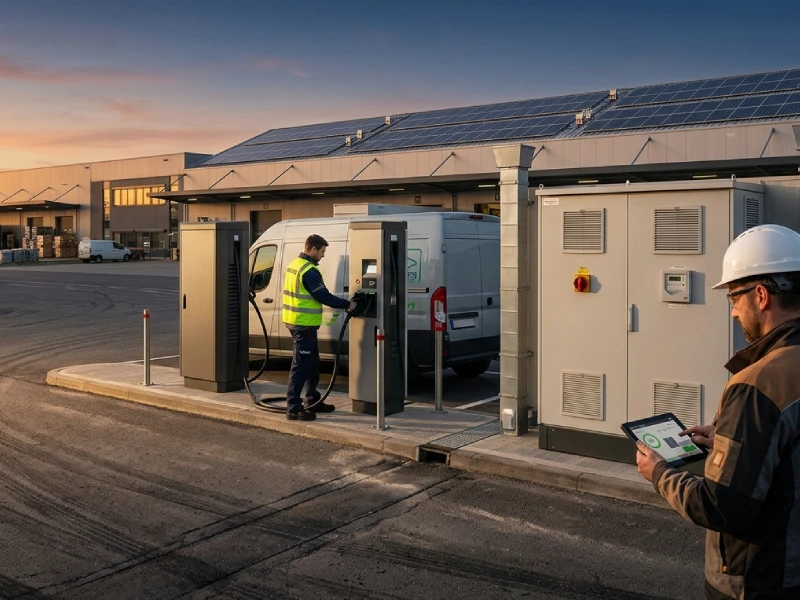
Solar + EV Charging + Storage Integration
The rapid expansion of electric vehicle charging infrastructure is creating new opportunities and challenges for commercial energy management.
Large EV charging deployments can dramatically increase facility electricity demand, often leading to:
- Transformer overload risk
- Higher utility capacity charges
- Demand charge spikes
- Grid instability concerns
Integrating solar generation, battery storage, and EV charging through intelligent three phase hybrid inverter systems allows commercial operators to manage charging loads more efficiently.
Benefits of Hybrid Inverter Integration in EV Infrastructure
- Load balancing during charging peaks
- Reduced transformer upgrade requirements
- Higher renewable energy utilization
- Lower electricity costs
- Improved charging station scalability
As vehicle electrification continues to accelerate globally, hybrid inverter systems are expected to become increasingly important in commercial EV infrastructure projects.
Agricultural and Remote Energy Applications
Agricultural facilities and remote commercial operations often face unstable grid conditions or limited utility infrastructure.
Common applications include:
- Irrigation systems
- Cold storage facilities
- Remote agricultural processing plants
- Water pumping systems
- Off-grid commercial facilities
Hybrid inverter systems help these facilities improve energy reliability while reducing diesel generator dependence.
In weak-grid or off-grid environments, hybrid inverter systems can intelligently coordinate:
- Solar generation
- Battery storage
- Generator backup
- Load prioritization
This hybrid energy strategy reduces fuel consumption while improving operational sustainability.
Hybrid Inverter vs Traditional Inverter: Which Is Better for Modern ESS Projects?
One of the most common questions asked by EPC contractors and commercial energy investors is whether hybrid inverter systems are truly superior to traditional inverter architectures.
The answer depends on project goals, operational requirements, battery integration needs, and long-term energy strategy.
For simple grid-tied photovoltaic systems without energy storage, traditional string inverters may still provide a cost-effective solution. However, as commercial energy systems become more dynamic and storage-oriented, hybrid inverter platforms increasingly offer superior long-term value.
| Feature | Hybrid Inverter | Traditional String Inverter |
|---|---|---|
| Battery Integration | Built-in support | Requires external components |
| Backup Power Capability | Supported | Limited or unavailable |
| Peak Shaving Functionality | Advanced intelligent control | Generally unsupported |
| System Scalability | High flexibility | More limited |
| EMS Integration | Integrated architecture | Additional devices required |
| Long-Term O&M Complexity | Lower due to integration | Higher system coordination complexity |
For modern commercial ESS deployments, hybrid inverter systems generally provide stronger long-term flexibility, especially when battery storage, backup power, EV charging, and intelligent energy management are required.
How EPC Contractors Should Evaluate a Hybrid Inverter Supplier
Selecting a hybrid inverter supplier is not simply a purchasing decision. For EPC contractors and project developers, it is a long-term engineering partnership decision that directly impacts project execution quality, operational stability, and customer satisfaction.
The commercial ESS industry is highly competitive, and not all inverter suppliers possess the same level of engineering capability or system integration experience.
Evaluate Real ESS Engineering Experience
Many inverter suppliers can provide product catalogs, but relatively few possess deep commercial ESS deployment experience.
EPC contractors should evaluate whether the supplier has:
- Commercial ESS integration capability
- Real-world project deployment experience
- Technical troubleshooting expertise
- Battery integration knowledge
- Grid compliance understanding
- Overseas project support capability
Practical engineering experience often matters far more than marketing specifications alone.
Assess Long-Term Firmware and EMS Support
Commercial ESS systems are long-term operational assets that may remain active for 10–15 years or more.
During this period:
- Grid regulations may change
- Battery platforms may evolve
- EMS functionality may expand
- Cybersecurity requirements may increase
Therefore, hybrid inverter suppliers should provide:
- Firmware update capability
- Remote diagnostic tools
- EMS compatibility support
- Long-term software maintenance
- Technical service responsiveness
This ongoing technical support is essential for maintaining long-term ESS performance and operational reliability.
Verify Multi-Battery Platform Compatibility
Battery technology evolves rapidly, and EPC contractors often need procurement flexibility across multiple battery manufacturers.
A high-quality commercial hybrid inverter platform should support:
- LiFePO4 battery systems
- High-voltage battery configurations
- Multiple BMS communication protocols
- Third-party battery integration
This flexibility improves supply chain resilience and reduces project procurement risk.
Technical Standards and Certifications That Matter in Commercial ESS Projects
Certifications and compliance standards are critical indicators of product quality, safety, and international project readiness.
Commercial ESS systems operate in high-power environments where electrical safety and grid compliance are essential.
Important standards may include:
- IEC 62109
- IEC 62477
- EMC compliance standards
- Grid certification requirements
- UN38.3 transportation standards
- Battery safety certifications
For EPC contractors working on international projects, selecting compliant equipment helps reduce approval delays and improves long-term operational confidence.
Expert Tip from SolarDyna Engineers
In many international ESS projects, certification compatibility becomes one of the most important procurement factors during late-stage project approval. Early verification of inverter compliance standards can significantly reduce commissioning delays and unexpected redesign costs.
Why SolarDyna Hybrid Inverter Solutions Stand Out
As commercial ESS projects become increasingly complex, EPC contractors and energy developers require more than standalone hardware suppliers. They need long-term engineering partners capable of supporting system integration, technical optimization, and future scalability.
SolarDyna focuses on delivering intelligent commercial ESS solutions designed for real-world deployment environments rather than simplified residential energy applications.
Designed for Commercial and Industrial ESS Applications
SolarDyna hybrid inverter solutions are engineered specifically for demanding commercial operating conditions including:
- Industrial peak shaving systems
- Commercial rooftop ESS deployments
- Solar plus storage projects
- EV charging infrastructure integration
- Backup power applications
- Distributed commercial microgrids
The system architecture emphasizes:
- Operational stability
- High-efficiency energy dispatch
- Flexible scalability
- Advanced thermal protection
- Intelligent battery coordination
Engineering-Oriented System Integration Capability
Unlike suppliers focused only on hardware shipment, SolarDyna emphasizes engineering-grade ESS integration support.
This includes:
- Battery compatibility coordination
- Commercial ESS architecture optimization
- Technical deployment support
- Remote troubleshooting assistance
- Long-term firmware maintenance
For EPC contractors, this engineering-oriented support model helps reduce deployment risk while improving long-term system reliability.
Long-Term Partnership Value for EPC Contractors and Distributors
Successful commercial ESS deployment depends heavily on supply chain consistency and technical support continuity.
SolarDyna supports global EPC and distribution partners through:
- Stable product supply capability
- Flexible OEM/ODM cooperation
- Commercial project customization support
- Technical documentation assistance
- Responsive engineering communication
For long-term ESS project development, strong technical collaboration is often just as important as equipment pricing.
Future Trends: Why Hybrid Inverters Will Become the Standard in Commercial Energy Systems
The global energy transition is accelerating rapidly. As renewable penetration increases and distributed energy systems become more intelligent, hybrid inverter technology is expected to play a central role in future commercial energy infrastructure.
Several major trends are driving this transformation.
Expansion of Distributed Energy Storage
Commercial energy systems are shifting away from centralized power dependence toward distributed energy architectures that combine:
- Solar generation
- Battery storage
- Smart energy management
- Flexible load coordination
Hybrid inverter systems provide the operational intelligence necessary to coordinate these distributed resources efficiently.
AI-Driven Energy Optimization
Future ESS systems will increasingly rely on AI-driven energy forecasting and predictive dispatch algorithms.
Advanced hybrid inverter platforms are expected to integrate:
- Predictive load analysis
- Weather-based energy forecasting
- Automated battery optimization
- Dynamic pricing response
- Virtual power plant coordination
These intelligent capabilities will help commercial facilities optimize energy consumption automatically while improving overall grid flexibility.
Growth of Commercial EV Infrastructure
As commercial EV charging deployment accelerates globally, hybrid inverter systems will become increasingly important for balancing charging demand with renewable energy generation and battery storage.
This integration will help reduce:
- Grid congestion
- Demand charge spikes
- Infrastructure upgrade costs
Commercial ESS platforms capable of integrating solar, storage, and EV charging are likely to become standard infrastructure in future smart commercial facilities.
Conclusion
The evolution of commercial energy systems is fundamentally changing how businesses generate, store, and manage electricity. As energy costs continue rising and grid flexibility becomes increasingly important, hybrid inverter systems are rapidly emerging as the core technology behind modern commercial ESS infrastructure.
The most important hybrid inverter benefits extend far beyond simple solar conversion efficiency. Modern hybrid inverter systems help commercial facilities:
- Reduce peak demand charges
- Improve energy resilience
- Simplify ESS architecture
- Optimize battery lifecycle performance
- Support EV charging integration
- Enhance long-term operational flexibility
For EPC contractors and commercial energy investors, selecting the right hybrid inverter supplier is equally important. Long-term system stability depends not only on hardware quality, but also on engineering support capability, battery compatibility, firmware maintenance, and real-world ESS deployment experience.
As distributed energy storage continues to expand globally, hybrid inverter technology is expected to become the foundation of future intelligent commercial energy systems.
For businesses seeking scalable, reliable, and engineering-oriented ESS solutions, SolarDyna provides commercial hybrid inverter platforms designed to support long-term operational performance, energy optimization, and future-ready energy infrastructure development.
Planning a Commercial ESS Project with Hybrid Inverter Integration?
Choosing the right commercial hybrid inverter solution directly impacts system efficiency, peak shaving performance, battery compatibility, and long-term ESS reliability. SolarDyna provides engineering-grade hybrid inverter systems designed for EPC contractors, commercial solar developers, and industrial energy storage projects.
✔ Intelligent peak shaving and battery energy management integration
✔ AC-coupled and DC-coupled ESS architecture support
✔ OEM/ODM customization for EPC contractors and distributors
✔ Multi-battery compatibility with LiFePO4 energy storage systems
✔ Engineering support for grid compliance, EMS integration, and system deployment
Speak directly with SolarDyna engineers for a custom commercial hybrid inverter configuration tailored to your ESS project, energy load profile, and deployment environment.
Frequently Asked Questions (FAQ) — Hybrid Inverter for Commercial ESS Projects
Q1: What are the main hybrid inverter benefits for commercial ESS projects?
The key hybrid inverter benefits include reduced BOS complexity, integrated battery management, peak shaving capability, improved energy dispatch efficiency, and simplified system architecture. For EPC contractors, this translates into lower installation costs, faster commissioning, and improved long-term system reliability.
Q2: How does a hybrid inverter improve ROI in commercial solar projects?
A hybrid inverter improves ROI by enabling intelligent energy shifting between solar generation, battery storage, and grid consumption. This allows commercial users to reduce peak demand charges, optimize time-of-use tariffs, and increase solar self-consumption, directly improving project payback periods.
Q3: What is the difference between AC-coupled and DC-coupled hybrid inverter systems?
DC-coupled systems offer higher efficiency and are ideal for new-build ESS projects, while AC-coupled systems provide easier retrofit integration with existing solar installations. EPC contractors choose based on project structure, efficiency targets, and expansion requirements.
Q4: Can hybrid inverters work with different LiFePO4 battery brands?
Yes, but compatibility depends on BMS communication protocols such as CAN or RS485. High-quality commercial hybrid inverter systems support multi-brand battery integration, which improves procurement flexibility and reduces supply chain risks for EPC contractors.
Q5: How do hybrid inverters support peak shaving in industrial applications?
Hybrid inverters store excess solar or off-peak grid energy in batteries and discharge it during high-demand periods. This reduces peak electricity consumption, lowers demand charges, and stabilizes industrial load profiles, especially in manufacturing and logistics facilities.
Q6: What are the common challenges in hybrid inverter deployment?
Common challenges include battery communication mismatches, incorrect system sizing, thermal management issues, and improper EMS integration. These risks can be minimized by selecting suppliers with proven engineering experience and validated ESS deployment cases.
Q7: What certifications should a commercial hybrid inverter have?
Key certifications include IEC 62109 for safety, IEC 62477 for power electronics, EMC compliance, UN38.3 for battery transport, and regional grid codes. These certifications ensure system safety, regulatory approval, and international project compatibility.
Q8: Why should EPC contractors choose an engineering-focused hybrid inverter supplier?
Engineering-focused suppliers provide more than hardware—they offer system integration support, firmware updates, battery compatibility testing, and long-term technical assistance. This reduces project risk, improves system stability, and ensures better lifecycle performance for commercial ESS projects.