As commercial energy costs continue to rise worldwide, choosing the best solar inverter commercial projects can rely on has become one of the most important decisions for EPC contractors, energy developers, and industrial facility owners. In 2026, commercial solar systems are no longer simple grid-tied photovoltaic installations. They are evolving into intelligent energy management ecosystems that combine rooftop solar, LiFePO4 battery storage, hybrid inverters, EV charging, and advanced EMS platforms.
For engineering teams, the challenge is no longer just achieving high conversion efficiency. The real challenge is building a stable, scalable, and future-ready commercial energy system that can operate reliably for 10–15 years under real industrial conditions. That is why selecting the best solar inverter commercial applications require involves evaluating not only efficiency ratings, but also battery compatibility, thermal stability, remote monitoring capability, grid compliance, and long-term technical support.
This guide explains how commercial project teams evaluate modern solar inverter systems, which technologies are becoming mainstream in 2026, and what factors truly impact long-term project ROI in factories, warehouses, shopping centers, agricultural facilities, and commercial ESS deployments.
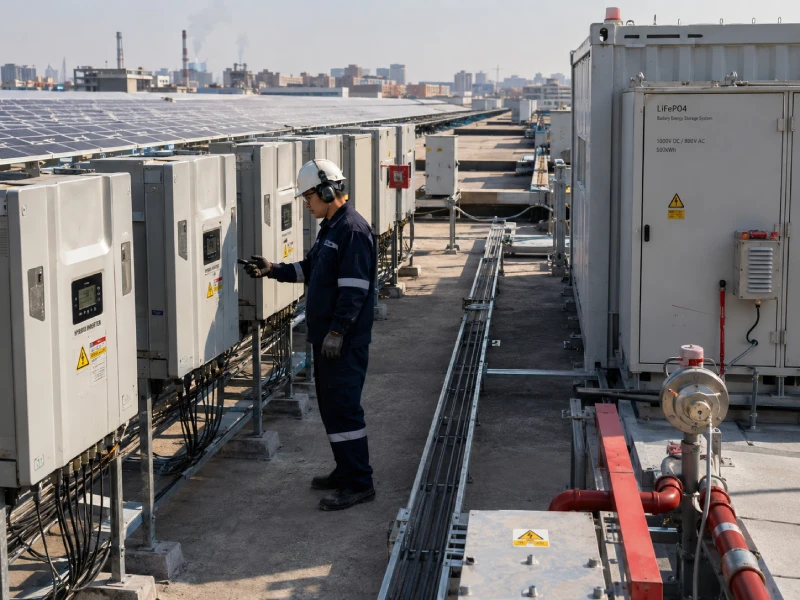
What Is the Best Commercial Solar Inverter in 2026?
There is no single “best” commercial solar inverter for every project. The ideal solution depends on several engineering factors, including project size, rooftop complexity, energy storage integration, local grid requirements, and future expansion plans.
However, in 2026, the market is clearly shifting toward:
- Hybrid inverters with ESS-ready architecture
- Three-phase commercial inverter systems
- Remote monitoring and intelligent EMS integration
- LiFePO4-compatible energy storage platforms
- Scalable inverter solutions for phased commercial expansion
For factories, warehouses, and industrial rooftop solar systems, hybrid commercial inverters are increasingly preferred because they support peak shaving, battery storage optimization, backup power capability, and long-term energy flexibility.
Why Choosing the Right Commercial Solar Inverter Matters in 2026
Commercial solar projects are becoming significantly more complex than they were only a few years ago. Traditional grid-tied photovoltaic systems focused mainly on daytime energy production. Today, commercial energy systems are expected to perform multiple functions simultaneously:
- Reduce peak electricity demand charges
- Support battery energy storage systems
- Provide backup power during outages
- Participate in smart grid programs
- Optimize energy consumption through EMS software
- Enable future EV charging expansion
As a result, the inverter has become the central control hub of the entire commercial energy architecture.
In many industrial solar projects, the inverter directly determines:
- Overall system stability
- Battery charging efficiency
- Grid interaction performance
- Long-term maintenance cost
- Remote diagnostics capability
- Future expansion flexibility
This is why EPC contractors increasingly prioritize engineering reliability over low initial pricing when evaluating commercial inverter suppliers.
Commercial Energy Storage Is Changing Inverter Requirements
One of the biggest industry shifts in 2026 is the rapid adoption of commercial ESS systems. Rising electricity prices, time-of-use billing structures, and grid instability are pushing factories and commercial buildings toward energy storage integration.
Unlike traditional PV systems, ESS-enabled commercial projects require much deeper inverter functionality.
Modern commercial hybrid inverters must now support:
- Fast battery communication
- Bi-directional energy flow
- Peak shaving algorithms
- Battery state-of-charge management
- Dynamic load balancing
- Remote EMS coordination
This is one reason why many older commercial string inverter platforms are struggling to meet new market expectations.
Expert Tip
In many commercial ESS projects, system instability is not caused by the battery itself, but by poor communication between the inverter, BMS, and EMS platform. CAN protocol mismatches, firmware inconsistency, and delayed response logic can create charging interruptions and peak-shaving failures. For industrial-grade projects, communication reliability is often more important than achieving a slightly higher efficiency percentage.
Grid Compliance Has Become More Complex
Another major challenge for EPC teams in 2026 is grid compliance.
Different regions now require increasingly strict inverter certifications and grid-support functions. Commercial inverters must often support:
- Anti-islanding protection
- Reactive power control
- Frequency regulation
- Low-voltage ride-through capability
- Remote utility dispatch integration
For international projects, compliance requirements may vary significantly between Europe, Southeast Asia, the Middle East, and Latin America.
This means commercial project teams increasingly prefer inverter manufacturers with:
- Global certification experience
- Engineering support teams
- Firmware customization capability
- Strong technical documentation
Why Many Commercial Solar Projects Fail at the Inverter Stage
In commercial energy projects, inverter-related issues are among the most common causes of long-term underperformance. Surprisingly, many failures are not immediately visible during system commissioning. Instead, they gradually appear after months of real operating conditions.
Understanding these engineering risks is essential when selecting the best inverter for commercial solar systems.
Inverter Undersizing Creates Long-Term Energy Loss
One of the most common design mistakes is improper inverter sizing.
Some projects intentionally undersize inverter capacity to reduce initial procurement cost. However, in real commercial environments, this often causes:
- Frequent clipping during peak sunlight hours
- Reduced annual energy yield
- Excessive thermal stress
- Higher long-term operational losses
For factories operating high daytime loads, even small efficiency losses can significantly impact ROI over a 10-year project lifecycle.
Engineering teams increasingly prefer scalable inverter architectures that allow future expansion without replacing core system components.
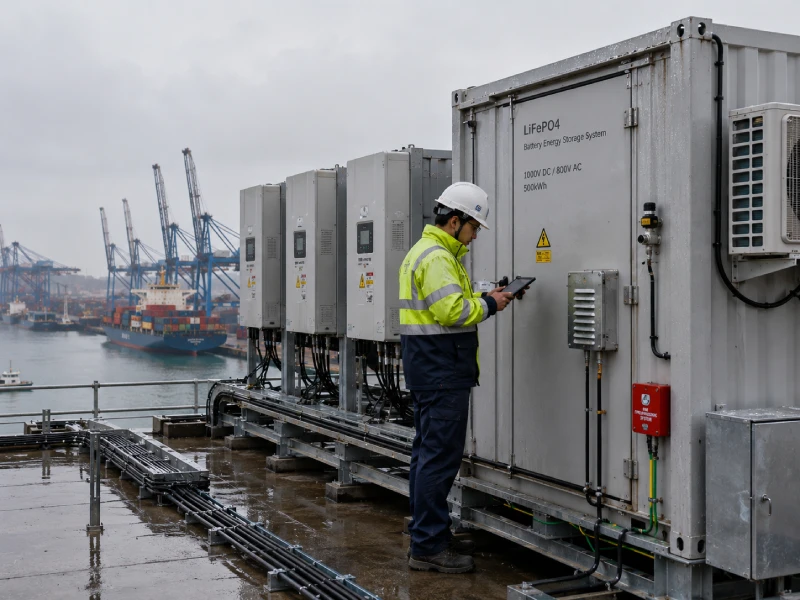
Poor Thermal Design Reduces Commercial Reliability
Industrial rooftop environments are often extremely demanding.
Commercial inverters may operate under:
- High rooftop temperatures
- Dust-heavy industrial zones
- High humidity coastal areas
- Large daily temperature fluctuations
If thermal management is poorly designed, inverter performance may degrade rapidly under continuous load.
Common symptoms include:
- Power derating during summer afternoons
- Cooling fan failure
- PCB overheating
- Reduced inverter lifespan
For this reason, EPC contractors increasingly prioritize industrial-grade protection features such as:
- IP65/IP66 enclosure ratings
- Intelligent thermal airflow design
- Corrosion-resistant housing
- Wide operating temperature range
Weak After-Sales Support Increases EPC Risk
Technical support has become one of the most important evaluation criteria in commercial solar projects.
In large-scale installations, inverter downtime may directly impact:
- Factory production schedules
- Peak shaving performance
- Energy storage operation
- Financial return targets
Unfortunately, many suppliers still focus primarily on shipment volume rather than long-term engineering support.
Commercial project teams increasingly expect:
- Fast remote diagnostics
- Firmware update support
- Real-time troubleshooting
- Local spare parts availability
- Professional commissioning guidance
This shift is changing how EPC contractors evaluate commercial inverter manufacturers in 2026.
Commercial Solar Inverter Evaluation Checklist for 2026
| Evaluation Factor | Why It Matters |
|---|---|
| Max Efficiency | Improves long-term energy yield and ROI |
| Battery Compatibility | Critical for ESS stability and charging logic |
| MPPT Quantity | Supports complex rooftop layouts |
| IP Protection Rating | Improves outdoor durability |
| Remote Monitoring | Reduces O&M response time |
| Parallel Scalability | Enables future commercial expansion |
| Grid Compliance | Accelerates project approval |
| Warranty Support | Reduces operational risk |
How EPC Contractors Evaluate Commercial Solar Inverters in Real Projects
In real commercial energy projects, inverter selection is rarely based on brochure specifications alone. Engineering teams, procurement managers, and system designers evaluate commercial inverter platforms according to long-term operational risk, compatibility with future expansion plans, maintenance complexity, and overall lifecycle economics.
This is especially true for large rooftop PV systems, commercial battery storage projects, industrial microgrids, and hybrid energy infrastructures where inverter reliability directly impacts project profitability.
As a result, the process of selecting the best solar inverter commercial projects require has become much more engineering-focused in 2026.
Total Lifecycle Cost Is More Important Than Initial Purchase Price
One of the most important shifts in commercial solar procurement is the growing focus on lifecycle cost instead of upfront equipment pricing.
Low-cost inverter solutions may appear attractive during the bidding stage, but experienced project teams understand that operational stability determines long-term financial performance.
A commercial inverter influences:
- Annual energy yield
- Maintenance frequency
- System downtime risk
- Battery charging efficiency
- Peak shaving performance
- Remote service response speed
- Replacement component availability
Even small inverter inefficiencies can create significant financial losses over the lifetime of a commercial project.
For example, a 500kW commercial rooftop solar system operating with a persistent 1.5% performance loss may lose tens of thousands of kilowatt-hours annually. Over a 10-year operational cycle, that energy loss can become financially significant for factories operating under high industrial electricity tariffs.
This is why engineering teams increasingly evaluate commercial hybrid inverters according to long-term operational stability rather than lowest procurement cost.
Expert Tip
For industrial rooftop projects, inverter downtime often creates greater financial loss than minor differences in equipment pricing. Fast technical response, spare parts availability, and remote diagnostic capability are critical factors that directly affect operational continuity.
Commercial ESS Integration Is Reshaping Inverter Requirements
Commercial energy storage systems are no longer considered optional upgrades in many markets. In regions with time-of-use electricity pricing, demand charges, or unstable grids, ESS integration has become a core project requirement.
This is changing the technical expectations for commercial inverter platforms.
Traditional string inverters designed only for daytime photovoltaic generation are increasingly unable to meet modern commercial energy management requirements.
Modern hybrid commercial inverter systems must support:
- Bi-directional battery charging and discharging
- Dynamic energy scheduling
- Peak shaving algorithms
- Battery state-of-charge optimization
- Grid backup switching
- EMS communication integration
- Multi-source energy coordination
For commercial facilities with fluctuating energy demand, hybrid inverter architecture offers significant operational advantages.
Factories, warehouses, shopping centers, and logistics hubs increasingly deploy hybrid commercial energy systems to:
- Reduce peak demand charges
- Improve self-consumption rates
- Maintain backup power capability
- Stabilize operational electricity cost
- Increase energy independence
What Engineering Teams Expect from a Long-Term Inverter Partner
As commercial solar projects become increasingly complex, project teams are placing greater emphasis on long-term engineering support rather than simply comparing hardware specifications.
The relationship between inverter supplier and project developer now extends far beyond equipment delivery.
Commercial energy projects often involve:
- Multi-phase expansion plans
- Battery integration upgrades
- Grid compliance adjustments
- Firmware optimization
- Remote troubleshooting requirements
- EMS software coordination
This means engineering responsiveness has become one of the most valuable differentiators among commercial inverter manufacturers.
Stable Component Supply for Multi-Phase Commercial Projects
Commercial solar projects are often implemented in stages.
For example:
- Phase 1: 200kW rooftop PV installation
- Phase 2: Battery ESS deployment
- Phase 3: EV charging infrastructure integration
If inverter product lines change too rapidly or supply chains become unstable, future expansion may become technically difficult or financially inefficient.
This is why many EPC contractors now prioritize manufacturers with:
- Stable product platforms
- Long-term firmware support
- Consistent communication protocols
- Reliable inventory management
- Global component sourcing capability
Remote Monitoring and Smart O&M Capability
Commercial solar systems increasingly rely on remote operation and maintenance platforms.
Modern inverter systems are expected to provide:
- Real-time energy monitoring
- Fault alert notifications
- Remote firmware upgrades
- Historical performance analytics
- Battery health diagnostics
- EMS coordination visibility
For distributed commercial projects operating across multiple facilities, intelligent monitoring significantly reduces maintenance cost and troubleshooting time.
Remote diagnostics are particularly important for commercial ESS projects where battery performance and inverter communication must remain synchronized continuously.
Why Remote Monitoring Matters in Commercial ESS Systems
- Faster fault detection reduces downtime risk
- Battery charging anomalies can be identified early
- Remote firmware updates improve system stability
- Performance analytics help optimize energy dispatch
- Centralized monitoring simplifies multi-site management
Fast Technical Support During Commissioning
Commissioning is often one of the most sensitive phases of a commercial solar project.
Unexpected issues during inverter startup may include:
- Grid synchronization problems
- Battery communication failure
- Incorrect EMS configuration
- Voltage instability alarms
- Protection parameter mismatches
Without rapid engineering support, commissioning delays can create substantial project costs.
For this reason, many engineering teams evaluate inverter suppliers according to:
- Technical response speed
- Availability of commissioning engineers
- Firmware adjustment capability
- Remote support infrastructure
- Engineering documentation quality
Best Inverter Configurations for Different Commercial Applications
Different commercial applications require different inverter architectures.
The best commercial inverter configuration for a warehouse may not be suitable for a factory, EV charging station, or agricultural irrigation project.
Understanding application-specific design priorities is essential for maximizing long-term system performance.
Factory Rooftop Solar + ESS Systems
Industrial factories typically experience large daytime electricity demand and significant peak load fluctuations.
For these projects, hybrid commercial inverter systems are often preferred because they support:
- Peak shaving functionality
- Battery-assisted demand reduction
- Continuous production stability
- Backup power support
- High-load energy dispatch optimization
Factories also require robust thermal management because rooftop operating temperatures can become extremely high during summer production periods.
Warehouse and Logistics Rooftop Solar Systems
Warehouses and logistics facilities often feature large rooftop areas with relatively stable daytime loads.
Key inverter priorities for these projects include:
- High conversion efficiency
- Flexible MPPT design
- Low maintenance requirements
- Centralized remote monitoring
- Easy future expansion
Because many warehouse projects operate across multiple locations, remote monitoring platforms are particularly valuable for reducing O&M workload.
Commercial EV Charging Stations
Commercial EV charging infrastructure is becoming an increasingly important segment of the energy storage market.
However, EV charging creates highly dynamic energy demand profiles.
To manage this effectively, many commercial projects now integrate:
- Hybrid inverter systems
- LiFePO4 battery storage
- Dynamic load balancing
- Smart EMS coordination
- Solar-assisted charging optimization
In these applications, inverter communication performance becomes especially important because charging loads may fluctuate rapidly throughout the day.
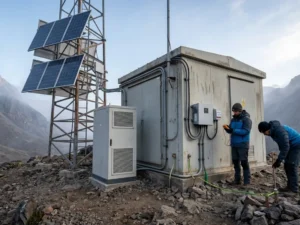
Agricultural and Remote Commercial Projects
Agricultural irrigation systems, remote telecom stations, and off-grid commercial facilities often operate under challenging environmental conditions.
These projects typically prioritize:
- Long-term reliability
- Battery backup capability
- Low maintenance operation
- High environmental protection ratings
- Wide operating temperature tolerance
In remote applications, inverter reliability becomes especially critical because maintenance access may be limited.
Engineering Insight
Commercial inverter selection should always be based on operational scenarios rather than specification sheets alone. Environmental conditions, load variability, ESS integration complexity, and future scalability requirements often determine real-world system performance more than laboratory efficiency ratings.
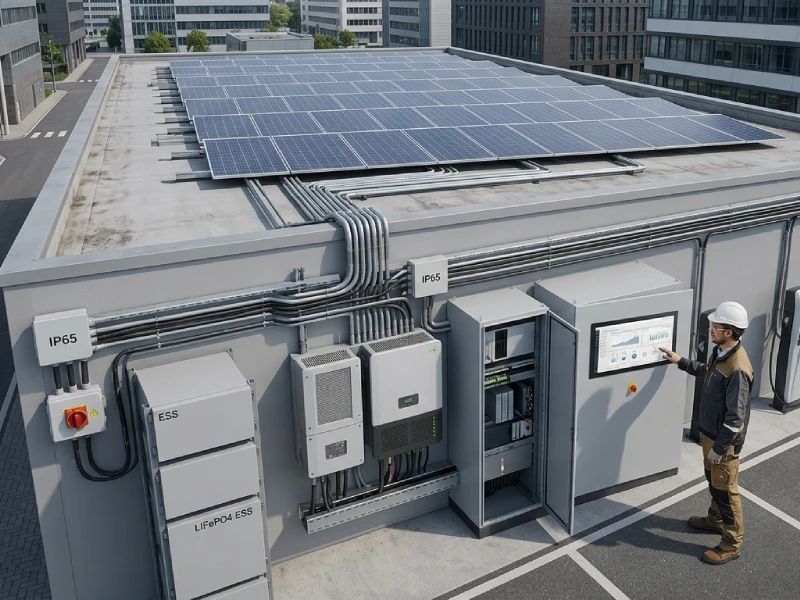
Why Hybrid Commercial Inverters Are Becoming the Mainstream in 2026
The commercial solar industry is entering a major transition period. While traditional grid-tied photovoltaic systems still dominate many markets, hybrid commercial inverter systems are rapidly becoming the preferred architecture for new commercial and industrial energy projects.
This shift is not driven by marketing trends alone. It is largely the result of changing energy economics, grid instability, electricity pricing pressure, and the rapid expansion of commercial ESS deployment worldwide.
For EPC contractors and commercial project developers, hybrid energy systems now offer significantly greater operational flexibility compared to conventional PV-only installations.
As a result, many engineering teams evaluating the best solar inverter commercial facilities need are prioritizing hybrid inverter architecture from the beginning of project planning.
Commercial Energy Storage Is Reshaping Project Economics
In many regions, electricity pricing structures are changing rapidly.
Commercial energy users increasingly face:
- Peak demand charges
- Time-of-use electricity pricing
- Grid instability risks
- Power interruption concerns
- Energy cost volatility
Under these conditions, simply generating daytime solar power is no longer enough to maximize energy savings.
Commercial facilities now want the ability to:
- Store excess solar energy
- Reduce peak grid consumption
- Maintain operational continuity during outages
- Optimize energy dispatch dynamically
- Improve energy independence
Hybrid inverter systems make these functions possible by coordinating photovoltaic generation, battery storage, grid interaction, and facility load management within a unified architecture.
Hybrid Inverters Improve Long-Term Commercial Flexibility
One major advantage of hybrid commercial inverter platforms is future scalability.
Many commercial projects are no longer designed as fixed, single-phase installations.
Instead, energy infrastructure is increasingly developed in stages:
- Phase 1: Rooftop solar deployment
- Phase 2: Battery ESS integration
- Phase 3: EV charging deployment
- Phase 4: Smart EMS optimization
Traditional inverter systems often struggle to support this type of expansion efficiently.
Hybrid commercial inverter architecture provides greater flexibility because it is designed to support:
- Battery expansion
- Parallel inverter operation
- Advanced EMS integration
- Microgrid functionality
- Future smart grid interaction
For commercial project owners, this scalability reduces the risk of future infrastructure replacement and improves long-term return on investment.
Expert Tip
Many commercial facilities initially install photovoltaic systems without battery storage due to budget limitations. However, electricity pricing structures and energy storage economics are evolving rapidly. Choosing a hybrid-ready inverter platform during the initial deployment stage can significantly reduce future ESS upgrade costs.
What Makes a Commercial Solar Inverter Truly Reliable?
Reliability is one of the most frequently discussed topics in commercial solar projects, but it is also one of the most misunderstood.
Many buyers focus only on peak efficiency ratings when comparing commercial inverter products. However, long-term reliability depends on a much broader range of engineering factors.
A truly reliable commercial inverter platform must maintain stable operation under:
- Continuous high-load operation
- Extreme environmental conditions
- ESS charging and discharging cycles
- Grid fluctuations
- Complex rooftop layouts
- Long operational lifecycles
Thermal Stability Is Critical for Industrial Projects
Commercial rooftop environments can become extremely harsh during summer operation.
Factory rooftops frequently experience:
- Surface temperatures exceeding 60°C
- Dust accumulation
- Restricted airflow
- Continuous daytime loading
Poor thermal management can reduce inverter lifespan significantly.
This is why industrial-grade inverter design increasingly focuses on:
- Intelligent cooling architecture
- Wide operating temperature tolerance
- Thermal derating optimization
- Efficient internal airflow management
- Industrial-grade electronic components
For large rooftop systems, thermal stability directly impacts annual energy production consistency.
Communication Stability Is Essential for Commercial ESS
As commercial energy systems become more intelligent, communication reliability is becoming increasingly important.
Modern hybrid commercial inverter systems must continuously coordinate data exchange between:
- Battery management systems (BMS)
- Energy management systems (EMS)
- PV generation systems
- Grid monitoring platforms
- Facility load management systems
If communication becomes unstable, the system may experience:
- Battery charging interruption
- Incorrect dispatch logic
- Peak shaving failure
- System protection alarms
- Reduced energy optimization efficiency
For this reason, communication protocol compatibility has become one of the most important evaluation criteria for commercial ESS projects.
Commercial Inverter Reliability Checklist
| Reliability Factor | Engineering Importance |
|---|---|
| Thermal Management | Maintains stable operation under industrial rooftop conditions |
| Communication Stability | Ensures reliable ESS and EMS coordination |
| Protection Design | Reduces environmental and electrical failure risk |
| Firmware Support | Improves long-term operational stability |
| Parallel Scalability | Supports phased commercial expansion |
| Remote Diagnostics | Accelerates troubleshooting and reduces downtime |
How Solardyna Supports Modern Commercial Energy Projects
As commercial solar and ESS projects continue evolving, engineering teams increasingly require partners capable of supporting not only equipment supply, but also long-term technical coordination and scalable project deployment.
Solardyna focuses on commercial and industrial energy solutions designed for real project environments, including:
- Commercial hybrid inverter systems
- LiFePO4 battery energy storage systems
- Three-phase commercial ESS platforms
- Industrial rooftop solar integration
- Smart EMS coordination solutions
For engineering teams managing commercial projects, long-term operational stability is often more valuable than short-term specification advantages.
This is why modern commercial inverter solutions increasingly prioritize:
- Stable communication architecture
- Remote O&M capability
- Scalable ESS compatibility
- Grid-ready protection systems
- Industrial-grade thermal design
Frequently Asked Questions About Commercial Solar Inverters
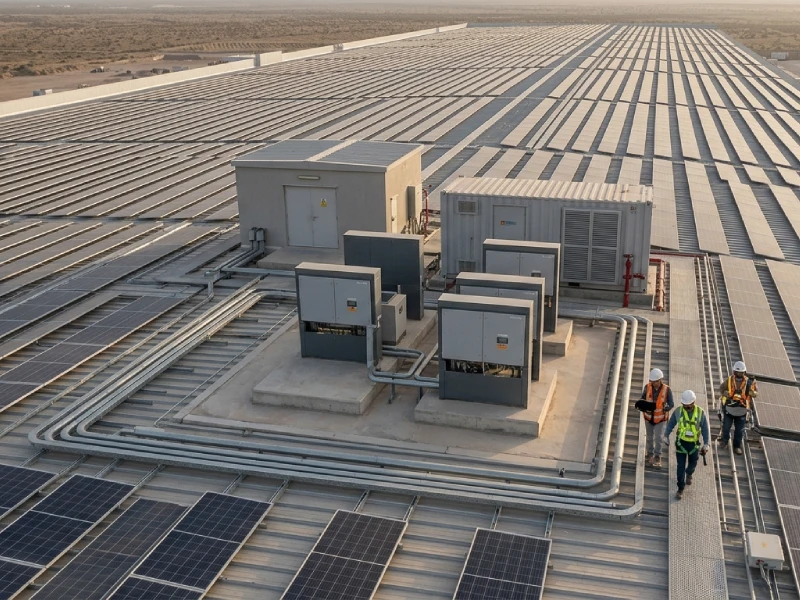
Q1. What inverter size is best for a 500kW commercial rooftop system?
The ideal inverter size depends on rooftop layout, DC/AC ratio strategy, local temperature conditions, and future expansion requirements. Many commercial projects use multiple three-phase string or hybrid inverters to improve redundancy and operational flexibility.
Q2. Are hybrid inverters worth it for commercial projects?
In many markets, hybrid commercial inverter systems provide strong long-term value because they support battery integration, peak shaving, backup power functionality, and future energy flexibility. They are especially valuable in regions with high electricity prices or unstable grids.
Q3. How long do commercial solar inverters typically last?
Most high-quality commercial inverters are designed for operational lifecycles of approximately 10–15 years under proper environmental conditions and maintenance practices. Actual lifespan depends heavily on thermal management, operating load, and installation quality.
Q4. What causes inverter failure in commercial ESS systems?
Common causes include thermal stress, unstable communication between inverter and battery systems, improper installation, poor ventilation, firmware incompatibility, and grid instability.
Q5. Can commercial inverters support future battery expansion?
Many modern hybrid commercial inverter platforms are designed to support phased ESS expansion. However, future scalability depends on inverter architecture, communication compatibility, and EMS configuration capability.
Q6. What certifications are important for commercial solar inverters?
Certification requirements vary by region, but common standards include IEC, CE, UL, grid compliance certifications, and local utility approval standards. Commercial projects should always verify compliance according to local regulatory requirements.
Conclusion: Choosing the Right Commercial Solar Inverter for Long-Term Project Success
As commercial solar systems continue evolving into intelligent energy management platforms, inverter selection has become one of the most important engineering decisions in modern energy infrastructure projects.
The best solar inverter commercial projects require is no longer defined solely by conversion efficiency. Long-term project success increasingly depends on:
- ESS integration capability
- Communication stability
- Thermal reliability
- Grid compliance flexibility
- Remote monitoring capability
- Future scalability
- Engineering support responsiveness
For factories, warehouses, EV charging stations, agricultural facilities, and commercial microgrid deployments, hybrid inverter systems are becoming the foundation of next-generation energy infrastructure.
As the commercial ESS market continues expanding worldwide, engineering teams that prioritize long-term operational reliability over short-term cost reduction will be better positioned to achieve stable project ROI and sustainable energy performance.
Planning a Commercial Solar or ESS Project in 2026?
Choosing the best commercial solar inverter is critical for long-term system reliability, ESS stability, and project ROI. Solardyna provides commercial hybrid inverter and LiFePO4 ESS solutions engineered for factories, warehouses, commercial rooftops, EV charging infrastructure, and industrial energy systems.
✔ Three-phase inverter solutions for industrial rooftop solar projects
✔ Engineering support for EMS coordination and grid compliance
✔ Scalable LiFePO4 battery ESS architecture for future expansion
✔ Reliable supply capability for large commercial energy deployments
Talk with our engineering team for a custom commercial ESS and inverter solution tailored to your project’s load profile, grid requirements, and future expansion plans.