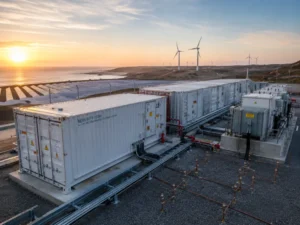
Choosing the right inverter architecture has become one of the most important decisions in modern solar projects. This inverter comparison guide helps EPC contractors, solar distributors, and technical decision-makers understand the differences between hybrid inverters and string inverters, and how each solution impacts system design, project efficiency, and long-term operational value.
As photovoltaic projects continue evolving from simple power generation systems into integrated energy solutions, inverter selection is no longer only about conversion efficiency. Project developers must consider energy storage compatibility, system flexibility, maintenance requirements, future expansion, and supply chain reliability.
For commercial and industrial solar applications, selecting between a hybrid inverter and a string inverter requires a complete understanding of the project’s energy strategy. The optimal choice depends on whether the system focuses on direct solar generation, battery integration, backup power, or future energy management requirements.
Why Inverter Selection Matters for Commercial Solar Projects
In a solar energy system, the inverter plays a central role in converting DC electricity generated by photovoltaic modules into usable AC electricity. However, modern energy projects require more than basic power conversion.
EPC companies and system integrators are increasingly evaluating inverters based on their ability to support:
- High system efficiency and stable operation
- Flexible project configuration
- Battery energy storage integration
- Reliable grid interaction
- Long-term operation and maintenance performance
A technically suitable inverter solution can reduce engineering complexity and improve project reliability. On the other hand, choosing an unsuitable architecture may increase installation challenges, require additional components, or limit future system upgrades.
For procurement teams, the decision is not simply about selecting a product. It is about choosing a technology platform that supports project delivery, customer satisfaction, and long-term business growth.
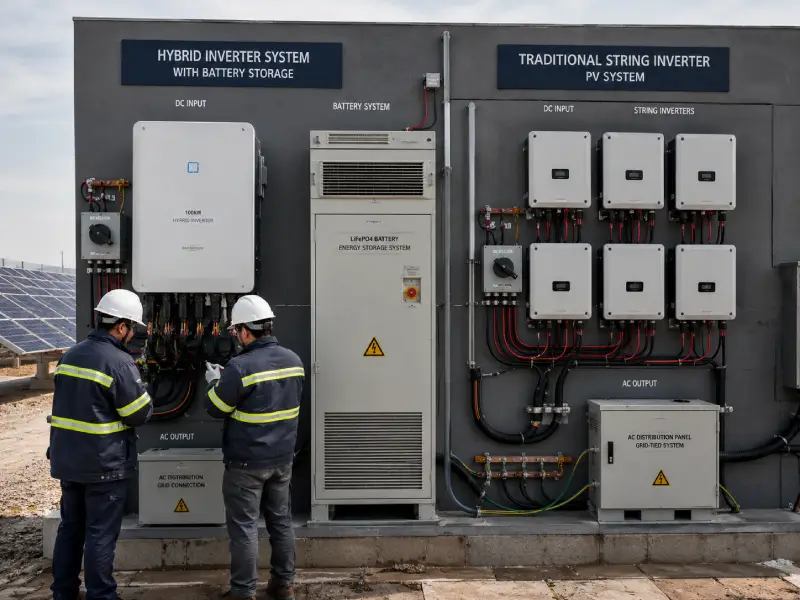
Hybrid vs String Inverter: Understanding the Core Difference
Before comparing performance factors, it is important to understand how hybrid and string inverters are designed and where they fit into solar energy applications.
What Is a String Inverter?
A string inverter is one of the most widely used inverter types in photovoltaic installations. In this architecture, multiple solar panels are connected together into a series called a string. Several PV strings are then connected to the inverter, which converts the DC electricity into AC power for grid connection or local consumption.
String inverters are commonly used in:
- Commercial rooftop solar projects
- Industrial facility PV systems
- Large distributed solar installations
- Utility-scale photovoltaic applications
One of the key advantages of string inverter technology is its mature system design. Because the technology has been widely adopted, EPC contractors usually have extensive experience with installation, commissioning, and maintenance procedures.
Modern string inverters typically include multiple maximum power point tracking (MPPT) channels, allowing different PV strings to operate efficiently under varying conditions. This provides flexibility when designing systems with different roof orientations, shading conditions, or module layouts.
Advantages of String Inverters
- High conversion efficiency: String inverters are designed to efficiently convert solar DC power into AC electricity.
- Simple system architecture: For PV-only projects, string inverter systems can provide a straightforward design approach.
- Flexible installation: Multiple inverter units can be distributed across larger projects, making system management easier.
- Maintenance convenience: Distributed inverter deployment can reduce the impact of a single equipment failure.
Engineering Considerations for String Inverters
Although string inverters are suitable for many applications, EPC teams should evaluate future energy requirements before selecting this architecture.
For projects that may add battery storage later, additional system planning may be required. Battery integration often involves additional energy management equipment, communication systems, and design considerations.
Therefore, string inverter selection should be based not only on current PV requirements but also on the expected lifecycle of the energy system.
What Is a Hybrid Inverter?
A hybrid inverter combines photovoltaic power conversion with battery energy management functions. Unlike traditional inverter systems that only convert solar energy, hybrid inverter solutions are designed to coordinate PV generation, battery charging and discharging, and energy usage.
Hybrid inverters are commonly applied in:
- Solar plus energy storage projects
- Commercial facilities requiring backup power
- Microgrid applications
- Energy cost optimization systems
The main difference is that hybrid inverters are designed with energy storage integration in mind. They can manage power flows between solar panels, batteries, loads, and the grid.
Advantages of Hybrid Inverters
- Integrated energy management: Hybrid inverter systems can coordinate solar generation and battery operation within one solution.
- ESS compatibility: They are suitable for projects where battery storage is part of the energy strategy.
- Future expansion capability: For customers planning energy storage adoption, hybrid architecture may simplify future upgrades.
- Backup power capability: Depending on system configuration, hybrid solutions can support backup applications.
Inverter Comparison: Key Factors EPC Contractors Should Evaluate
A professional inverter comparison should go beyond product specifications. EPC contractors need to evaluate how each inverter type affects the entire project lifecycle.
1. System Architecture and Integration
String inverter systems are generally optimized for solar generation. They provide an efficient solution when the primary objective is converting PV energy and feeding electricity into the grid or onsite loads.
Hybrid inverter systems are designed for more complex energy architectures. They combine PV generation and battery management, reducing the need for separate equipment in some applications.
For projects involving energy storage, demand management, or backup power, system integration capability becomes a major selection factor.
2. Installation and Engineering Complexity
The complexity of an inverter solution affects installation time, commissioning requirements, and overall project management.
String inverter projects may require additional equipment when battery storage is introduced. Hybrid inverter solutions can simplify certain system designs by integrating multiple functions into a single platform.
However, the final engineering choice should always consider project scale, electrical requirements, and local regulations.
3. Long-Term Operation and Maintenance
For commercial solar projects, operational reliability is often more important than initial equipment price.
EPC contractors and asset owners should consider:
- Equipment accessibility
- Monitoring capability
- Maintenance procedures
- Availability of technical support
A reliable inverter solution helps reduce unexpected downtime and supports stable energy production throughout the project lifecycle.
Expert Tip: Selecting Inverters Based on Project Goals
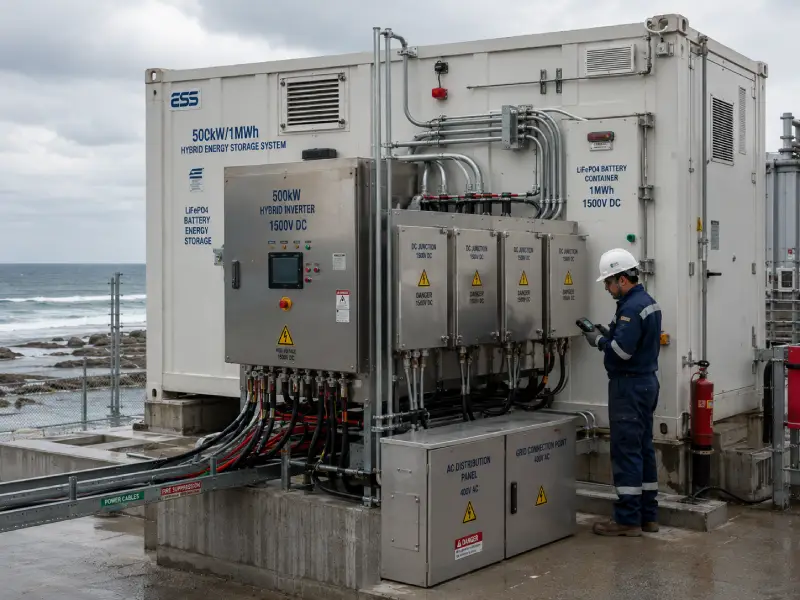
Expert Tip from SolarDyna: For commercial PV projects, inverter selection should start from the energy architecture rather than the product price. A suitable inverter solution should balance efficiency, integration requirements, maintenance strategy, and future expansion possibilities.
Many procurement decisions focus heavily on initial cost. However, experienced EPC teams evaluate the complete system value, including installation efficiency, compatibility, and long-term operational performance.
Total Cost Analysis: Why Initial Inverter Price Is Not the Only Factor
When evaluating different inverter solutions, many procurement teams initially focus on equipment price. However, for commercial and industrial solar projects, the lowest upfront cost does not always represent the best long-term investment.
A complete inverter comparison should include the total project lifecycle value, including installation requirements, balance of system costs, maintenance workload, and future expansion possibilities.
For EPC contractors and solar distributors, understanding the difference between initial investment and long-term system value is essential for delivering reliable solutions to customers.
CAPEX Considerations: Initial Investment and System Components
String inverter systems are often selected for PV-only projects because they provide a mature and cost-effective solution. Their architecture is well established, and many installers are familiar with the design process.
However, when battery storage becomes part of the project scope, additional components may be required. Depending on the system design, these may include battery inverters, energy management systems, communication devices, and additional protection equipment.
Hybrid inverter systems may require a higher initial investment compared with standard string inverter solutions, but they integrate more energy management functions into one platform.
For projects where energy storage is a core requirement, hybrid architecture can simplify system integration and reduce design complexity.
Lifecycle Value: Looking Beyond Equipment Cost
The real value of an inverter solution is determined by how effectively it supports the project throughout its operating life.
Key lifecycle factors include:
- System efficiency during daily operation
- Reliability under different environmental conditions
- Ease of maintenance and troubleshooting
- Compatibility with future energy upgrades
- Availability of technical support
A well-designed solar energy system should continue meeting operational requirements years after installation. Therefore, EPC companies should evaluate inverter selection from a long-term engineering perspective rather than only comparing purchase prices.
Hybrid vs String Inverter: Choosing the Right Solution Based on Project Requirements
There is no universal inverter solution suitable for every solar project. The correct choice depends on project objectives, energy usage patterns, and future development plans.
A professional inverter comparison should always begin with the question:
What is the primary purpose of this solar system?
Is the project designed mainly for solar power generation? Or does it require energy storage, backup capability, and intelligent energy management?
Choose String Inverters for PV-Focused Projects
String inverters are often suitable when the project goal is maximizing solar generation with a relatively simple system structure.
Typical applications include:
- Industrial rooftop PV systems without battery storage
- Commercial solar installations connected to the grid
- Distributed generation projects
- Projects requiring straightforward operation
For these applications, string inverter architecture provides several benefits:
- Simple electrical design
- Efficient PV energy conversion
- Convenient installation planning
- Established maintenance procedures
However, EPC teams should still consider whether future battery integration may be required. Early planning can help avoid unnecessary redesign work later.
Choose Hybrid Inverters for Solar + Storage Applications
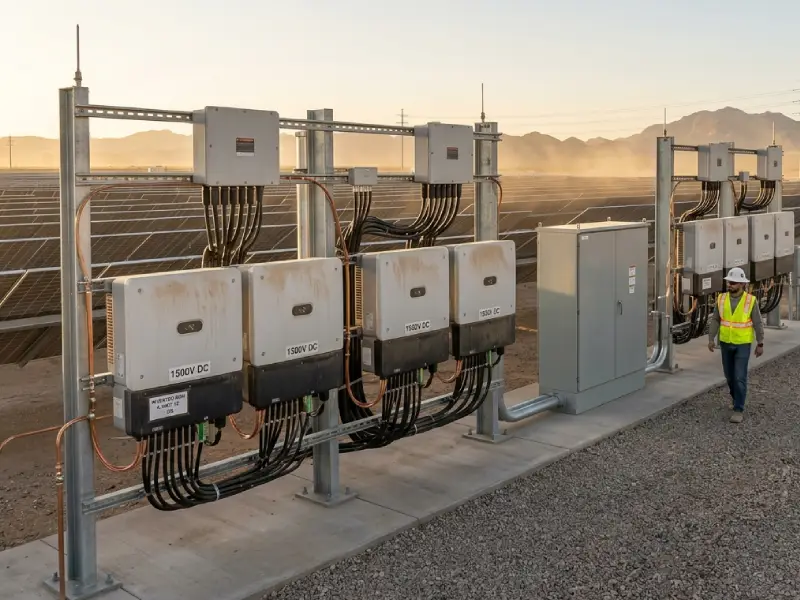
Hybrid inverter solutions become increasingly valuable when energy storage is part of the project strategy.
Common applications include:
- Commercial facilities with peak demand management requirements
- Projects requiring backup power capability
- Sites aiming to increase self-consumption of solar energy
- Microgrid and distributed energy applications
By coordinating solar generation and battery operation, hybrid inverter systems can support more flexible energy management.
For businesses, this flexibility can become an important factor when managing energy costs and improving energy resilience.
Technical Checklist Before Selecting a Solar Inverter Supplier
For EPC contractors and distributors, choosing an inverter supplier is not only a technical decision. It is also a supply chain decision.
A reliable supplier should support not only product delivery but also project implementation, technical communication, and long-term cooperation.
Electrical Compatibility and System Design Requirements
Before selecting an inverter, engineering teams should verify compatibility between the inverter, PV modules, batteries, and grid connection requirements.
Important considerations include:
- DC voltage range
- Maximum input current
- MPPT configuration
- AC output requirements
- Communication compatibility
- Protection functions
These technical parameters directly affect system safety, efficiency, and long-term reliability.
Energy Storage Compatibility
As energy storage adoption increases, inverter compatibility with batteries and energy management systems becomes more important.
For hybrid inverter projects, EPC teams should evaluate:
- Battery communication protocols
- Charging and discharging control logic
- Energy management functions
- System monitoring capability
A properly matched inverter and storage system can improve operational stability and simplify project management.
Certification and Market Compliance
Different markets have different technical requirements for solar equipment. Before project deployment, suppliers and EPC contractors need to confirm that inverter solutions meet applicable standards and grid requirements.
Compliance evaluation may include:
- Electrical safety requirements
- Grid connection regulations
- Regional certification requirements
- Installation standards
For international projects, working with an experienced supplier can help reduce communication barriers and improve project execution efficiency.
How to Evaluate a Reliable Solar Inverter Manufacturer
A successful solar project depends not only on choosing the right inverter technology but also on selecting the right manufacturing partner.
For B2B customers, a supplier evaluation should include both product capability and business reliability.
Manufacturing Capability and Quality Management
Professional EPC companies typically evaluate suppliers based on:
- Production capability
- Quality control procedures
- Product consistency
- Technical documentation
- Response capability
A stable manufacturing process helps reduce project risks and supports predictable delivery schedules.
Technical Support for EPC Projects
Large-scale solar projects often require communication between suppliers, engineers, installers, and end customers.
A capable inverter supplier should be able to provide support during different project stages, including:
- System configuration discussion
- Technical specification confirmation
- Installation guidance
- After-sales communication
For EPC partners, this technical cooperation can significantly improve project execution efficiency.
SolarDyna: Supporting EPC Partners with Engineering-Focused Solar Solutions
For EPC contractors and solar distributors, SolarDyna focuses on supporting reliable solar energy system deployment through professional communication, suitable product matching, and project-oriented cooperation.
Rather than treating inverter selection as a simple product purchase, SolarDyna approaches each project from a system perspective, helping partners evaluate application requirements and select appropriate solutions.
Whether a project requires a PV-focused string inverter solution or a solar-plus-storage architecture using hybrid inverter technology, the selection process should always be based on actual project conditions.
This engineering-focused approach helps partners build more reliable solar projects and create long-term value for their customers.
Why EPC Partners Consider Supplier Capability Important
In competitive solar markets, equipment supply is only one part of project success.
EPC companies also need suppliers who understand:
- Project timelines
- Technical requirements
- System integration challenges
- Long-term service expectations
A trusted solar technology partner can help reduce uncertainty throughout the project lifecycle.
Hybrid vs String Inverter: A Practical Decision Framework for EPC Contractors
Selecting between a hybrid inverter and a string inverter requires a structured evaluation process. For EPC contractors, the best decision is not based on one specification but on the complete relationship between system design, customer requirements, and future energy goals.
A professional inverter comparison should consider the following decision factors before finalizing the system architecture.
Step 1: Define the Main Energy Objective
The first step is understanding what the solar project is expected to achieve.
Different project objectives require different inverter strategies.
- Solar generation focused: The main goal is converting PV energy efficiently and supplying power to the grid or onsite loads.
- Energy storage focused: The project requires battery charging, discharge management, and energy scheduling.
- Energy resilience focused: The customer requires backup power capability and improved energy security.
For PV-only projects, string inverter solutions may provide a simple and efficient approach. For solar plus storage projects, hybrid inverter systems may offer stronger integration advantages.
Step 2: Evaluate Future Expansion Requirements
Solar projects are long-term investments. Many commercial customers initially install photovoltaic systems and later consider adding battery storage.
EPC companies should therefore evaluate whether future expansion is likely.
Important questions include:
- Will the customer need battery storage in the future?
- Is energy price optimization becoming a priority?
- Could backup power become necessary?
- Will the system need advanced energy management?
Considering future requirements during the initial design stage can help avoid unnecessary system modifications.
Step 3: Consider Installation Environment and Operation Conditions
The installation environment can influence inverter selection and system performance.
Engineering teams should consider:
- Ambient temperature conditions
- Available installation space
- Maintenance accessibility
- Grid connection environment
- Load characteristics
A technically suitable inverter should not only meet electrical specifications but also match real operating conditions.
Common Mistakes When Choosing Solar Inverters
Many project challenges come from selecting an inverter based on incomplete evaluation criteria. Understanding common mistakes can help EPC teams improve project reliability.
Mistake 1: Choosing Only Based on Purchase Price
Price is an important factor, but it should not be the only decision point.
A lower-cost inverter may create additional challenges if it does not match the project requirements, such as limited expansion capability or additional integration work.
A better approach is to evaluate the complete system value, including installation efficiency, technical compatibility, and long-term operation.
Mistake 2: Ignoring Energy Storage Plans
As energy storage becomes more common, some customers may expect their solar systems to support batteries in the future.
If storage requirements are ignored during the early design stage, system upgrades may become more complex.
For this reason, EPC companies should communicate with customers about both current and future energy needs.
Mistake 3: Selecting Equipment Without Considering Supplier Capability
A solar inverter is part of a larger project ecosystem. The supplier’s technical support, documentation quality, and communication ability can affect project success.
Professional buyers should evaluate:
- Technical response capability
- Product consistency
- Project communication process
- Long-term cooperation potential
A strong supplier relationship helps EPC companies reduce project risks and improve customer satisfaction.
Hybrid vs String Inverter: Which Solution Is Better for Commercial Solar?
There is no single answer to whether hybrid inverters or string inverters are universally better. The correct choice depends on the project’s technical requirements and business objectives.
String Inverter Summary
String inverters are often the preferred choice when:
- The project mainly focuses on photovoltaic generation
- The system design should remain simple
- Battery storage is not required immediately
- Cost efficiency is a primary consideration
Their mature technology and broad application experience make them suitable for many commercial PV installations.
Hybrid Inverter Summary
Hybrid inverters are often preferred when:
- Solar and battery storage are combined
- The customer needs intelligent energy management
- Backup power is required
- Future system expansion is expected
Their integrated design provides greater flexibility for modern energy systems.
Future Trends: Why Energy Storage Is Changing Inverter Selection
The global energy landscape is moving toward smarter and more flexible electricity management. Solar systems are increasingly becoming part of broader energy solutions rather than standalone generation equipment.
This trend is influencing how EPC companies evaluate inverter technology.
Future solar projects are expected to focus more on:
- Energy optimization
- Battery integration
- Smart monitoring
- Flexible electricity usage
- Grid interaction capability
As these requirements increase, inverter systems that support advanced energy management may become more valuable for certain applications.
SolarDyna’s Approach to Reliable Solar Inverter Solutions
For EPC contractors, distributors, and system integrators, SolarDyna supports project development by focusing on practical engineering requirements and application-based solutions.
A reliable inverter partner should help customers move beyond simple product selection and evaluate the complete energy system.
SolarDyna works with project partners to understand:
- Solar system configuration requirements
- Energy storage expectations
- Application environment
- Technical implementation needs
This approach helps partners select inverter solutions that match real project conditions.
Conclusion: Making the Right Inverter Decision for Future Solar Projects
Choosing between a hybrid inverter and a string inverter is an important decision for any commercial solar project. The right solution depends on the project’s energy objectives, technical requirements, and future development strategy.
String inverters remain a reliable choice for many PV-focused applications due to their mature design, efficiency, and installation flexibility.
Hybrid inverters provide additional advantages for solar plus storage applications by integrating energy management functions and supporting more flexible energy architectures.
For EPC contractors and solar distributors, the best inverter selection strategy is to evaluate the complete system rather than focusing only on initial equipment cost.
A professional inverter comparison helps project stakeholders make informed decisions that support reliable operation, easier maintenance, and long-term customer value.
Frequently Asked Questions About Hybrid vs String Inverter Selection
Choosing the right inverter solution is a critical decision for EPC contractors, solar distributors, and commercial energy developers. The following questions address common technical and procurement considerations when comparing hybrid and string inverter systems.
1. What is the main difference between a hybrid inverter and a string inverter?
The main difference between a hybrid inverter and a string inverter is their system architecture and energy management capability.
A string inverter is mainly designed to convert DC power generated by photovoltaic modules into AC electricity for grid connection or onsite consumption. It is widely used in commercial solar projects where battery storage is not the primary requirement.
A hybrid inverter integrates PV conversion, battery charging and discharging management, and energy control functions into one solution. It is more suitable for solar plus storage applications where energy flexibility and future expansion are important.
2. Which inverter solution is better for commercial solar projects?
There is no universal answer because the best choice depends on project requirements.
For commercial projects focused mainly on solar generation, string inverters can provide a reliable and efficient solution with a relatively simple system design.
For projects requiring battery storage, backup power, or advanced energy management, hybrid inverter solutions may provide better system integration and operational flexibility.
EPC contractors should evaluate project goals, load characteristics, grid conditions, and future expansion plans before selecting an inverter system.
3. Can string inverters be used with battery energy storage systems?
Yes, string inverters can be combined with battery energy storage systems, but the overall system architecture may require additional components.
Depending on the design, battery integration may involve separate battery inverters, energy management systems, communication equipment, and additional protection devices.
For projects where ESS integration is planned from the beginning, hybrid inverters can simplify system coordination by combining multiple functions into a single platform.
4. What factors should EPC contractors consider when selecting a solar inverter?
EPC contractors should evaluate more than just inverter efficiency or purchase price.
Important selection factors include:
- PV system size and configuration
- DC voltage range and MPPT design
- Battery compatibility requirements
- Grid connection standards
- Installation environment
- Technical support capability
- Supplier reliability
A professional solar inverter selection process should consider the complete project lifecycle, including installation, operation, maintenance, and future upgrades.
5. Do hybrid inverters provide better ROI than string inverters?
The return on investment depends on the project application and energy strategy.
Hybrid inverters may provide stronger value in projects where battery storage improves self-consumption, peak load management, or energy resilience.
String inverters may deliver better economic performance for PV-only projects where storage is not required.
The correct approach is to compare lifecycle value rather than only comparing initial equipment costs.
6. Why is supplier capability important when purchasing solar inverters?
For B2B solar projects, inverter selection is also a supplier evaluation decision.
A reliable inverter supplier should provide:
- Stable manufacturing capability
- Consistent product quality
- Technical documentation
- Engineering communication support
- After-sales service capability
Strong supplier support helps EPC companies reduce project risks and maintain reliable system performance throughout the project lifecycle.
7. How does inverter design affect future solar system expansion?
Future expansion capability is an important consideration for commercial solar systems.
A project may start as a PV-only installation but later require battery storage, backup power, or intelligent energy management.
Hybrid inverter systems are often designed with energy storage integration in mind, while string inverter systems may require additional planning when storage is introduced later.
Early evaluation of future requirements helps avoid unnecessary redesign and additional engineering costs.
8. How can EPC companies choose the right inverter solution for their projects?
EPC companies should begin with the project’s energy objectives rather than selecting equipment first.
A practical decision process includes:
- Defining the main energy application
- Evaluating storage requirements
- Reviewing electrical compatibility
- Comparing lifecycle value
- Selecting a supplier with technical support capability
A complete inverter comparison helps project developers choose a solution that balances efficiency, reliability, integration capability, and long-term business value.
Get Solar Inverter Support from SolarDyna
If you are planning commercial solar projects, ESS applications, or customized PV solutions, SolarDyna can support your technical evaluation and product selection process.
Discuss your project requirements with SolarDyna and explore inverter solutions designed for reliable solar energy applications.
Need Help Choosing the Right Hybrid or String Inverter Solution?
The right inverter comparison starts with your project requirements. SolarDyna provides hybrid inverter and string inverter solutions for EPC contractors, solar distributors, and commercial energy projects.
✔ Hybrid & string inverter solutions matched to system requirements
✔ Technical support for DC/AC design and grid integration
✔ Reliable supply capability for EPC and distributor projects
Talk with our engineering team for a custom solar inverter configuration based on your project size, storage needs, and grid requirements.