Why Businesses Are Switching to Portable Power Stations: Challenges, Risks, and Opportunities
In today’s volatile energy landscape, businesses are facing rising electricity costs, unpredictable power outages, and increasing pressure to improve operational efficiency and sustainability. For EPC contractors, distributors, and procurement managers, choosing the wrong backup power solution can lead to costly downtime, delayed project timelines, and reduced ROI. Traditional diesel generators are no longer the default choice due to fuel dependency, maintenance burden, and environmental restrictions.
This is where portable power stations for business are rapidly emerging as a reliable, scalable, and cost-effective alternative. But not all solutions are created equal—and selecting the wrong supplier or technology can still expose your business to significant risks.
This article helps EPC contractors, system integrators, and B2B buyers evaluate commercial portable power stations, understand their real ROI, and identify the key factors for choosing a reliable supplier.
Why Portable Power Stations Are Becoming Critical for Business Operations
Rising Energy Uncertainty and the True Cost of Downtime
Across global markets—especially in Southeast Asia, Africa, and remote project environments—power instability is no longer an exception; it is becoming the norm. Grid interruptions, voltage fluctuations, and infrastructure limitations are directly impacting construction sites, telecom operations, outdoor events, and emergency response systems.
For businesses, the cost of downtime goes far beyond temporary inconvenience:
- Construction delays leading to contractual penalties
- Equipment damage caused by unstable power supply
- Lost productivity in field operations
- Revenue loss in commercial or service environments
In this context, a commercial portable power station is not just a backup device—it is a critical operational asset that ensures continuity, flexibility, and reliability.
Compared to fixed energy storage systems, portable units offer:
- Rapid deployment without installation
- Mobility across multiple job sites
- Scalability for temporary or seasonal demand
- Lower upfront infrastructure investment
However, while the market is growing rapidly, many B2B buyers underestimate the complexity behind these systems—leading to costly procurement mistakes.
Expert Tip: The real cost of a power solution is not the purchase price—it is the total cost of downtime it prevents (or fails to prevent).
Common Procurement Pitfalls B2B Buyers Must Avoid
Despite the increasing adoption of portable energy storage systems, many procurement teams still approach sourcing decisions with a consumer mindset—focusing heavily on price and nominal specifications while overlooking critical performance and compliance factors.
Here are the most common mistakes:
- Choosing low-cost products with inferior battery cells – leading to rapid capacity degradation
- Ignoring certification requirements – resulting in shipping delays or customs rejection
- Overlooking BMS quality – increasing the risk of system failure or safety issues
- Selecting suppliers without production scalability – causing delivery delays in large orders
- Lack of after-sales support – leaving distributors exposed to customer complaints
For B2B buyers, the risk is amplified because failures do not just affect one user—they impact entire projects, customer relationships, and brand reputation.
A reliable portable energy storage system must be evaluated as a complete solution, not just a hardware product.
Expert Tip: Always evaluate suppliers based on “system reliability + compliance + delivery capability”—not just unit price.
Technical Factors That Define Commercial-Grade Portable Power Stations
Battery Technology: Why LiFePO4 Is the Industry Standard
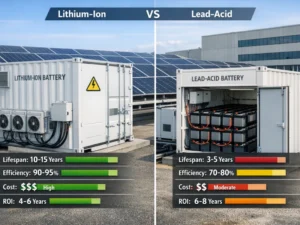
At the core of every portable power station lies its battery technology—and this is where the biggest performance differences emerge. For commercial applications, LiFePO4 (Lithium Iron Phosphate) has become the preferred choice over traditional lithium-ion (NMC) batteries.
Key advantages of LiFePO4 include:
- Long cycle life: Typically 3000–6000 cycles, compared to 500–1000 cycles for NMC
- Superior safety: High thermal stability reduces risk of overheating or fire
- Consistent performance: Stable voltage output across discharge cycles
- Lower total cost of ownership: Longer lifespan means better ROI
For distributors and EPC contractors, this translates into fewer warranty claims, higher customer satisfaction, and stronger long-term profitability.
A LiFePO4 portable power station is particularly suitable for:
- Construction sites with continuous daily usage
- Telecom base stations requiring reliability
- Rental business models with high utilization rates
- Off-grid and solar-integrated systems
While the upfront cost may be slightly higher, the lifecycle value significantly outweighs the initial investment.
Expert Tip: When comparing products, always request cycle life test data under real operating conditions—not just theoretical specifications.
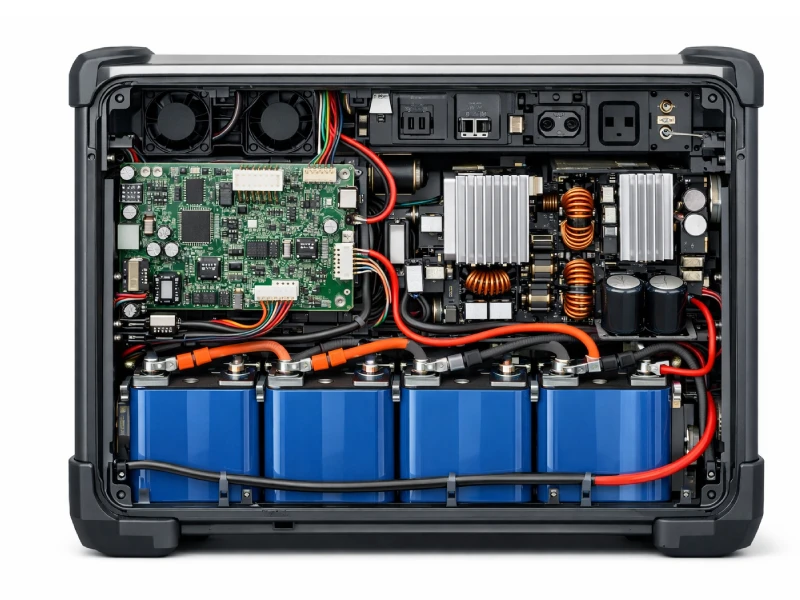
BMS (Battery Management System): The Brain Behind System Reliability
While battery cells determine capacity and lifespan, the Battery Management System (BMS) defines how safely and efficiently that energy is managed. In commercial applications, a robust BMS is essential for ensuring long-term system stability.
Key BMS functions include:
- Overcharge and over-discharge protection
- Short circuit and overload protection
- Temperature monitoring and thermal management
- Cell balancing to maintain consistency
- Real-time system diagnostics
Advanced BMS systems also enable:
- Parallel expansion of multiple units
- Remote monitoring and control
- Integration with solar and hybrid systems
Without a high-quality BMS, even the best battery cells can fail prematurely—leading to safety risks and operational disruptions.
For businesses relying on continuous power, this is a non-negotiable requirement.
Expert Tip: Ask whether the BMS is developed in-house or sourced from third parties—this directly impacts system integration and reliability.
Output, Compatibility & Charging Flexibility: Matching Real Business Applications
Output Configuration: Ensuring Compatibility with Professional Equipment
For B2B applications, output flexibility is just as critical as battery capacity. A commercial portable power station must support a wide range of professional tools and equipment across different industries, from construction and telecom to events and emergency services.
Typical output requirements include:
- AC Outputs: 110V / 220V for power tools, lighting systems, and office equipment
- DC Outputs: For industrial devices and specialized systems
- USB & Type-C Ports: For communication devices and mobile electronics
- Anderson / XT60 Ports: For high-current applications and external battery connections
However, not all systems deliver stable output under load. Voltage drops, waveform distortion, or insufficient surge capacity can damage sensitive equipment or cause operational failures.
A high-quality portable energy storage system should provide:
- Pure sine wave output for sensitive electronics
- High surge power to support startup loads
- Stable voltage regulation under varying loads
Expert Tip: Always verify surge capacity (2x–3x rated power) when powering tools like compressors or drilling equipment—this is where many low-cost systems fail.
Solar Compatibility & Hybrid Charging Capabilities
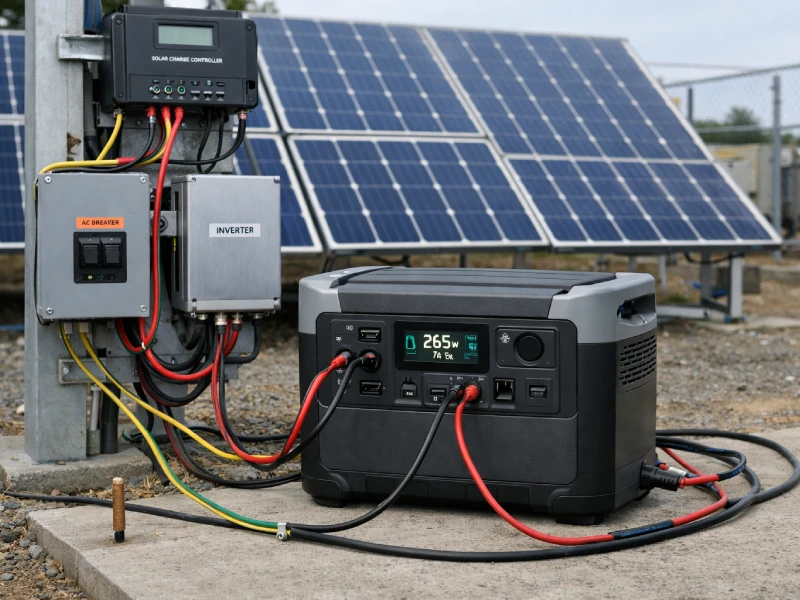
As businesses increasingly adopt renewable energy, compatibility with solar systems has become a key decision factor. A modern portable power station for business should not only function as a standalone unit but also integrate seamlessly into hybrid energy systems.
Key features to look for:
- MPPT (Maximum Power Point Tracking): Maximizes solar charging efficiency
- Wide PV input range: Supports different solar panel configurations
- Hybrid charging: Simultaneous AC + solar input for faster charging
- Off-grid capability: Ideal for remote or infrastructure-limited locations
For EPC contractors, this opens opportunities to bundle portable storage with solar solutions—creating higher-value offerings for end customers.
Additionally, solar-compatible systems reduce dependency on fuel-based generators, aligning with sustainability goals and regulatory requirements.
Expert Tip: Check whether the system supports “pass-through charging”—this allows simultaneous charging and discharging, critical for continuous operations.
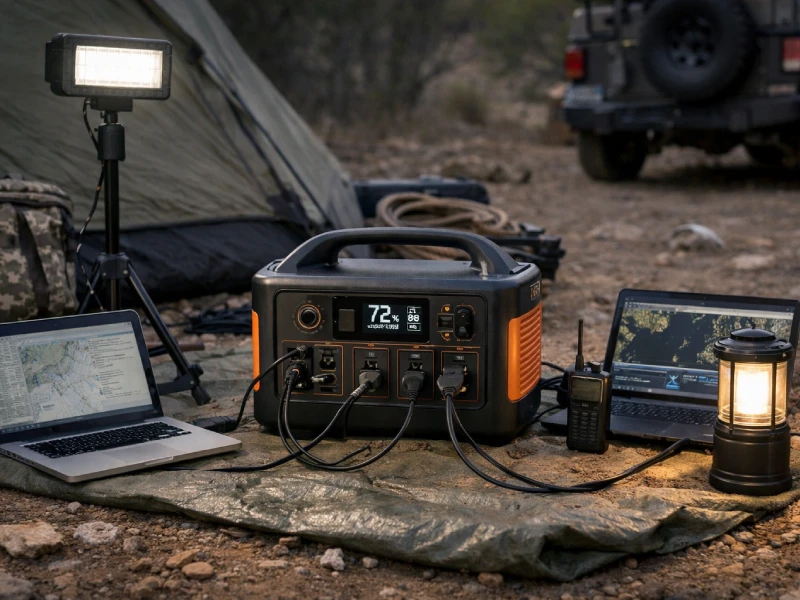
Fast Charging & Operational Efficiency
Charging speed directly impacts how efficiently a portable system can be utilized in real-world operations. In high-frequency use cases such as rental fleets or construction sites, slow charging can create bottlenecks and reduce asset utilization.
Advanced systems now offer:
- AC fast charging (1–2 hours to full capacity)
- Dual-input charging (AC + solar)
- Smart charging algorithms to protect battery life
Compared to traditional systems requiring 6–8 hours to recharge, fast-charging solutions significantly improve turnaround time and ROI.
This is particularly valuable for:
- Rental businesses with tight scheduling cycles
- Emergency response teams requiring rapid redeployment
- Field operations with limited downtime
Expert Tip: Fast charging should not compromise battery lifespan—ensure the system includes thermal management and intelligent charging control.
Manufacturing Standards & Certifications That Ensure Global Compliance
Essential Certifications for International B2B Projects
For global B2B buyers, compliance is not optional—it is a fundamental requirement. A portable power station for business must meet international certification standards to ensure safety, legal compliance, and smooth logistics.
Key certifications include:
- CE: Required for European market entry
- UN38.3: Mandatory for lithium battery transportation
- MSDS: Material safety documentation for shipping
- IEC / UL: Safety and performance standards for high-end markets
Failure to meet these requirements can result in:
- Shipment delays or rejection at customs
- Increased logistics costs
- Legal liabilities in target markets
For distributors and EPC contractors, this directly impacts project timelines and customer trust.
Expert Tip: Always request full certification reports—not just certificates—to verify authenticity and scope of compliance.
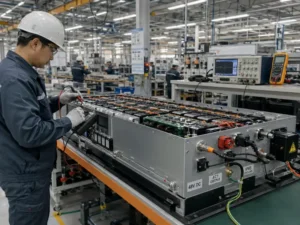
Quality Control: From Cell Selection to Final Assembly
Behind every reliable portable energy storage system is a rigorous quality control process. For B2B buyers, consistency across large orders is far more important than the performance of a single unit.
A professional manufacturing process typically includes:
- Cell grading and matching: Ensures consistency across battery packs
- Incoming material inspection (IQC): Verifies component quality
- In-process quality control (IPQC): Monitors assembly accuracy
- Aging tests: Simulates real-world usage conditions
- Final quality control (FQC): Ensures performance before shipment
Without strict QC processes, batch inconsistency can lead to:
- Higher defect rates
- Increased warranty claims
- Damage to brand reputation
For distributors, this risk multiplies as volume increases.
Expert Tip: Ask suppliers for defect rate data and QC process documentation—reliable manufacturers are transparent about their quality metrics.
Why Factory Capability Matters More Than Branding
In the portable power station market, branding can be misleading. Many “brands” are simply trading companies without real manufacturing capabilities, outsourcing production to third-party factories with limited control over quality and delivery.
For B2B buyers, this creates several risks:
- Lack of customization flexibility
- Unstable production schedules
- Inconsistent product quality
- Limited technical support
In contrast, working directly with a manufacturer offers:
- Full control over product specifications
- OEM/ODM customization capabilities
- Better cost efficiency at scale
- Direct communication with engineering teams
A reliable portable power station supplier should demonstrate:
- Automated production lines
- In-house R&D capabilities
- Proven experience in large-scale orders
- Stable supply chain management
For long-term partnerships, manufacturing capability is far more important than brand visibility.
Expert Tip: If possible, request a factory audit (virtual or on-site)—this is one of the most effective ways to validate supplier credibility.
Beyond the Product: What Makes a Reliable Portable Power Station Supplier
After-Sales Support & Warranty: Protecting Long-Term Business Value
For B2B buyers, purchasing a portable power station for business is not a one-time transaction—it is a long-term operational investment. The real value of a supplier is often revealed after the product has been delivered.
A strong after-sales support system should include:
- Warranty coverage: Typically 2–5 years depending on battery technology
- Clear RMA process: Defined procedures for repair or replacement
- Technical support: Remote diagnostics and troubleshooting
- Spare parts availability: Ensures fast repair turnaround
Without these elements, distributors and EPC contractors may face:
- Increased operational downtime
- Higher maintenance costs
- Customer dissatisfaction and brand damage
In competitive markets, after-sales performance can be a key differentiator that determines whether a business retains or loses clients.
Expert Tip: Evaluate not just the warranty duration, but the supplier’s actual service response time and spare parts availability.
Logistics & Global Delivery Capability
Logistics is often an underestimated factor in B2B procurement, especially when dealing with lithium battery products. A portable energy storage system must comply with strict transportation regulations, making global delivery more complex than standard goods.
A reliable supplier should offer:
- Multi-modal shipping options: Sea, air, and rail transport
- Dangerous goods handling expertise: Compliance with lithium battery shipping regulations
- Stable lead times: Predictable delivery schedules
- Global logistics network: Ability to serve multiple regions efficiently
Poor logistics capability can result in:
- Delayed project timelines
- Unexpected shipping costs
- Inventory shortages
For EPC contractors managing tight deadlines, these risks can directly impact project profitability.
Expert Tip: Always confirm Incoterms, shipping timelines, and documentation requirements before placing bulk orders.
OEM/ODM Customization: Building Competitive Advantage
In highly competitive markets, standard products are rarely enough to achieve differentiation. This is where OEM/ODM capabilities become critical for distributors and brand owners.
A professional supplier should support:
- Brand customization: Logo, packaging, and user interface
- Technical customization: Capacity, output configuration, and battery type
- Design customization: Enclosure, portability, and industrial design
- Software customization: Display interface, monitoring systems
With the right customization strategy, businesses can:
- Increase product margins
- Strengthen brand positioning
- Target niche market segments
This is particularly important for distributors seeking to build long-term brand equity rather than competing solely on price.
Expert Tip: Choose suppliers with in-house R&D teams—this significantly improves customization flexibility and reduces development time.
Case Insight: How the Right Supplier Improves Profitability
Consider a regional distributor supplying power solutions to construction companies. By switching from a generic supplier to a manufacturer offering customized commercial portable power stations, the distributor achieved:
- 20–30% higher margins through differentiated products
- Reduced warranty claims due to improved quality
- Faster delivery cycles with better inventory planning
This example highlights a key principle: supplier selection directly impacts not only cost—but also revenue and scalability.
Expert Tip: A good supplier reduces your operational risk; a great supplier actively improves your profitability.
ROI Analysis: Are Portable Power Stations Worth the Investment?
Total Cost of Ownership: Beyond Initial Investment
When evaluating a portable power station for business, focusing solely on upfront cost can be misleading. A more accurate approach is to analyze the total cost of ownership (TCO) over the product’s lifecycle.
Key cost components include:
- Initial purchase price
- Battery lifespan (cycle life)
- Maintenance and repair costs
- Energy costs (charging vs fuel)
- Downtime impact
Compared to traditional solutions, portable power stations offer:
- No fuel costs
- Minimal maintenance
- Longer operational lifespan (especially LiFePO4 systems)
Over time, these advantages significantly reduce overall operating expenses.
Expert Tip: Always calculate cost per cycle—not just cost per unit—to understand real value.
Portable Power Station vs Diesel Generator: A Practical Comparison
Diesel generators have long been the default backup solution, but they come with several limitations:
- High fuel dependency and fluctuating costs
- Frequent maintenance requirements
- Noise and emissions restrictions
In contrast, portable power stations provide:
- Silent operation
- Zero emissions at point of use
- Lower maintenance requirements
- Instant startup without warm-up time
For many commercial applications—especially indoor, urban, or environmentally regulated environments—portable systems are becoming the preferred solution.
From an ROI perspective, businesses can often recover their investment within 12–24 months, depending on usage frequency.
Expert Tip: In regions with high fuel costs or strict environmental regulations, portable power stations deliver significantly faster ROI.
New Revenue Opportunities for Distributors & EPC Contractors
Beyond cost savings, portable power stations also create new revenue streams:
- Rental services: Short-term leasing for events and construction projects
- Bundled solutions: Combining solar panels with storage systems
- Emergency power solutions: High-demand market during outages
These opportunities allow businesses to expand their offerings and increase overall profitability.
Expert Tip: Consider offering “energy-as-a-service” models to generate recurring revenue.
How to Choose the Right Portable Power Station Supplier
B2B Supplier Evaluation Checklist
Selecting the right supplier is one of the most critical decisions in the procurement process. A structured evaluation approach can help minimize risks and ensure long-term success.
- Does the supplier provide full certification (CE, UN38.3, etc.)?
- Do they offer OEM/ODM customization?
- Can they handle large-scale orders consistently?
- Do they provide technical and after-sales support?
- Do they have proven experience in international markets?
A reliable portable power station supplier should meet all of these criteria.
Expert Tip: Shortlist at least 2–3 suppliers and compare them based on technical capability—not just pricing.
Key Questions to Ask Before Placing Bulk Orders
Before committing to a supplier, B2B buyers should ask critical questions to validate product quality and supply chain reliability:
- What is the source and grade of battery cells?
- Is the BMS developed in-house?
- Can samples be tested before bulk purchase?
- What are the lead times and MOQ requirements?
- How are defects handled during warranty?
These questions help uncover potential risks early in the decision-making process.
Expert Tip: Always start with a pilot order to validate performance before scaling up.
Why SolarDyna Is a Trusted Partner for Global Buyers
For businesses seeking a reliable and scalable solution, SolarDyna combines technical expertise, manufacturing capability, and global service support to deliver high-performance portable power stations for business.
Key strengths include:
- Advanced LiFePO4 battery technology
- Strong OEM/ODM customization capabilities
- Comprehensive certification compliance
- Stable global logistics and delivery network
- Dedicated technical and after-sales support
With a focus on long-term partnerships, SolarDyna supports distributors, EPC contractors, and system integrators in building reliable and profitable energy solutions.
Expert Tip: Partnering with a supplier that understands your market strategy can significantly accelerate business growth.
Looking for a Reliable Portable Power Station for Your Business?
Choosing the right portable power stations for business is essential for maximizing ROI, ensuring stable operations, and reducing long-term energy costs. We provide commercial-grade portable energy storage solutions designed for EPC contractors, distributors, and industrial applications.
✔ OEM/ODM customization for branding and project requirements
✔ Engineering support for solar integration and hybrid energy systems
✔ Stable supply chain for bulk orders and global delivery
Talk to our experts for a custom portable power solution tailored to your application and business model
Frequently Asked Questions About Portable Power Stations for Business
Q1: How do portable power stations for business compare to diesel generators in ROI?
Portable power stations for business typically offer lower total cost of ownership due to zero fuel costs, minimal maintenance, and longer lifecycle—especially with LiFePO4 batteries. While diesel generators may have lower upfront costs, businesses often achieve ROI within 12–24 months using portable energy storage systems in high-frequency applications.
Q2: What capacity should EPC contractors choose for commercial portable power stations?
Capacity selection depends on load requirements, runtime expectations, and equipment type. For most commercial applications, systems between 1kWh–5kWh are suitable for tools and field operations, while higher-capacity units or parallel configurations are recommended for continuous or high-load usage scenarios.
Q3: Why is LiFePO4 battery technology preferred in commercial applications?
LiFePO4 batteries provide superior safety, longer cycle life (3000–6000 cycles), and stable performance under frequent use. For B2B buyers, this reduces replacement costs, minimizes warranty claims, and ensures consistent system reliability across large-scale deployments.
Q4: What certifications are required for importing portable power stations?
Key certifications include UN38.3 for transportation, CE for European markets, and MSDS for material safety. Depending on the target region, additional standards such as UL or IEC may be required. Ensuring compliance is critical to avoid customs delays and legal risks.
Q5: Can portable power stations be integrated with solar systems?
Yes, most commercial portable power stations support solar charging via MPPT controllers. This allows EPC contractors and distributors to offer hybrid energy solutions, combining solar generation with battery storage for off-grid or backup applications.
Q6: What should distributors evaluate when choosing a portable power station supplier?
Key factors include battery quality, BMS reliability, certification compliance, OEM/ODM capability, production capacity, and after-sales support. A reliable supplier should also demonstrate stable delivery timelines and experience in handling international logistics.
Q7: How do portable power stations improve business operational efficiency?
They provide instant, mobile power without installation, reducing downtime and increasing flexibility across job sites. Fast charging and multi-output capabilities allow businesses to power multiple devices efficiently, improving overall productivity in field operations.
Q8: Is OEM customization important for B2B portable power station projects?
Yes, OEM/ODM customization enables distributors to differentiate their products, align with market needs, and improve margins. Customization options may include branding, capacity, output configuration, and software interface, helping businesses build a competitive advantage.