As businesses increasingly operate beyond traditional power environments, reliable energy access has become a critical factor for project efficiency and operational continuity. A professional portable power outdoor solution provides companies with flexible electricity support for construction sites, outdoor operations, emergency response, and mobile commercial applications.
Unlike consumer-focused battery products, commercial portable energy systems are designed to support more demanding requirements, including stable power output, longer operating cycles, safer battery management, and dependable supplier support. For EPC contractors, distributors, and procurement teams, selecting the right portable power solution is not only a product decision but also a long-term energy infrastructure decision.
This guide explains how businesses can evaluate outdoor portable power systems, what technical factors matter most, and how to identify a reliable energy storage partner for long-term cooperation.
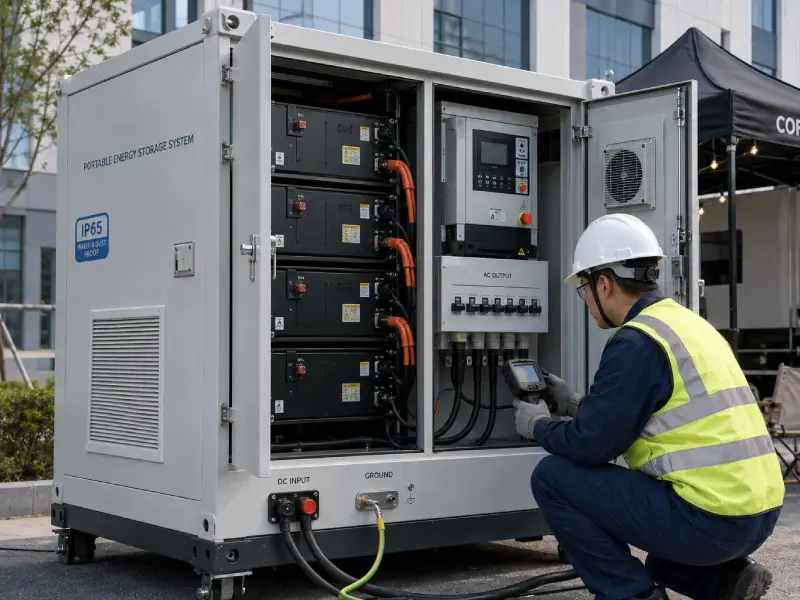
Why Portable Power Outdoor Solutions Are Becoming Important for Modern Businesses
The demand for mobile energy solutions has expanded rapidly across many industries. Construction projects, temporary facilities, outdoor events, logistics operations, and emergency services increasingly require power sources that can be deployed quickly without depending on fixed electrical infrastructure.
Traditional fuel generators have supported outdoor electricity needs for decades. However, many businesses are now looking for alternatives because of operational challenges such as fuel management, noise restrictions, maintenance requirements, and environmental considerations.
A modern outdoor portable power station offers a cleaner and more flexible approach by combining advanced lithium battery technology, intelligent energy management systems, and multiple output configurations.
For commercial users, the value of a portable energy storage system extends beyond providing electricity. It helps businesses improve project flexibility, reduce operational interruptions, and create more efficient energy workflows.
Changing Energy Requirements in Outdoor Business Applications
Outdoor business environments often involve unpredictable energy conditions. A temporary worksite may require electricity before grid connection is available. A mobile operation may need backup power during unexpected outages. An event organizer may require quiet and reliable power without affecting customer experience.
These scenarios create a growing demand for commercial portable power solutions that can deliver:
- Reliable electricity supply in remote locations
- Fast deployment without complex installation
- Stable operation for sensitive electronic equipment
- Flexible charging options including solar integration
- Lower maintenance requirements compared with fuel-based systems
What Is a Commercial Portable Power Station?
A commercial portable power station is an integrated energy storage system designed to store electricity and deliver power whenever and wherever it is needed. It typically includes a battery pack, battery management system (BMS), inverter, charging system, and multiple output interfaces.
While small consumer products are mainly designed for personal use, business-oriented portable energy systems focus on reliability, safety, and continuous operation.
From Consumer Battery Products to Business Energy Systems
The difference between consumer and commercial portable power equipment is mainly reflected in engineering design and application requirements.
| Consumer Portable Power | Commercial Portable Power System |
|---|---|
| Short-term personal use | Professional business applications |
| Limited output capability | Higher power delivery requirements |
| Basic protection functions | Advanced battery management and safety controls |
| Individual purchase decisions | Long-term supplier cooperation |
For EPC contractors and procurement managers, evaluating a portable power station requires looking beyond capacity numbers. Factors such as battery quality, system design, scalability, and supplier capability directly influence project performance.
Core Technologies Behind Reliable Outdoor Portable Power Systems
LiFePO4 Battery Technology for Commercial Applications
Battery technology is one of the most important factors when selecting a portable energy solution. Many commercial users prefer lithium iron phosphate (LiFePO4) batteries because of their balance between safety, durability, and operational stability.
A LiFePO4 portable power station is designed to provide dependable energy storage performance for applications where reliability matters. Compared with some traditional lithium battery chemistries, LiFePO4 technology is widely recognized for its strong thermal stability and long service capability.
For businesses, battery selection affects:
- System lifespan
- Maintenance frequency
- Operational reliability
- Total ownership cost
This is especially important for companies managing multiple projects, where unexpected equipment downtime can affect schedules and operational efficiency.
Battery Management System (BMS) and Safety Control
A high-quality battery system depends not only on battery cells but also on intelligent management. The Battery Management System continuously monitors important operating conditions and helps maintain safe performance.
A professional BMS can support:
- Overcharge protection
- Over-discharge protection
- Temperature monitoring
- Battery balancing
- Performance optimization
For outdoor environments, where temperature changes and operating conditions can vary, effective battery management becomes an essential part of system reliability.
Power Conversion and Output Configuration
A portable power system must convert stored energy into usable electricity efficiently. The inverter and output design determine how well the system supports different business applications.
Depending on project requirements, commercial users may need:
- AC power output for professional equipment
- DC output for specialized devices
- USB charging interfaces
- Solar charging compatibility
A well-designed system provides flexibility for different working environments, making it suitable for construction, mobile services, outdoor operations, and emergency applications.
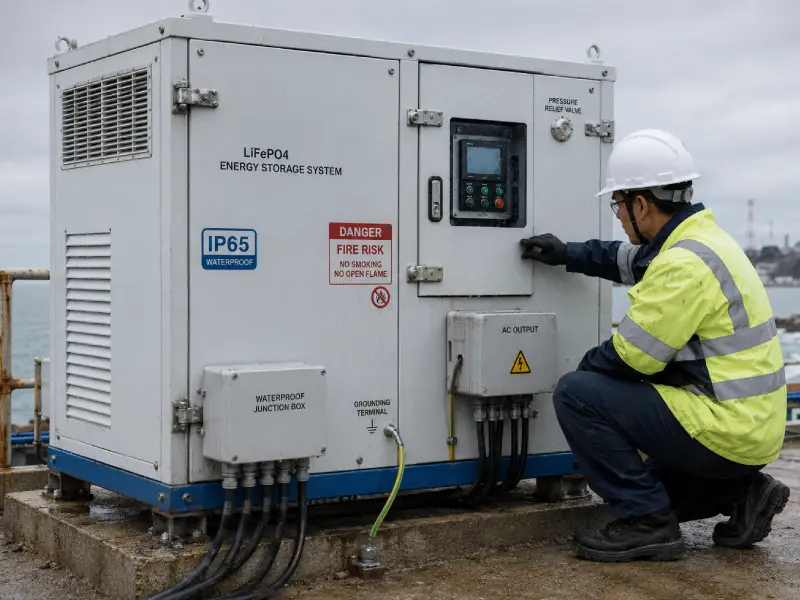
Expert Tip: What EPC Buyers Should Evaluate Before Selecting a Portable Power Supplier
Expert Tip: For EPC contractors and distributors, choosing a portable power supplier should not be based only on battery capacity or product appearance. A reliable supplier should demonstrate engineering capability, consistent manufacturing quality, technical support, and long-term supply stability.
Before placing bulk orders, professional buyers should evaluate:
- Battery technology and system safety design
- Product consistency between production batches
- Technical documentation and support capability
- Customization options for different applications
- Long-term cooperation potential
Portable Power Outdoor Applications Across Commercial Industries
Construction Sites and Remote Work Areas
Construction projects frequently face temporary power challenges, especially during early-stage development, remote installation, or locations without immediate grid access.
A portable power outdoor system can support:
- Power tools
- Temporary lighting
- Communication equipment
- Monitoring devices
For EPC companies, mobile energy solutions can improve construction flexibility by reducing dependence on fuel logistics and temporary electrical infrastructure.
Outdoor Events and Mobile Business Operations
Outdoor commercial activities require reliable electricity while maintaining a professional environment. Noise levels, equipment stability, and fast deployment are important considerations.
Applications include:
- Outdoor exhibitions
- Mobile retail operations
- Temporary service stations
- Field marketing activities
Compared with traditional power sources, battery-based systems can provide quieter operation and easier energy management.
Emergency Response and Backup Power Applications
Reliable electricity availability is critical during emergency situations. Temporary facilities, communication systems, and essential equipment may require immediate power support when conventional electricity sources are unavailable.
A portable energy storage system provides a practical solution for emergency and backup applications by offering fast deployment and flexible operation. Unlike fixed energy infrastructure, portable systems can be transported and installed according to changing project requirements.
For organizations responsible for emergency preparation or field operations, key considerations include:
- Fast activation capability
- Stable power output
- Simple operation process
- Reliable battery performance
- Easy transportation and deployment
These requirements make battery-based mobile energy solutions an increasingly important option for professional users.
How to Select the Right Portable Power Outdoor System for Business Projects
Selecting a suitable energy system requires more than comparing battery capacity. Business buyers need to evaluate how the equipment matches their actual working environment, power requirements, and long-term operational goals.
A professional selection process helps companies avoid purchasing equipment that does not meet project expectations.
Step 1: Calculate Power and Energy Requirements
The first step is understanding the electricity demand of connected equipment. Different applications require different power levels and operating durations.
Important parameters include:
- Rated power requirements
- Peak power requirements
- Daily energy consumption
- Expected operating hours
- Charging availability
For example, equipment with high startup power may require additional output capacity compared with devices that operate at a stable power level.
A reliable supplier should help customers evaluate these requirements instead of simply recommending a standard product.
Step 2: Evaluate Battery Capacity and System Scalability
Battery capacity determines how long a system can provide power before recharging. However, capacity alone does not represent the complete performance of an energy storage system.
Professional buyers should also consider:
- Battery cycle performance
- Charging efficiency
- Future expansion possibilities
- Compatibility with renewable energy sources
For growing businesses, scalable energy solutions provide greater flexibility. A system that supports future expansion can adapt to changing project requirements without requiring complete replacement.
Step 3: Consider Charging Methods and Solar Integration
Modern businesses increasingly combine battery storage with renewable energy. Solar charging capability allows portable energy systems to become more independent from traditional electricity sources.
A solar-compatible portable power solution can support:
- Off-grid applications
- Remote project locations
- Long-duration outdoor operations
- Hybrid energy systems
This approach helps companies create more flexible energy strategies, especially in locations where grid connection is limited.
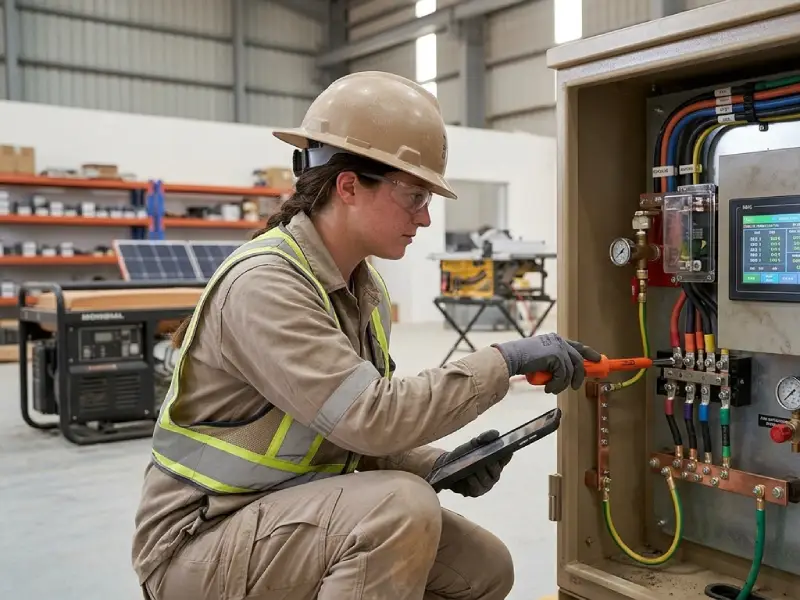
Portable Power Station vs Fuel Generator: A Business Perspective
For many years, fuel generators have been widely used as temporary power sources. However, changes in business requirements have encouraged companies to explore cleaner and more efficient alternatives.
When comparing portable battery systems with traditional generators, businesses should consider total operational impact rather than only initial purchase cost.
| Comparison Factor | Portable Energy Storage System | Fuel Generator |
|---|---|---|
| Noise Level | Low-noise operation | Higher operating noise |
| Maintenance | Limited routine maintenance | Requires fuel and mechanical maintenance |
| Deployment | Fast setup and flexible movement | Requires fuel preparation and equipment handling |
| Energy Source | Electric charging and renewable integration | Fuel dependent |
| Application Flexibility | Suitable for various temporary locations | Limited by operating conditions |
For EPC contractors and commercial users, battery-based solutions can provide operational advantages in environments where noise, emissions, and mobility are important considerations.
Key Factors When Choosing a Portable Energy Storage Supplier
For B2B buyers, selecting equipment is only part of the decision. Choosing the right supplier directly influences project success, product availability, and long-term cooperation.
A professional supplier should provide not only products but also technical support and supply chain reliability.
Manufacturing Capability and Product Consistency
Large-scale projects require stable product quality across multiple orders. Inconsistent performance between product batches can create additional installation and maintenance challenges.
Procurement teams should evaluate:
- Production quality management
- Testing procedures
- Battery system integration capability
- Product documentation support
For businesses building long-term energy solutions, consistent manufacturing capability is a key factor in reducing project risk.
Technical Support for EPC and Distribution Partners
EPC contractors and distributors often require more than standard product information. They may need assistance with system selection, application analysis, and customized configurations.
A reliable energy partner should be able to support:
- Technical communication
- Application recommendations
- Project requirement analysis
- Product customization discussion
This technical cooperation helps partners deliver better solutions to their end customers.
Why SolarDyna Supports Business-Focused Portable Energy Solutions
SolarDyna focuses on providing practical energy solutions designed for commercial and professional applications. The company understands that B2B customers require dependable products, responsive technical support, and a stable supply relationship.
For businesses searching for a long-term energy partner, the objective is not simply purchasing a battery device. It is building a reliable energy solution that can support ongoing operations.
Engineering-Oriented Product Approach
Commercial energy applications require careful consideration of system design, operating environment, and user requirements.
SolarDyna emphasizes:
- Application-focused product design
- Reliable battery system integration
- Practical energy management solutions
- Professional customer support
This engineering-focused approach helps businesses select energy systems that better match real-world operating conditions.
Supporting Distributors, Installers, and EPC Partners
For channel partners, supply reliability and communication efficiency are essential. SolarDyna works with business customers who need stable product availability and professional cooperation throughout the purchasing process.
Potential cooperation support includes:
- Bulk purchasing support
- Product solution communication
- Application guidance
- Long-term partnership development
A strong supplier relationship allows distributors and EPC companies to improve their service capability and respond more effectively to market demand.
Quality Control and Supply Chain Reliability
For businesses purchasing energy storage products, long-term reliability depends not only on product design but also on manufacturing consistency and supply chain management. A professional supplier must ensure that every unit delivered meets expected performance standards.
In commercial applications, product availability and quality consistency directly influence project schedules. Delays caused by unstable supply or inconsistent product performance can increase operational costs and affect customer satisfaction.
When evaluating an energy storage supplier, procurement teams should consider:
- Manufacturing process control
- Battery system testing procedures
- Quality inspection processes
- Production capacity planning
- After-sales technical support
SolarDyna focuses on building reliable cooperation with business customers by supporting product quality management, technical communication, and long-term supply requirements.
How Portable Energy Storage Supports Future Business Operations
The energy landscape is changing as companies look for more flexible, efficient, and sustainable power solutions. Mobile energy systems are becoming an important part of modern business operations because they allow electricity resources to move with operational needs.
A well-designed portable power outdoor solution can support businesses that require temporary, mobile, or backup electricity without relying entirely on fixed infrastructure.
Future development trends include smarter energy management, renewable energy integration, and modular system design.
Integration With Solar Energy Systems
Solar charging capability is becoming an important feature for portable energy applications. Combining photovoltaic generation with battery storage allows businesses to create more independent power systems.
This approach is particularly valuable for:
- Remote work locations
- Outdoor commercial activities
- Temporary facilities
- Off-grid applications
By combining renewable generation and energy storage, companies can improve energy flexibility while reducing dependence on traditional power sources.
Smarter Energy Monitoring and Management
Modern energy systems are increasingly focused on visibility and control. Businesses want to understand how energy is being used and how systems are performing.
Future mobile energy solutions may increasingly include:
- Real-time monitoring
- Remote management capabilities
- Performance analysis
- Intelligent energy optimization
These features help businesses manage energy resources more efficiently and make better operational decisions.
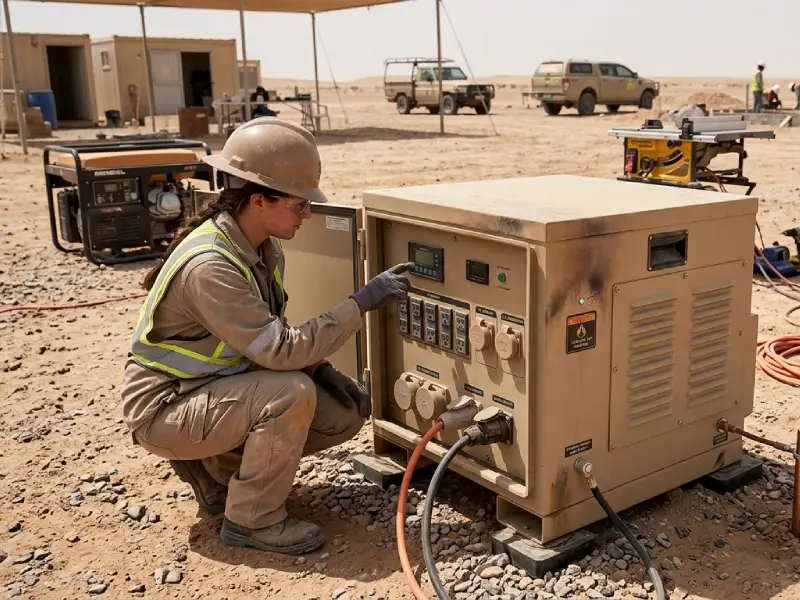
Business Checklist: Selecting the Right Outdoor Portable Power Solution
Before purchasing a commercial energy system, decision-makers can review the following checklist to ensure the selected solution matches their project requirements.
| Evaluation Area | Questions to Consider |
|---|---|
| Application | Where and how will the system be used? |
| Power Demand | What equipment needs electricity and for how long? |
| Battery Technology | Does the battery provide suitable safety and lifespan? |
| System Design | Does the solution support future expansion? |
| Supplier Capability | Can the supplier provide stable delivery and technical support? |
This evaluation process helps businesses avoid selecting products based only on price and instead focus on long-term project value.
Frequently Asked Questions About Portable Power Outdoor Solutions
Q1. What industries can use portable power stations?
Portable power systems can support many commercial industries, including construction, outdoor services, events, logistics, emergency operations, and temporary facilities.
The main advantage is flexibility. Businesses can deploy power where it is needed without waiting for permanent electrical infrastructure.
Q2. How do businesses choose the right battery capacity?
Battery capacity selection depends on the equipment load, operating duration, and charging availability.
Companies should calculate both power requirements and expected runtime. A professional supplier can help analyze application scenarios and recommend a suitable configuration.
Q3. Why are LiFePO4 batteries widely used in commercial portable power systems?
LiFePO4 technology is widely selected for commercial energy applications because it provides a combination of safety characteristics, stable performance, and durability.
For businesses, battery reliability directly affects maintenance requirements and operational continuity.
Q4. Can portable energy systems work with solar panels?
Yes. Many modern systems support solar charging, allowing users to combine renewable energy generation with battery storage.
This creates a more flexible energy solution for remote locations and applications where grid power is limited.
Q5. What should EPC companies consider before ordering in bulk?
EPC companies should evaluate supplier capability, product consistency, technical support, and delivery reliability before making large purchasing decisions.
A strong supplier relationship helps EPC partners reduce project risks and provide better solutions to their customers.
Build Reliable Mobile Energy Solutions With SolarDyna
As business energy requirements continue to evolve, companies need more flexible ways to access reliable electricity. A portable energy storage solution is no longer only a temporary power device—it is becoming part of a broader strategy for improving operational efficiency and energy resilience.
For distributors, installers, and EPC contractors, selecting the right partner is equally important as selecting the right product. A reliable supplier should combine product quality, engineering understanding, and long-term cooperation capability.
SolarDyna supports business customers seeking dependable energy solutions for outdoor operations, mobile applications, and backup power requirements.
Whether you are evaluating a new project, expanding your product portfolio, or searching for a stable energy supply partner, SolarDyna can help you identify a suitable solution.
Request a Commercial Energy Solution
Discuss your application requirements with SolarDyna and explore suitable portable energy solutions for your business projects.Contact SolarDyna Energy Experts
Final Takeaway
The future of outdoor business power depends on reliability, flexibility, and intelligent energy management. Companies that invest in high-quality mobile energy solutions can improve project efficiency, reduce operational challenges, and build stronger energy strategies.
A professional portable power outdoor system provides businesses with the ability to operate confidently in changing environments while maintaining dependable access to electricity.
By working with an experienced energy partner like SolarDyna, businesses can move beyond simple equipment purchasing and develop long-term energy solutions designed for real-world applications.
Need a Reliable Portable Power Outdoor Solution for Your Business?
Choosing the right portable power outdoor system directly impacts project reliability, operating efficiency, and long-term energy performance. We provide LiFePO4 portable energy storage solutions for EPC contractors, distributors, and commercial energy projects.
✔ LiFePO4 battery systems with intelligent BMS protection
✔ Engineering support for EPC projects and energy integration
✔ OEM/ODM customization and stable bulk supply capability
Talk with our energy specialists for a custom mobile energy storage configuration based on your project requirements