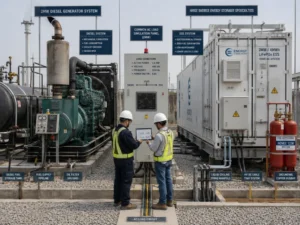
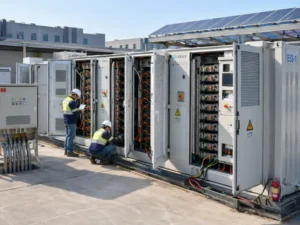
As global demand for distributed energy storage accelerates, understanding portable power station battery types has become a critical purchasing factor for EPC contractors, solar distributors, telecom integrators, emergency backup providers, and commercial energy buyers. From outdoor construction projects to mobile solar systems and off-grid backup applications, commercial portable power station deployments are rapidly expanding across Europe, Southeast Asia, the Middle East, and North America.
However, many B2B buyers still struggle to evaluate the real difference between LiFePO4 and NMC battery systems. On paper, many products appear similar. In reality, battery chemistry directly determines product lifespan, safety performance, international shipping compliance, warranty risk, and long-term return on investment. For procurement managers and OEM buyers, choosing the wrong battery platform can lead to high RMA costs, shortened lifecycle performance, customer complaints, and severe damage to brand reputation.
This guide provides a deep technical and commercial analysis of modern portable power station battery types, helping B2B buyers understand how battery chemistry impacts Total Cost of Ownership (TCO), lifecycle profitability, operational reliability, and ESS deployment performance. Instead of repeating generic consumer-level explanations, this article focuses on engineering-level insights used by experienced energy storage manufacturers and commercial procurement teams.
Why Battery Chemistry Matters More Than Most Buyers Realize
In commercial energy storage projects, battery chemistry is not simply a specification sheet parameter. It directly affects:
- Cycle lifespan and replacement frequency
- Thermal runaway resistance and operational safety
- International transportation compliance
- Warranty claim rates and after-sales costs
- Long-term LCOS (Levelized Cost of Storage)
- System reliability in high-temperature environments
- Energy density and portability tradeoffs
For commercial portable power station buyers, selecting the correct battery platform is ultimately a strategic business decision — not just a technical preference.
The Dominant Chemistry: LiFePO4 vs NMC for Commercial Portable Power Stations
Today, nearly all premium portable power station battery types are built around two lithium-ion chemistries:
- LiFePO4 (Lithium Iron Phosphate)
- NMC (Nickel Manganese Cobalt)
While both technologies belong to the lithium-ion family, their internal crystal structures, thermal characteristics, and long-term commercial performance differ dramatically. For B2B energy storage manufacturers and OEM suppliers, understanding these differences is essential for selecting the right platform for specific applications.
| Technical Indicator | LiFePO4 (Lithium Iron Phosphate) | NMC (Nickel Manganese Cobalt) |
|---|---|---|
| Cycle Life (80% DoD) | 3,000 – 6,000+ cycles | 500 – 1,500 cycles |
| Thermal Runaway Temperature | Approximately 270°C | Approximately 210°C |
| Energy Density | 140–160 Wh/kg | 200–250 Wh/kg |
| Thermal Stability | Excellent | Moderate |
| Long-Term LCOS | Ultra-low | Higher due to degradation |
| Commercial ESS Suitability | Highly Recommended | Limited scenarios |
| Warranty Risk | Low | Higher |
Why LiFePO4 is the Gold Standard for Commercial Portable Power Stations
Over the past five years, LiFePO4 technology has rapidly become the dominant battery platform for commercial portable power stations. The reason is simple: commercial buyers prioritize safety, operational lifespan, reliability, and long-term profitability far more than marginal weight reduction.
The core advantage of LiFePO4 chemistry comes from its highly stable olivine crystal structure. Compared with ternary lithium systems such as NMC, the phosphate bond inside LiFePO4 cells is significantly stronger under high-temperature and high-load operating conditions. This gives LiFePO4 batteries exceptional resistance to thermal runaway and chemical decomposition.
For EPC contractors and energy storage integrators operating in harsh environments, this stability is extremely important. Portable energy storage systems are often deployed:
- Inside construction sites with high ambient temperatures
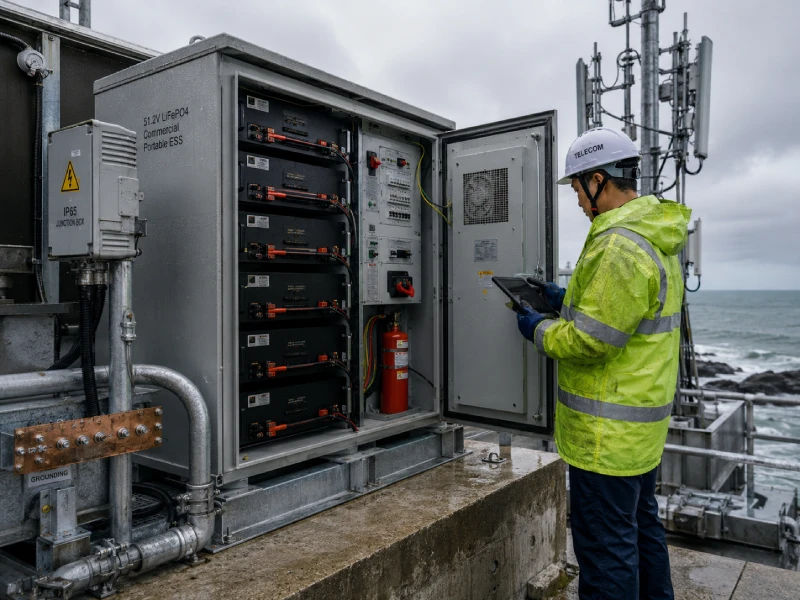
- In telecom backup stations with continuous cycling
- Within off-grid solar applications exposed to direct sunlight
- In emergency response systems requiring ultra-high reliability
- Across mobile rental power equipment fleets
Under these operating conditions, battery stability directly affects equipment survival rates and warranty exposure. A low-quality or thermally unstable battery system can rapidly degrade after repeated deep discharge cycles, eventually causing swelling, overheating, or catastrophic failure.
This is precisely why experienced B2B energy storage manufacturers increasingly standardize around Tier-1 LiFePO4 cells for premium commercial deployments.
Commercial Advantages of LiFePO4 Battery Systems
- Ultra-long operational lifespan exceeding 4,000 cycles
- Lower long-term replacement costs
- Reduced RMA and warranty claim risks
- Superior thermal stability in hot climates
- Improved safety during international shipping
- Better compatibility with daily cycling applications
- More stable voltage discharge curves
- Lower Levelized Cost of Storage over system lifetime
Another major reason LiFePO4 dominates the commercial portable power station sector is its exceptionally long cycle life. In practical ESS deployments, high-quality LiFePO4 cells can maintain more than 80% usable capacity after 4,000 charge-discharge cycles. Some premium automotive-grade cells even exceed 6,000 cycles under optimized operating conditions.
By contrast, many lower-cost NMC systems begin showing noticeable capacity degradation after only 800 to 1,200 cycles. For commercial buyers deploying fleets of mobile power stations, this difference has massive financial implications.
Consider a rental equipment company operating portable energy storage systems daily. A LiFePO4-based unit may remain commercially usable for 8–10 years, while an NMC system could require replacement within 2–4 years under identical usage intensity.
When warehousing, international logistics, maintenance labor, downtime losses, and replacement inventory are factored into the equation, LiFePO4 delivers dramatically lower Total Cost of Ownership despite its higher upfront purchase price.
Expert Insight from SolarDyna’s ESS Engineering Team
“Many procurement teams still focus heavily on initial invoice cost instead of lifecycle economics. However, professional EPC contractors evaluate portable power stations based on LCOS and operational survivability. A premium LiFePO4 system delivering 4,000 cycles often achieves a per-cycle storage cost more than 60% lower than low-cost alternatives that degrade after 800 cycles. In real-world commercial environments, battery longevity is directly tied to profit margins.”
When Does NMC Still Make Sense?
Despite the growing dominance of LiFePO4 technology, NMC batteries still retain relevance in several specialized commercial scenarios.
The primary advantage of NMC chemistry is its significantly higher energy density. Compared with LiFePO4 systems, NMC batteries can store more energy within a smaller and lighter physical footprint. This makes NMC attractive for applications where portability and weight reduction are absolute priorities.
Typical NMC-focused applications may include:
- Ultra-light mobile field equipment
- Compact emergency power kits
- Drone charging systems
- Portable media production equipment
- Short-duration backup systems
- Consumer-focused lightweight generators
However, these applications typically involve lower cycling frequency and shorter operational duty cycles. In high-frequency commercial usage, the shorter lifespan and higher thermal sensitivity of NMC become increasingly problematic.
For this reason, many commercial portable power station manufacturers are gradually transitioning away from NMC platforms in favor of safer and more durable LiFePO4 architectures.
Emerging and Legacy Battery Technologies: Lead-Acid and Solid-State Batteries
Although LiFePO4 and NMC currently dominate the commercial portable power station market, many buyers still encounter alternative battery technologies during supplier sourcing and OEM negotiations. Some low-cost manufacturers continue using outdated lead-acid systems in entry-level products, while others aggressively market solid-state batteries as the “next revolution” in portable energy storage.
For commercial buyers, it is important to separate marketing narratives from actual deployment realities. Understanding the limitations and maturity levels of these battery technologies helps procurement teams avoid misleading specifications, unrealistic ROI expectations, and future supply chain risks.
Why Lead-Acid Batteries Are Obsolete in Premium Portable Power Stations
Lead-acid batteries once dominated backup power systems and early portable energy storage products because of their relatively low manufacturing cost and simple charging requirements. However, in modern commercial portable power station applications, lead-acid technology has become increasingly impractical.
The first major limitation is energy density. Lead-acid batteries are extremely heavy compared with lithium-based systems. A commercial portable power station using lead-acid cells may weigh two to three times more than an equivalent LiFePO4 system with the same usable energy capacity. For mobile applications, field deployment, and transportation efficiency, this disadvantage is substantial.
Another critical issue is shallow Depth of Discharge capability. Most lead-acid systems should not regularly discharge below 50% capacity if users expect acceptable lifespan performance. In practical terms, this means buyers must purchase larger battery banks simply to achieve usable energy output comparable to lithium systems.
Key Limitations of Lead-Acid Battery Systems
- Low usable Depth of Discharge
- Extremely heavy system weight
- Short operational lifespan
- Higher maintenance requirements
- Poor high-temperature performance
- Slower charging capability
- Reduced transportation efficiency
- Environmental compliance concerns
Cycle degradation is another major weakness. Many lead-acid batteries experience severe performance loss after only several hundred deep cycles. For commercial buyers operating portable power stations daily, this creates unacceptable replacement frequency and elevated operational expenses.
Environmental compliance also presents growing challenges. International markets increasingly enforce strict RoHS and REACH regulations regarding hazardous substances and recycling responsibilities. As sustainability requirements tighten across Europe and North America, lead-acid battery systems continue losing competitiveness in premium energy storage sectors.
Today, lead-acid technology survives mainly in ultra-budget backup systems or highly price-sensitive short-term projects. In professional-grade commercial portable power station deployments, most experienced EPC contractors and distributors no longer consider lead-acid a viable long-term solution.
Solid-State Batteries: Future Potential vs Current Commercial Reality
On the opposite side of the technology spectrum, solid-state batteries receive enormous media attention as a potential breakthrough for next-generation energy storage systems. Many industry analysts predict that solid-state chemistry may eventually redefine electric vehicles, aviation batteries, and ultra-high-density portable energy storage.
The core concept behind solid-state technology is replacing traditional liquid electrolytes with solid conductive materials. In theory, this architecture offers several attractive advantages:
- Higher energy density
- Improved thermal stability
- Reduced fire risk
- Faster charging potential
- Longer future cycle life
- More compact ESS packaging
However, despite the impressive theoretical benefits, commercial viability remains extremely limited in 2026. Most solid-state battery manufacturing still faces serious obstacles involving scalability, yield consistency, raw material cost, and large-scale industrialization.
For portable power station manufacturers, the biggest issue is cost-to-performance ratio. Current solid-state cells remain prohibitively expensive for mass-market commercial energy storage systems. Production volumes are limited, supply chains are immature, and long-term reliability validation under real-world ESS operating conditions is still incomplete.
| Technology Factor | Current Solid-State Status |
|---|---|
| Mass Production Capability | Limited |
| Commercial Cost Competitiveness | Very Low |
| Supply Chain Stability | Immature |
| Long-Term ESS Validation | Still developing |
| Large-Scale B2B Adoption | Not commercially mature |
As a result, most experienced B2B energy storage manufacturers continue prioritizing advanced LiFePO4 platforms because they offer the best balance of safety, cycle life, supply chain reliability, and commercial scalability. While solid-state batteries may become influential in the future, they are unlikely to replace LiFePO4 in mainstream commercial portable power stations within the next several years.
Which Battery Chemistry Fits Different Commercial Applications?
One of the biggest mistakes procurement teams make is assuming that all portable power station battery types are suitable for every commercial scenario. In reality, different industries prioritize completely different performance metrics.
Some applications prioritize lightweight mobility, while others focus on continuous cycling durability, extreme-temperature stability, or long-term operating economics. Understanding the relationship between battery chemistry and deployment environment is essential for maximizing investment returns.
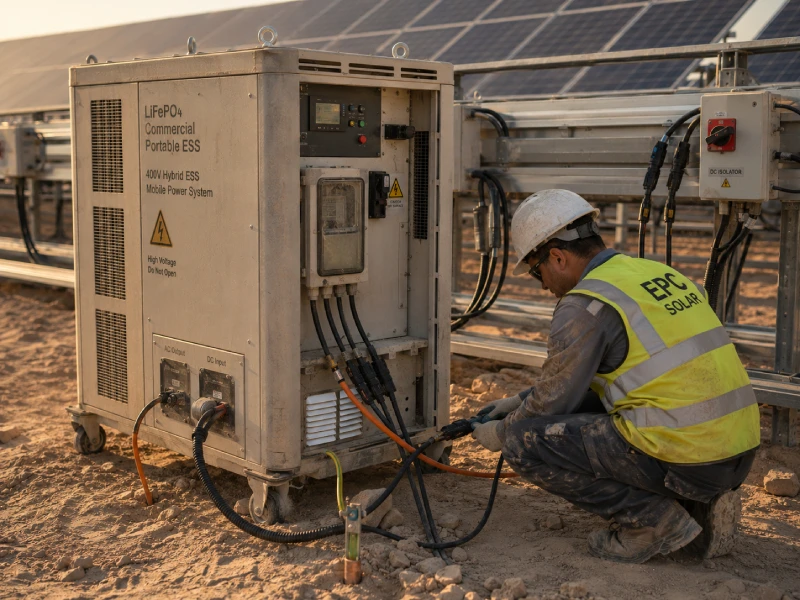
Outdoor EPC and Construction Power Systems
Construction sites represent one of the harshest operating environments for portable energy storage systems. Portable power stations deployed on EPC projects are frequently exposed to:
- High ambient temperatures
- Dust and vibration
- Frequent deep discharge cycles
- Long daily operating hours
- Unstable charging conditions
- Transportation stress between job sites
Under these conditions, LiFePO4 battery systems are significantly more reliable than NMC alternatives. Their superior thermal stability and longer operational lifespan reduce the risk of field failures, downtime, and expensive warranty claims.
For EPC contractors managing multiple project locations, long-term reliability is usually more valuable than reducing several kilograms of system weight. This is why most industrial-grade commercial portable power stations now standardize around LiFePO4 architecture.
Mobile Solar Generator Systems
Portable solar generators represent another rapidly growing market segment, particularly in regions experiencing grid instability or expanding off-grid energy demand. These systems often operate alongside photovoltaic panels and therefore experience daily charge-discharge cycling.
In solar-integrated applications, cycle life becomes critically important because batteries may complete hundreds of cycles annually. A battery platform with insufficient lifespan rapidly destroys project economics.
LiFePO4 chemistry performs exceptionally well in this environment because of:
- Excellent daily cycling endurance
- Stable voltage output curves
- Improved thermal resistance during solar charging
- Lower long-term storage costs
- Superior compatibility with renewable energy systems
As distributed renewable energy adoption continues increasing worldwide, LiFePO4-based commercial portable power stations are becoming the preferred architecture for mobile solar ESS applications.
Emergency Backup and Telecom Infrastructure
Telecom operators and emergency infrastructure providers require exceptionally high reliability because system downtime may directly affect communication networks, disaster response operations, and mission-critical equipment.
In these sectors, battery failure is not simply inconvenient — it can create operational and financial consequences on a much larger scale. Therefore, buyers typically prioritize:
- Long standby lifespan
- High thermal stability
- Low maintenance requirements
- Predictable degradation behavior
- Advanced BMS protection systems
- International safety certifications
Because of these requirements, LiFePO4 has become the preferred battery chemistry for many telecom backup deployments and mobile emergency power systems across global markets.
Beyond Battery Chemistry: The Technical Pillars That Determine Long-Term ESS Reliability
Although battery chemistry is the foundation of portable energy storage performance, experienced commercial buyers understand that chemistry alone does not determine whether a portable power station succeeds or fails in real-world operation.
In fact, many commercial portable power station failures are not caused by the lithium chemistry itself, but rather by poor system engineering, inconsistent cell quality, weak thermal management, or low-cost electronic components used to reduce manufacturing expenses.
This is why leading B2B energy storage manufacturers focus heavily on three critical engineering pillars:
- Automotive-grade cell quality
- Advanced BMS architecture
- International certification and compliance systems
For commercial buyers evaluating OEM or ODM suppliers, these factors often matter more than the battery chemistry label printed on the product brochure.
1. Automotive-Grade Cells vs Consumer-Grade Cells
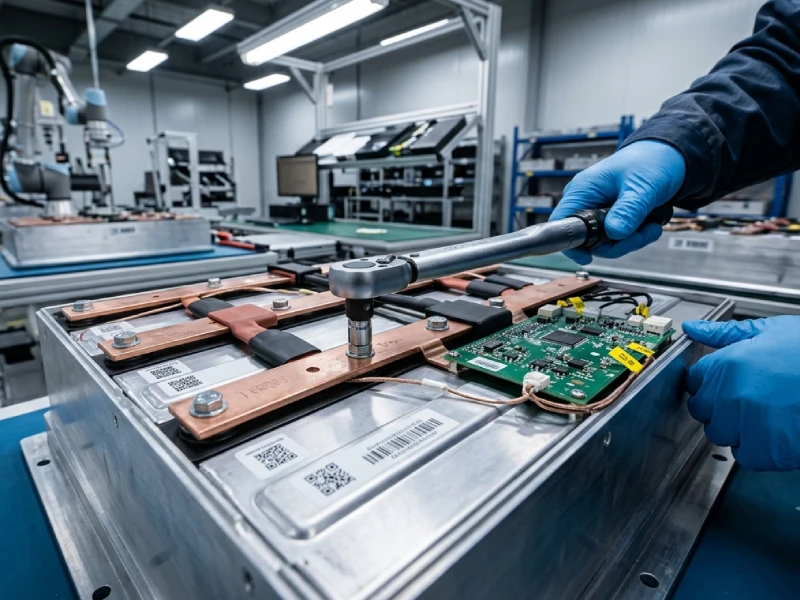
One of the least understood issues in the portable power station industry is the enormous quality gap between automotive-grade lithium cells and low-cost consumer-grade alternatives.
On paper, many battery cells may appear similar because suppliers advertise the same voltage and capacity ratings. However, actual manufacturing consistency can vary dramatically between different production grades.
Automotive-grade cells are manufactured under extremely strict standards involving:
- Capacity consistency control
- Internal resistance matching
- Thermal stability screening
- Cycle aging validation
- High-current discharge testing
- Mechanical stress resistance
- Batch traceability systems
These standards are especially important in commercial portable power station applications because portable ESS products frequently experience vibration, transportation shock, high-current loading, and repeated cycling under unstable environmental conditions.
Low-cost cells with inconsistent internal resistance often create uneven current distribution inside the battery pack. Over time, this imbalance accelerates heat accumulation, voltage drift, and premature degradation.
Why Cell Consistency Matters in Commercial ESS Systems
In large portable power station battery packs, every individual cell must operate as part of a synchronized system. Even small inconsistencies between cells can gradually amplify into serious operational problems.
- Uneven heat generation
- Accelerated voltage imbalance
- Reduced usable battery capacity
- Higher thermal runaway risk
- Premature pack degradation
- Increased warranty failure rates
Unfortunately, some low-cost suppliers reduce manufacturing costs by mixing different cell batches or even using recycled lithium cells inside new battery packs. While these practices may reduce short-term pricing, they dramatically increase long-term failure risk.
This is why experienced EPC contractors and wholesale distributors increasingly prioritize suppliers that use genuine Tier-1 automotive-grade LiFePO4 cells with full batch traceability and strict incoming quality control procedures.
2. BMS Architecture: The Second Lifeline of Portable Energy Storage Systems
If battery cells represent the heart of a portable power station, then the Battery Management System serves as its brain and nervous system.
A high-quality BMS continuously monitors and controls critical battery operating parameters in real time. Without intelligent BMS protection, even premium lithium cells may become unsafe or degrade rapidly under demanding commercial conditions.
Modern commercial portable power station systems require advanced multi-layer protection protocols capable of managing:
- Overcharge protection
- Over-discharge protection
- Overcurrent protection
- Short-circuit protection
- Thermal monitoring
- Cell balancing
- Voltage equalization
- Charge optimization algorithms
One of the most important functions in advanced BMS design is active balancing technology. During long-term operation, lithium cells naturally develop minor voltage differences. If these imbalances are not corrected, weaker cells may become overstressed, reducing overall pack lifespan.
Active balancing systems intelligently redistribute energy between cells to maintain consistent voltage levels across the battery pack. This significantly improves long-term stability and cycle life, particularly in commercial applications involving frequent charging and deep discharge cycles.
| BMS Feature | Commercial Importance |
|---|---|
| Active Cell Balancing | Extends cycle lifespan |
| Thermal Monitoring | Prevents overheating events |
| MOS Protection | Improves electrical safety |
| Short-Circuit Defense | Protects critical equipment |
| Intelligent Charge Control | Optimizes battery longevity |
Many low-cost portable power station suppliers use simplified BMS boards with minimal thermal sensing and limited protection capability. These shortcuts may reduce initial production cost, but they often result in overheating issues, unstable output performance, and elevated failure rates after extended use.
3. International Certifications and Compliance Standards
For distributors, importers, and commercial integrators, certification compliance is not optional. It is one of the most critical factors affecting customs clearance, legal market access, insurance approval, and brand credibility.
Unfortunately, some buyers underestimate the complexity of global lithium battery regulations until shipment delays or compliance issues occur. In international portable energy storage trade, missing or incomplete certification documentation can create severe operational and financial consequences.
Professional commercial portable power station manufacturers typically maintain compliance with several key international standards:
| Certification | Primary Purpose |
|---|---|
| UN38.3 | Lithium battery transportation safety |
| IEC 62133 | Battery safety validation |
| UL 2743 | Portable power pack safety |
| CE Certification | European market compliance |
| RoHS | Hazardous substance restrictions |
Beyond regulatory requirements, certifications also function as indirect indicators of engineering quality. Manufacturers capable of passing rigorous international testing standards usually maintain stronger internal QC systems, more stable production processes, and higher manufacturing consistency.
For OEM buyers and energy distributors building long-term commercial brands, partnering with certified suppliers significantly reduces operational risk and improves customer trust.
Why Many Low-Cost Portable Power Stations Fail Within Two Years
One of the fastest-growing problems in the global energy storage industry is the flood of low-cost portable power stations entering international markets. Many products appear highly competitive on paper because suppliers advertise large capacities and attractive pricing. However, actual long-term reliability often tells a very different story.
Experienced EPC contractors increasingly report premature system failures caused by aggressive cost-cutting strategies throughout the manufacturing process.
Common failure causes include:
- Mixed or recycled lithium cells
- Low-grade MOS components
- Weak BMS protection architecture
- Insufficient cooling design
- Poor inverter quality
- Inadequate insulation systems
- Unstable assembly processes
- False battery capacity labeling
In many cases, these systems initially perform adequately during short-term testing but rapidly degrade under continuous commercial operation. This creates major problems for distributors because warranty claims, return logistics, and replacement inventory costs can quickly eliminate profit margins.
For this reason, professional buyers increasingly evaluate suppliers based not only on price, but also on engineering transparency, manufacturing consistency, and proven ESS deployment experience.
Expert Tip: Evaluate Total Cost of Ownership, Not Just Initial Price
Many first-time procurement teams focus heavily on reducing initial purchasing cost. However, experienced commercial energy buyers evaluate portable power station systems based on lifecycle profitability. A low-cost battery system that fails after 800 cycles may appear economical initially, but replacement expenses, shipping costs, maintenance labor, downtime losses, and customer dissatisfaction can quickly exceed the savings from the original purchase price.
In contrast, premium LiFePO4 systems with automotive-grade cells and advanced BMS architecture often deliver dramatically lower Levelized Cost of Storage over long-term deployment periods. For professional distributors and EPC contractors, reliability is ultimately more profitable than aggressive short-term price reductions.
Partnering with SolarDyna: Secure Your Tier-1 Portable ESS Supply Chain
As the global distributed energy storage market continues expanding, selecting the right manufacturing partner has become just as important as selecting the right battery chemistry.
Commercial buyers today require far more than basic assembly capability. They need suppliers capable of delivering:
- Stable long-term production capacity
- Strict engineering quality control
- Tier-1 battery sourcing
- Advanced BMS development capability
- International compliance support
- Reliable OEM and ODM integration
- Fast technical communication
- Global after-sales coordination
SolarDyna focuses on engineering-driven commercial portable power station manufacturing using 100% brand-new automotive-grade LiFePO4 cells, intelligent multi-layer BMS systems, and globally recognized certification frameworks.
Unlike many low-cost assembly suppliers, SolarDyna emphasizes long-term ESS reliability, thermal safety engineering, and scalable OEM production consistency. Every portable energy storage platform is designed around real commercial deployment requirements rather than short-term specification marketing.
SolarDyna Commercial ESS Advantages
- Tier-1 automotive-grade LiFePO4 battery cells
- Advanced active-balancing BMS systems
- Strict incoming cell inspection procedures
- Complete UN38.3 and IEC certification support
- OEM and ODM customization capability
- Scalable global wholesale supply capacity
- Professional engineering communication support
- Long-term commercial reliability focus
For distributors, EPC contractors, telecom integrators, and renewable energy companies seeking dependable commercial portable power station solutions, partnering with an experienced ESS manufacturer is one of the most important long-term strategic decisions.
Frequently Asked Questions About Portable Power Station Battery Types
Q1. What is the safest battery type for portable power stations?
LiFePO4 batteries are widely considered the safest lithium battery chemistry for commercial portable power stations because of their excellent thermal stability and strong resistance to thermal runaway events.
Q2. How long does a LiFePO4 portable power station last?
High-quality LiFePO4 systems commonly deliver between 3,000 and 6,000 charge-discharge cycles depending on operating conditions, BMS quality, and charging behavior. In many commercial applications, this translates to 8–10 years of operational lifespan.
Q3. Is NMC or LiFePO4 better for commercial use?
For most commercial portable energy storage applications, LiFePO4 is generally the superior choice because of its longer lifespan, improved safety, and lower long-term operational cost. NMC remains useful primarily in applications where minimizing weight is the highest priority.
Q4. What certifications are required for importing portable power stations?
Common international requirements include UN38.3 for transportation safety, IEC 62133 for battery safety compliance, UL standards for North American markets, CE certification for Europe, and RoHS environmental compliance.
Q5. Why do some low-cost portable power stations fail prematurely?
Premature failure is often caused by low-quality lithium cells, weak BMS protection systems, inadequate cooling design, inconsistent manufacturing quality, or unrealistic battery capacity claims.
Need a Reliable Commercial Portable Power Station for Your ESS Project?
Choosing the right portable power station battery types directly impacts system safety, lifecycle cost, and long-term operational reliability. SolarDyna provides commercial-grade LiFePO4 portable power station solutions engineered for EPC contractors, telecom backup systems, mobile solar deployment, and global energy distributors.
✔ Advanced active-balancing BMS for commercial ESS reliability
✔ OEM/ODM portable power station customization for global distributors
✔ UN38.3, IEC62133, CE, RoHS certification support for international markets
✔ Engineering support for telecom backup, solar EPC, and off-grid deployment
Speak with SolarDyna’s engineering team for a custom commercial portable power station solution tailored to your deployment environment and operational requirements