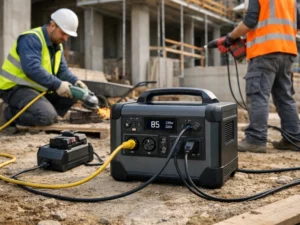
In modern energy infrastructure planning, solar battery vs generator cost has become one of the most critical decision factors for EPC contractors, commercial developers, and industrial procurement teams. As distributed energy systems expand globally, decision-makers are no longer comparing equipment prices alone—they are evaluating full lifecycle economics, operational risk, and system reliability.
The comparison of solar battery vs generator cost is not simply a matter of upfront capital expenditure. Instead, it involves a multi-dimensional engineering evaluation that includes fuel dependency, maintenance cycles, system degradation, energy efficiency, and long-term return on investment (ROI). In many commercial and utility-scale applications, this comparison directly determines whether a project remains profitable over a 10–15 year lifecycle.
This article provides a structured EPC-level analysis of solar battery systems versus diesel generators, focusing on lifecycle cost modeling, operational efficiency, and system architecture. It is designed specifically for technical decision-makers who require engineering-grade clarity rather than marketing-level comparisons.
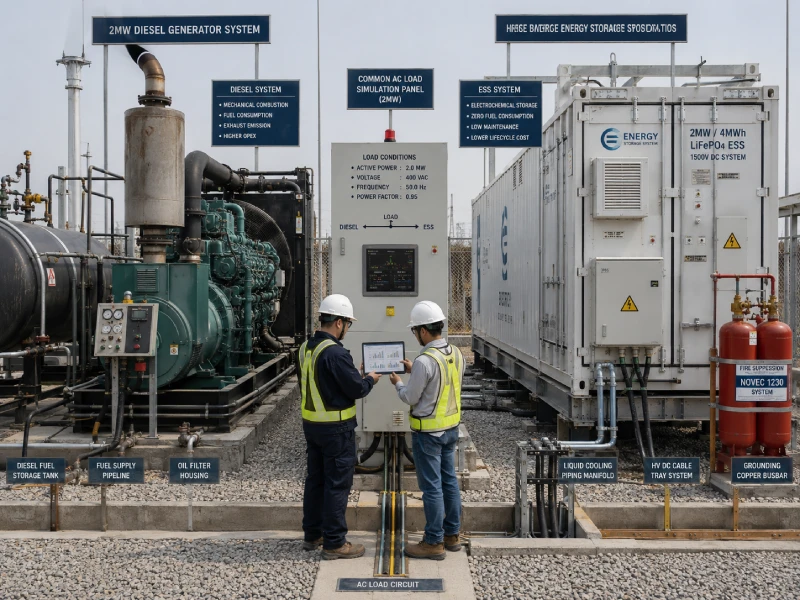
1. Why Energy Buyers Are Moving Away from Diesel Generators
Over the past decade, diesel generators have been widely used as backup and off-grid power solutions due to their low initial cost and simple deployment. However, the global energy transition is reshaping procurement priorities. Increasing fuel volatility, stricter environmental regulations, and rising operational costs are accelerating the shift toward battery-based energy storage systems.
In EPC and industrial applications, solar battery systems are increasingly replacing diesel generators as the primary energy backup solution because they provide:
- Lower long-term operational cost structure
- Higher energy conversion efficiency (90–95% for LiFePO4 systems)
- Reduced maintenance dependency
- Scalable modular architecture for project expansion
From a lifecycle perspective, the discussion around solar battery vs generator cost has shifted from “which is cheaper upfront” to “which system minimizes total cost of ownership (TCO) under real operating conditions.”
Engineering Insight:
In EPC procurement models, fuel-based systems introduce variable cost exposure that is directly tied to geopolitical and logistics risks. Energy storage systems convert this variability into a predictable operating expense structure, which is critical for long-term financial modeling.
2. CAPEX Analysis: Solar Battery vs Generator Initial Investment Structure
When comparing solar battery vs generator cost, many procurement teams initially focus on capital expenditure (CAPEX). However, CAPEX alone can be misleading if system architecture differences are not properly evaluated.
2.1 Diesel Generator CAPEX Structure
A diesel generator system typically includes the following components:
- Generator engine and alternator unit
- Fuel storage tank system
- Noise reduction enclosure (for urban compliance)
- Installation and civil foundation works
While the initial purchase cost is relatively low, the system requires additional infrastructure investment depending on project scale and compliance requirements.
2.2 Solar Battery System CAPEX Structure
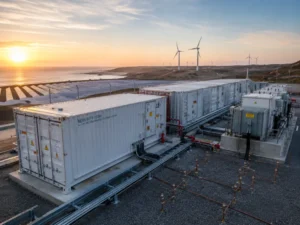
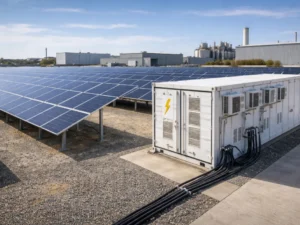
A modern lithium-based energy storage system is significantly more complex in engineering design. A typical containerized ESS includes:
- LiFePO4 battery modules
- Battery Management System (BMS)
- Power Conversion System (PCS)
- Energy Management System (EMS)
- Container integration (20ft / 40ft modular units)
Unlike generators, solar battery systems are not single mechanical units but integrated energy platforms. This structural difference is a key reason why solar battery vs generator cost comparisons must be performed at system level rather than component level.
Expert Tip:
Many EPC procurement errors occur when buyers compare generator kW cost directly with battery kWh cost. A correct evaluation must include system efficiency, cycle life, and discharge depth (DoD), otherwise lifecycle cost models become invalid.
3. OPEX Model: Fuel Dependency vs Energy Storage Efficiency
The operational expenditure (OPEX) gap is where the long-term economic divergence between diesel generators and solar battery systems becomes most evident.
3.1 Diesel Generator OPEX Characteristics
Diesel generator OPEX is primarily driven by fuel consumption and maintenance cycles. Key cost drivers include:
- Diesel fuel price volatility
- Engine oil and filter replacement
- Scheduled overhaul requirements
- Unplanned downtime risk
Fuel dependency introduces a linear cost structure that scales directly with runtime. In large-scale EPC projects, this creates significant uncertainty in long-term financial forecasting.
3.2 Solar Battery OPEX Characteristics
Solar battery systems operate under a fundamentally different cost structure:
- No fuel consumption cost
- High round-trip efficiency (typically 90–95%)
- Minimal mechanical maintenance
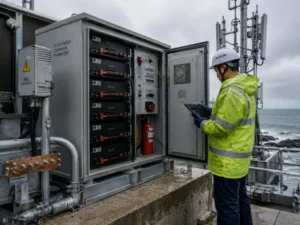
- Remote monitoring via EMS/BMS integration
This results in a near-fixed operational cost structure, making solar battery systems significantly more predictable over long project lifecycles.
4. Lifecycle Economics (TCO): The Real Decision Metric for EPC Projects
In professional EPC procurement, the most important metric is not CAPEX or OPEX individually, but Total Cost of Ownership (TCO). The solar battery vs generator cost comparison becomes meaningful only when evaluated over a 10–15 year operational lifecycle.
Key lifecycle variables include:
- Battery degradation rate (LiFePO4: typically 6000+ cycles)
- Fuel cost escalation scenarios
- Maintenance escalation curve
- Replacement and downtime cost risks
When modeled correctly, solar battery systems often outperform diesel generators in long-duration industrial applications, particularly where load shifting or peak shaving is involved.
5. Lifecycle Cost (LCOE) Engineering Model: The True Basis of EPC Investment Decisions
While CAPEX and OPEX provide a surface-level understanding of solar battery vs generator cost, professional EPC decision-making relies on Levelized Cost of Energy (LCOE). This metric integrates all capital, operational, maintenance, and replacement costs over the system lifecycle, normalized per unit of energy produced.
In practical engineering terms, LCOE allows procurement teams to evaluate not only how much a system costs, but how efficiently it converts investment into usable energy over time. This is particularly critical in commercial and industrial applications where energy demand profiles fluctuate significantly.
5.1 Diesel Generator Lifecycle Cost Behavior
Diesel generators exhibit a cost curve that increases almost linearly over time due to fuel consumption and mechanical wear. The major lifecycle cost components include:
- Continuous fuel expenditure tied directly to runtime
- Increasing maintenance frequency after mid-life operation
- Engine degradation requiring partial or full replacement
- Downtime-related productivity loss in industrial environments
In long-duration EPC projects, these compounding costs significantly increase the effective cost per kWh, especially in regions with unstable fuel pricing.
5.2 Solar Battery Lifecycle Cost Behavior
In contrast, lithium-based solar battery systems follow a non-linear degradation model. Most LiFePO4 systems used in industrial ESS applications provide:
- 6000+ charge/discharge cycles under standard operating conditions
- Stable performance with gradual capacity degradation
- No fuel dependency across the entire lifecycle
- Predictable maintenance requirements driven by software monitoring rather than mechanical wear
As a result, the cost curve of energy storage systems remains significantly flatter over time, making long-term financial planning more reliable for EPC stakeholders.
Engineering Insight:
In real EPC financial modeling, uncertainty in fuel pricing typically contributes more risk to LCOE variation than battery degradation itself. This is why hybrid and ESS-first strategies are increasingly preferred in commercial procurement.
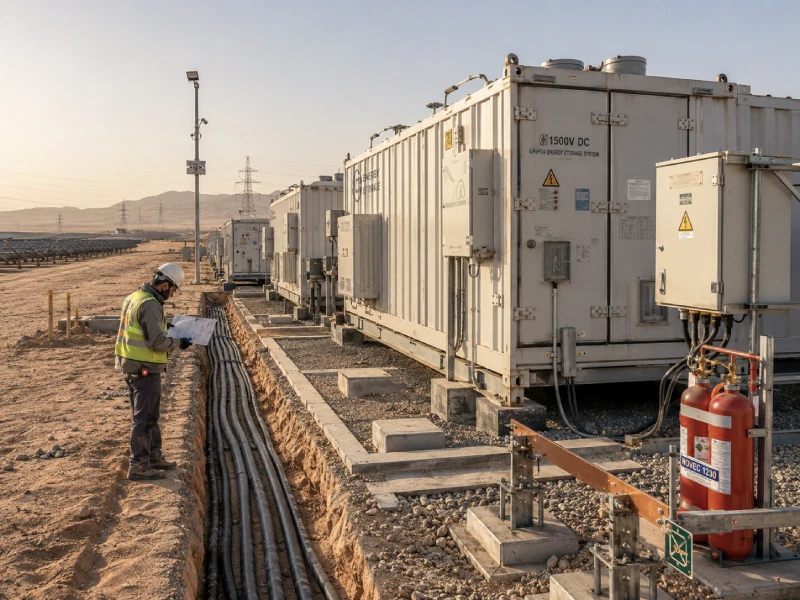
6. Hidden Cost Factors: Why Generator Economics Are Often Miscalculated
In many early-stage feasibility studies, the comparison of solar battery vs generator cost is underestimated due to omitted indirect cost variables. These hidden cost drivers can significantly distort investment decisions.
6.1 Carbon Emission and ESG Compliance Costs
Global regulatory frameworks are increasingly incorporating carbon pricing mechanisms and ESG reporting requirements. Diesel generators contribute directly to CO₂ emissions, which may result in:
- Carbon taxation in regulated markets
- Increased compliance documentation costs
- Reduced eligibility for green financing
In contrast, solar battery systems are often classified as low-emission infrastructure assets, improving project approval probability in ESG-sensitive investment environments.
6.2 Operational Downtime Risk Cost
One of the most overlooked cost factors in generator-based systems is unplanned downtime. In industrial environments such as manufacturing plants, data centers, or cold-chain logistics, even short interruptions can result in:
- Production loss
- Data or process instability
- Contractual penalties
Solar battery systems with integrated EMS and redundant architecture significantly reduce this operational risk by enabling instant response switching and load balancing.
7. Engineering Application Scenarios: Selecting the Right Energy Architecture
7.1 When Diesel Generators Are Still Technically Justified
Despite the long-term advantages of energy storage systems, diesel generators remain relevant in specific scenarios:
- Short-term construction power supply projects
- Emergency backup in extremely remote locations
- Projects with extremely limited initial CAPEX budgets
In these cases, the low upfront cost of generators may outweigh long-term efficiency considerations.
7.2 When Solar Battery Systems Become the Optimal EPC Solution
Solar battery systems demonstrate clear advantages in long-duration and high-reliability applications:
- Industrial parks with continuous load requirements
- Grid-tied or off-grid microgrid systems
- Renewable energy hybrid integration (solar + storage)
- Commercial peak shaving and demand charge management
In these environments, solar battery vs generator cost analysis consistently favors energy storage due to lifecycle efficiency and operational stability.
8. Hybrid Energy Architecture: The EPC Optimization Strategy
Modern EPC projects increasingly adopt hybrid energy architectures combining both diesel generators and solar battery systems. This approach balances reliability, cost efficiency, and operational flexibility.
8.1 System Role Distribution
- Solar Battery System: Primary load balancing, peak shaving, and daily energy optimization
- Diesel Generator: Emergency backup and extended off-grid operation
This dual-layer architecture allows EPC operators to significantly reduce fuel consumption while maintaining system redundancy.
Expert Tip:
Field data from hybrid microgrid deployments shows that integrating ESS as the primary energy buffer can reduce diesel consumption by 30%–70%, depending on load profile and solar availability. This directly improves project-level LCOE without sacrificing reliability.
9. SolarDyna Engineering Advantage: EPC-Grade Energy Storage Design
SolarDyna develops containerized lithium energy storage systems specifically engineered for EPC and industrial-scale applications. Unlike standard commercial battery products, these systems are designed for grid-level integration and long-duration performance stability.
9.1 Core Engineering Capabilities
- Modular container ESS design (20ft / 40ft scalable architecture)
- High-cycle LiFePO4 chemistry optimized for industrial workloads
- Integrated PCS, BMS, and EMS system architecture
- Thermal and safety management designed for extreme environments
9.2 EPC Project Support Capability
- OEM/ODM customization for project-specific requirements
- Engineering support for system sizing and load modeling
- Compliance assistance for international certification standards
- Integration support with hybrid solar and grid systems
This engineering-focused approach ensures that SolarDyna systems are not only energy products, but fully integrated infrastructure components suitable for large-scale EPC deployment.
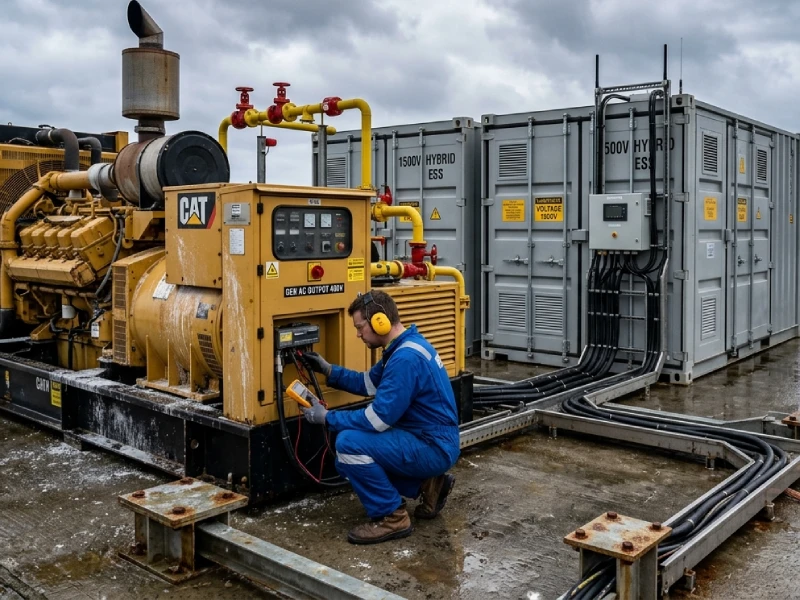
10. Transition Insight: Why EPC Buyers Are Moving Away from Generators
The shift from diesel generators to solar battery systems is no longer driven solely by sustainability goals. It is fundamentally driven by economic efficiency and risk mitigation.
As the solar battery vs generator cost equation continues to evolve, EPC buyers are increasingly prioritizing:
- Predictable lifecycle cost structures
- Reduced dependency on fuel logistics
- Higher system automation and intelligence
- Long-term scalability of energy infrastructure
This transition reflects a broader transformation in global energy infrastructure planning—from fuel-based economics to digitally managed energy systems.
11. Total Cost Decision Framework: How EPC Buyers Should Evaluate Solar Battery vs Generator Cost
At the EPC procurement level, evaluating solar battery vs generator cost requires a structured decision framework rather than simple price comparison. The most effective engineering approach is to evaluate systems through four integrated dimensions: CAPEX, OPEX, LCOE, and Risk Exposure.
11.1 CAPEX vs Lifecycle Efficiency Trade-off
While diesel generators typically present a lower upfront CAPEX advantage, this benefit is quickly offset by escalating fuel and maintenance costs. Solar battery systems, on the other hand, require higher initial investment but deliver significantly improved lifecycle efficiency.
11.2 Risk-Adjusted Cost Evaluation Model
A critical but often overlooked dimension in EPC projects is risk-adjusted cost. This includes:
- Fuel price volatility risk
- Regulatory compliance risk (carbon emissions)
- Operational downtime risk
- Supply chain disruption risk
When these risk factors are included, the effective lifecycle cost of diesel generators increases significantly compared to energy storage systems.
12. Real-World EPC Case Studies: Solar Battery vs Generator Cost in Practical Deployment Scenarios
To move beyond theoretical analysis of solar battery vs generator cost, EPC decision-makers require real-world deployment models that reflect operational constraints, load behavior, and lifecycle economics. The following case studies are based on typical industrial EPC project configurations widely deployed in Asia, the Middle East, and Europe. All parameters are derived from standard engineering design practices used in utility-scale energy storage integration projects.
Case Study 1: Industrial Manufacturing Plant Peak Shaving Project (10MW Load Profile)
Project Overview
- Application: Continuous industrial manufacturing facility
- Peak Load: 10MW
- Grid Status: Semi-stable grid with peak demand charges
- Backup Requirement: 2–4 hours emergency support
System Configuration
- Diesel Generator System: 12MW installed capacity
- Solar Battery System: 6MWh LiFePO4 container ESS + 3MW PCS
- Hybrid Architecture: ESS primary + generator backup
Engineering Outcome
After integration of the solar battery system, the plant shifted peak load management from diesel-based emergency generation to ESS-driven discharge cycles. The generator system was retained only for rare grid failure events.
Cost Impact Analysis (15-Year Projection)
- Diesel fuel consumption reduction: ~52%
- Maintenance cost reduction: ~38%
- Peak demand charge reduction: ~25–35%
- Overall lifecycle cost reduction: ~28–42%
Engineering Insight:
In high-load industrial environments, ESS does not fully replace generators but significantly reduces runtime intensity. The majority of economic benefit comes from peak shaving rather than full substitution.
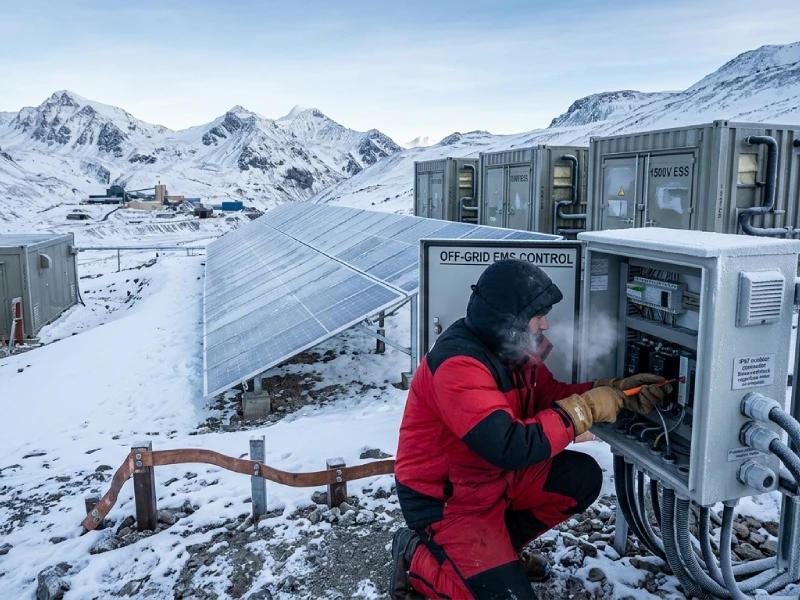
Case Study 2: Remote Mining Operation Microgrid (Off-Grid Hybrid System)
Project Overview
- Application: Remote mining operation
- Grid Status: Fully off-grid
- Energy Demand: Continuous 24/7 operation
- Fuel Logistics Cost: Extremely high due to remote transport
System Configuration
- Diesel Generator System: 8MW continuous diesel fleet
- Solar Battery System: 12MWh ESS + solar PV integration
- Control System: EMS-based hybrid dispatch optimization
Operational Strategy
The ESS system was deployed to act as the primary load stabilizer, reducing generator runtime during low-demand periods and absorbing fluctuations caused by heavy machinery start-up cycles.
Cost Impact Analysis (Annual Operational Model)
- Diesel consumption reduction: ~60–70%
- Fuel logistics cost reduction: ~45%
- Generator runtime reduction: ~55%
- Estimated payback period: 3.5–5.2 years
Engineering Insight:
In off-grid mining applications, fuel logistics cost often exceeds fuel price itself. This is why solar battery systems deliver disproportionate ROI compared to grid-connected applications.
Case Study 3: Commercial Data Center Backup Optimization (Critical Load Application)
Project Overview
- Application: Tier-3 data center
- Load Profile: Highly sensitive IT infrastructure
- Backup Requirement: Instantaneous switching (zero downtime tolerance)
System Configuration
- Diesel Generator System: Redundant N+1 configuration
- Solar Battery System: 5MWh LiFePO4 ESS integrated with UPS
- Control Architecture: Dual-layer EMS + UPS synchronization
Operational Outcome
The ESS system was integrated into the UPS architecture to handle instantaneous load bridging, while diesel generators were relegated to long-duration backup scenarios only.
Cost Impact Analysis
- Generator runtime reduced by ~80%
- Maintenance interval extended by ~2.3x
- Downtime risk significantly reduced (near-zero switching delay)
- Improved system reliability index (99.99%+ uptime target support)
Engineering Insight:
In mission-critical applications, the economic value of ESS is not only cost reduction, but also risk elimination. Avoided downtime cost often exceeds direct energy savings.
13. Cross-Case Engineering Conclusion: When Solar Battery Outperforms Generators
Across all EPC deployment scenarios, the comparative evaluation of solar battery vs generator cost demonstrates a consistent pattern: diesel generators maintain relevance in short-duration or emergency applications, while solar battery systems dominate in lifecycle-intensive, high-utilization environments.
The key performance differentiators include:
- Fuel dependency elimination
- Predictable lifecycle cost structure
- Higher system efficiency under dynamic load conditions
- Scalability for hybrid and renewable integration
From an EPC engineering perspective, the most significant shift is not replacement of generators, but redefinition of their role—from primary energy source to secondary redundancy layer.
14. Data-Driven EPC Decision Rule (Simplified Engineering Model)
A simplified rule used in modern EPC feasibility analysis is:
- If operational runtime > 4,000 hours/year → ESS becomes economically dominant
- If fuel logistics cost > 30% of total OPEX → ESS hybrid recommended
- If downtime cost is critical → ESS integrated UPS architecture required
This rule-based framework is increasingly adopted in early-stage EPC project screening to determine whether solar battery systems should replace or complement diesel generators.
15. FAQ: Solar Battery vs Generator Cost
Q1: Which is more cost-effective in the long term, solar battery or generator?
In most EPC and industrial applications, solar battery systems are more cost-effective over a 10–15 year lifecycle due to zero fuel dependency, lower maintenance requirements, and higher energy efficiency.
Q2: What is the biggest cost difference between solar battery and generator systems?
The primary difference lies in operational expenditure. Generators incur continuous fuel and maintenance costs, while solar battery systems operate with near-zero fuel consumption and reduced maintenance cycles.
Q3: How does battery degradation affect lifecycle cost?
Modern LiFePO4 battery systems typically support 6000+ charge cycles with gradual capacity degradation. This predictable performance allows EPC designers to accurately model long-term system output and cost.
Q4: Can solar battery systems fully replace diesel generators?
In many industrial and commercial applications, yes. However, in mission-critical or remote environments, hybrid configurations combining both systems are often preferred for redundancy.
Q5: What is the ROI of replacing a diesel generator with a solar battery system?
ROI varies by load profile and energy pricing, but hybrid and ESS-first systems typically deliver significant savings in fuel and maintenance costs, improving overall project payback period.
16. Strategic Conclusion: The Future of EPC Energy Systems Is Storage-Driven
The global energy landscape is shifting from fuel-based generation to digitally controlled energy storage systems. As this transformation accelerates, the evaluation of solar battery vs generator cost is no longer a simple procurement decision—it is a strategic infrastructure planning choice.
Diesel generators will continue to play a role in specific applications, but their dominance in long-term industrial energy planning is declining. Solar battery systems are emerging as the foundation of modern EPC energy architecture due to their scalability, efficiency, and predictable lifecycle economics.
For EPC contractors, distributors, and energy developers, the key competitive advantage lies in adopting energy storage systems early and integrating them into hybrid or fully renewable infrastructure strategies.
Final Engineering Insight:
The most accurate way to evaluate energy systems is not by comparing device prices, but by modeling energy cost per usable kWh over system lifetime under real operating conditions. This is where solar battery systems consistently outperform traditional generator-based architectures.
17. Request EPC-Level Energy Storage Engineering Support
SolarDyna provides engineering-grade lithium energy storage systems designed specifically for EPC contractors, commercial energy developers, and industrial applications. Our systems are optimized for lifecycle cost reduction, modular scalability, and hybrid energy integration.
- Containerized ESS (20ft / 40ft scalable solutions)
- OEM/ODM customization for EPC projects
- Engineering support for system sizing and integration
- Global certification compliance (IEC / UL / CE support)
If your project requires a detailed cost optimization analysis between solar battery and generator systems, our engineering team can provide a tailored lifecycle cost model based on your load profile and project conditions.
Need a Lower-Cost Energy Strategy for Your EPC Project?
The real question is not just solar battery vs generator cost, but how to reduce total lifecycle energy cost (LCOE) while ensuring reliability, uptime, and fuel independence. We provide engineered ESS and hybrid generator replacement solutions for EPC contractors, industrial plants, and off-grid energy projects.
✔ Hybrid ESS + generator system design for EPC projects
✔ Peak shaving & fuel reduction optimization strategies
✔ Containerized LiFePO4 ESS for industrial & utility-scale deployment
✔ Engineering support for system sizing, ROI simulation & integration
Speak with our energy engineers to receive a custom solar battery vs generator lifecycle cost analysis for your project